

Maddy summaryHB 2213 establishes a regulatory framework for "skill video gaming" in Pennsylvania, directly affecting businesses that operate or distribute gaming systems. The bill requires licenses from the Department of Revenue for operators, distributors, and establishments, imposes fees, and mandates a central reporting system to track transactions like "coin in/out" and jackpots. Key provisions include banning access for people under 18, prohibiting "miniature casinos," requiring security measures for players, and creating criminal penalties for operating unlicensed systems or distributing to minors. It aims to eliminate illegal gambling devices disguised as skill-based games while leveraging the State Lottery's existing experience in retail gaming oversight.
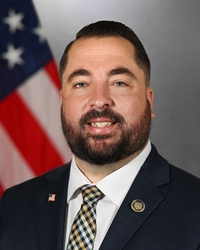
Rep. Dan Goughnour
Sponsored bills
Maddy summaryThis bill prohibits payment card networks (like Visa or Mastercard) from charging fees based on the full transaction amount that includes Pennsylvania's sales tax. It specifically bans interchange fees that calculate charges using the total amount (including tax) and prevents networks from raising fees to circumvent this rule. Merchants who accept credit/debit cards and payment networks are directly affected, as they can no longer impose these tax-inclusive fees. Violations of these provisions could result in penalties under the new law.
Maddy summaryHB 2127 amends Pennsylvania's Tax Reform Code to adjust tax credit rules for waterfront development projects. It increases the maximum tax credit for businesses from 75% to 90% of their contribution and doubles the annual cap on total credits from $5 million to $10 million. The bill also requires the Department of Revenue to review applications and renewals from waterfront development organizations within 60 days and limits contributions used for future maintenance to no more than 15%. These changes directly affect businesses contributing to waterfront development projects and the organizations managing these projects.
Maddy summaryHB 1628 extends Pennsylvania's medical assistance program to cover pregnancy-related care and postpartum support for up to 12 additional months after childbirth or pregnancy loss (such as miscarriage). It directly affects pregnant and postpartum women who are currently receiving medical assistance, have income below 215% of the federal poverty level, and are not otherwise eligible for ongoing assistance. The bill requires the state to seek federal approval for this extension via a waiver under the Social Security Act, and if federal approval is denied, it mandates a report to the legislature within 180 days detailing how to revise the application for future approval. This change aims to improve access to healthcare during a critical period following pregnancy.
Maddy summaryHB 2079 establishes a program to reimburse eligible entities - such as school districts, counties, human services providers, Pre-K programs, and Head Start providers - for documented financing costs or lost interest income caused by delays in passing the state budget (defined as the period from July 1, 2025, until the 2025-2026 budget takes effect). The program is funded primarily by "impasse-generated interest" (interest earned from delayed state spending during the budget impasse), with the legislature providing additional funds if needed. The Office of the Budget will administer the program, including processing applications and reporting annually on reimbursements, funding sources, and recipient details.
Maddy summaryHB 1233 requires battery manufacturers and retailers in Pennsylvania to create and implement plans for managing used portable batteries (like those in electronics and tools). It directs the Department of Environmental Protection to review these plans and enforce compliance, imposing fines for violations. The bill directly affects businesses that sell or produce portable batteries by mandating their responsible collection and recycling. If passed, it would establish new statewide requirements for handling battery waste, aiming to reduce environmental harm from improper disposal. The bill is currently pending in the Environmental Resources & Energy committee.
Maddy summaryHB 1540 creates a "Buy America, Buy Union" grant program and fund under Pennsylvania's Department of Community and Economic Development. It requires state-funded projects to prioritize American-made materials and union labor by offering grants to qualifying contractors. The bill establishes a dedicated fund to finance these grants, directly affecting state agencies and contractors working on public projects. Key provisions mandate that projects receiving grants must meet specific union labor and domestic sourcing standards, altering how state procurement contracts are awarded. This policy change shifts procurement incentives toward union workers and U.S. manufactured goods for eligible state projects.
Maddy summaryHB 2007 mandates a specific $62 million transfer from Pennsylvania's Budget Stabilization Reserve Fund by November 1, 2025, to address the loss of federal SNAP benefits. The funds are allocated as follows: $50 million to the Department of Agriculture for food bank grants under existing state food programs, $10 million to the Department of Human Services for senior meal assistance, and $2 million for administration and outreach. This bill directly affects food banks, senior assistance organizations, and state agencies managing these programs. It requires the transfer to occur regardless of the usual emergency funding process outlined in Section 1703-A(b), which typically requires a two-thirds legislative vote for reserve fund appropriations. The bill takes effect immediately upon enactment.
Maddy summaryHB 1900 would amend Pennsylvania's Tax Reform Code of 1971 to create a tax credit for educators. This credit would allow teachers and school staff to reduce their income tax liability. The bill specifies this credit as part of the state's tax code changes, though details on eligibility or credit amount are not provided in the available context.
Maddy summaryHB 1702 amends Pennsylvania's Liquor Code to clarify definitions and update rules for retail liquor licensees. It defines "ready-to-draft pre-mixed keg cocktail" as a beverage prepared on-site by mixing nonalcoholic base (like juices or syrups) with liquor in a sealed container for on-premises dispensing via gas systems. The bill specifies that retail licensees may blend and store such pre-mixed cocktails overnight without it being considered "manufacture" under the code. Additionally, it revises prohibitions on decanters, allowing kegs used for the defined pre-mixed cocktails while otherwise restricting decanter use for alcoholic beverages.