

Maddy summaryThis joint resolution proposes a constitutional amendment in Pennsylvania regarding exemptions and special provisions, but the specific exemptions or provisions it would change are not detailed in the provided information. As a constitutional amendment, it would require approval by the state legislature and potentially a statewide vote, affecting Pennsylvania's constitutional framework. The bill is currently active (removed from the table on 2025-11-19) but remains in early procedural stages with no substantive content described. Since it is a procedural constitutional proposal without defined policy changes in the context, a detailed summary of its impact cannot be provided.
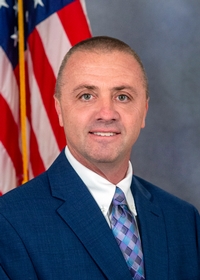
Rep. Dan Deasy
Sponsored bills
Maddy summaryThis bill designates April 8, 2026, as "THON Day" in Pennsylvania to honor a student-run fundraising event at Pennsylvania State University that raises money to fight pediatric cancer. The resolution recognizes the event's efforts to support Four Diamonds at Penn State Health Golisano Children's Hospital, which provides treatment, research, and family support for children with cancer. It highlights the significant contributions of over 16,500 volunteers and the millions of dollars raised through the 46-hour dance marathon. The measure serves as a formal acknowledgment of the event's impact and the dedication of the students and organizations involved.
Maddy summaryHB 1750 regulates cremation services for deceased pets and companion animals. It requires service providers to disclose details about cremation processes, maintain facility standards, keep records, and provide notices to pet owners. The bill also establishes enforcement mechanisms and penalties for non-compliance. This directly affects pet cremation businesses and pet owners who use these services.
Maddy summaryThis bill amends Pennsylvania's Tax Reform Code to increase personal income tax rates for taxable years beginning after December 31, 2025. It raises the tax rate for residents and nonresidents from 3.7% to 9.7% on all income, while maintaining a 3.7% rate for specific income categories. The legislation also clarifies how trust income is taxed by aligning Pennsylvania rules with federal Internal Revenue Code provisions regarding grantor trusts.
Maddy summaryThis resolution honors the lives of three Pennsylvania law enforcement officers - Detective Sergeant Cody Michael Becker, Detective Isaiah Emenheiser, and Detective Mark Edward Baker - who died in the line of duty on September 17, 2025. The bill formally extends condolences to their families and recognizes their individual contributions to public service, including Becker's heroism in saving a family from a house fire, Emenheiser's leadership and lifesaving awards, and Baker's pioneering work in forensic investigations. As a noncontroversial resolution, it does not create new laws or funding but serves as a legislative acknowledgment of their sacrifice and dedication to their communities.
Maddy summaryHB 289 requires all Pennsylvania public, charter, and private schools to test for radon gas in existing buildings starting with the 2026-2027 school year. If radon levels reach 4 picocuries per liter or higher, schools must install mitigation systems and retest until levels fall below that threshold, with new schools required to use radon-resistant construction. Testing must be done by certified professionals using specific protocols, and results must be shared with school boards, parents, teachers, and health officials. Schools with low radon levels must retest every five years, while those needing mitigation must retest every two years. This law directly affects all Pennsylvania school entities and aims to reduce exposure to radon, a radioactive gas linked to lung cancer.
Maddy summaryHB 678 requires labor brokers who supply construction workers to employers in Pennsylvania to register with the Department of Labor and Industry. It mandates brokers to pay fees, maintain registration validity, verify worker placements, and report changes, with the Department establishing a dedicated registration account for these fees. The bill imposes penalties for operating without registration or violating its requirements, directly affecting labor brokers in the construction industry. Key provisions include a verification system for worker placements, annual renewal of registration, and specific definitions clarifying which entities qualify as labor brokers versus subcontractors. This legislation aims to increase oversight of labor brokers handling construction workers, with penalties for noncompliance.
Maddy summaryHB 501 amends Pennsylvania's Alternative Energy Portfolio Standards Act to update definitions and clarify requirements for renewable energy compliance. It specifically adds "advanced reactor" (including small modular reactors) to eligible energy sources, refines criteria for low-impact hydropower, and updates definitions for biomass, biogas, and alternative energy credits. The bill affects electric utilities required to meet portfolio standards by specifying which energy sources count toward compliance and how credits are calculated. These changes aim to modernize the framework for renewable energy reporting and incentives without altering current percentage targets. The bill is currently in committee review (Environmental & Natural Resource Protection).
Maddy summaryThis bill amends Pennsylvania's vehicle laws to exempt individuals aged 65 or older from identification card renewal fees if they have surrendered their driver's license due to a diagnosed physical or mental condition. The exemption applies specifically to those who surrender their licenses based on a health care provider's diagnosis, and the department may request proof of this medical documentation. The change aims to reduce financial burdens on seniors who can no longer drive for health reasons. The legislation would become effective 60 days after passage.
Maddy summaryThis bill amends Pennsylvania's Pharmacy Audit Integrity and Transparency Act to update definitions for "specialty drug" and "spread pricing" while establishing a new role for a State pharmacy benefits manager. The updated definitions clarify which prescription medications qualify as specialty drugs based on cost, handling requirements, and patient needs, while defining spread pricing as when a pharmacy benefits manager charges more than it pays pharmacists. The bill requires the Department of Human Services to select a single third-party administrator to manage all pharmacy benefits for Medicaid recipients by July 2026, ensuring all managed care organizations contract with this designated manager. The procurement process mandates competitive selection with strict conflict-of-interest disclosures to prevent conflicts between the manager and other healthcare entities like pharmacies, drug distributors, or managed care organizations.