

Maddy summaryHB 1706 requires Pennsylvania schools to integrate student mental health awareness into existing health education standards and school operations. It mandates the State Board of Education to update health standards, the Department of Health and Education to develop public guidelines on mental health warning signs for students and families, and schools to notify students and parents twice yearly about local mental health services. The bill also requires school entities to report student absences or injuries in activities to student assistance programs and directs the Pennsylvania Interscholastic Athletic Association to add mental health training to coach certification by the 2025-2026 school year. This bill directly affects all public, private, and parochial schools in Pennsylvania, their students, families, and athletic staff.
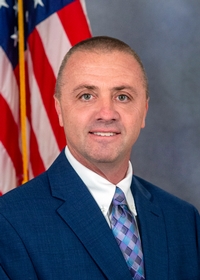
Rep. Dan Deasy
Sponsored bills
Maddy summaryThis bill authorizes Pennsylvania to join the Respiratory Care Interstate Compact, a legal agreement designed to allow licensed respiratory therapists to practice in other member states without needing separate licenses for each location. The legislation establishes a framework where a therapist's home state retains primary regulatory authority while granting temporary practice privileges in other states to improve patient access and support military families. Key provisions include creating a central data system to track licenses, defining strict rules for handling disciplinary actions across state lines, and setting requirements for criminal background checks and jurisprudence exams. By adopting this compact, the state aims to streamline administrative processes and address workforce shortages while maintaining public safety standards.
Maddy summaryThis resolution designates April 2026 as "Pennsylvania 8-1-1 Safe Digging Month" to raise awareness about the state's utility notification system. It directly encourages excavators and homeowners to call 8-1-1 (or 1-800-242-1776) before digging to locate underground utility lines, preventing damage, injuries, and service interruptions. The resolution emphasizes the existing legal requirement for three business days' notice before excavation and promotes the Pennsylvania One Call System, which handles over 1 million annual requests to protect infrastructure and the environment. As a ceremonial resolution, it does not create new laws but aims to reinforce public safety practices through recognition.
Maddy summaryHB 728 establishes Pennsylvania's Identification Upon Reentry Program, requiring prisons to provide newly released inmates with essential identification documents (like state ID cards) before their release. This directly affects individuals transitioning from incarceration back into the community, who often face barriers to accessing services without valid ID. The key provision mandates that correctional facilities coordinate with state agencies to issue these documents during the reentry process, replacing the current inconsistent practice. This policy change aims to streamline access to housing, employment, and government services for returning citizens.
Maddy summaryHB 879 would change Pennsylvania law to allow both state and local prosecutors to pursue charges for riot, disorderly conduct, and related offenses that currently fall under state jurisdiction alone. This bill directly affects law enforcement agencies, prosecutors, and individuals charged with these specific offenses by expanding who can bring legal action. The key provision establishes "concurrent jurisdiction," meaning local district attorneys and the state attorney general could both prosecute the same case without requiring state involvement. The bill aims to streamline enforcement for these offenses but does not alter the penalties or definitions of the crimes themselves.
Maddy summaryThis bill would create a state-funded paid family and medical leave program for eligible workers needing time off for health issues, childbirth, or family care. It establishes a dedicated state fund to cover leave costs, creates an advisory board to guide implementation, and assigns oversight to the Department of Labor. The program would directly affect employees in the state who qualify for these leave types, requiring employers to provide the benefits. The bill also specifies penalties for businesses failing to comply with the new requirements.
Maddy summaryHB 1834 requires commercial data centers in Pennsylvania to pay fees to the state. These fees fund a new Data Center LIHEAP Enhancement Fund, which boosts assistance for low-income households struggling with energy costs. The bill also mandates that data centers meet specific renewable energy targets and allows them to recover certain operational costs through regulated rates. The Pennsylvania Public Utility Commission (PUC) and Department of Human Services are tasked with implementing these requirements and managing the fund.
Maddy summaryThis bill creates a tax credit for Pennsylvania educators who purchase instructional materials or supplies for classroom use. Professional employees in public, charter, cyber, and nonpublic schools can claim a credit equal to the amount they spent on qualifying expenses, up to a maximum of $500 per year. The Department of Revenue will establish rules to determine which expenses qualify and must publish guidelines online while submitting annual reports on program usage. The credit applies to tax years beginning on or after January 1, 2025, and cannot be carried forward, carried back, sold, or assigned.
Maddy summaryHB 1191 strengthens railroad safety in Pennsylvania by prohibiting railroads from blocking highway crossings for more than five minutes (with $10,000 penalties), limiting freight train lengths to 8,500 feet, and requiring two-person crews for freight trains (with limited exceptions for smaller railroads). The bill authorizes union representatives to monitor safety practices and operations, mandates functional wayside detector systems on higher-risk tracks, and creates a reporting system for hazardous materials transportation. It directly affects all railroads operating in Pennsylvania, including their safety protocols, staffing, and infrastructure maintenance. Penalties for violations range from $1,000 to $25,000 for crew-related breaches, with enforcement handled by the Public Utility Commission.
Maddy summaryHB 1260 would allow businesses owning warehouses or distribution centers to install solar energy systems by providing tax exemptions for "solar-ready" projects. It directly affects commercial property owners in the state by reducing their tax burden for qualifying solar installations. Key provisions include authorizing special tax breaks, requiring the Department of Environmental Protection to establish guidelines for these projects, and imposing fines for non-compliance with solar-ready construction standards. The bill aims to incentivize renewable energy adoption in large commercial facilities through concrete tax policy changes.