

Maddy summaryHB 1140 requires health insurers and Medicaid/CHIP managed care plans in Pennsylvania to cover all FDA-approved contraceptives - including prescription drugs, devices, emergency contraception (like levonorgestrel), and oral contraceptives - without any out-of-pocket costs for enrollees. It specifically prohibits prior authorization or step therapy for emergency and oral contraceptives, and mandates coverage for sterilization procedures and related services like counseling. The bill directly affects health insurers, managed care plans, and their enrollees by expanding contraceptive coverage under state insurance regulations. It exempts male condoms from coverage requirements but ensures no cost-sharing for covered contraceptive methods.
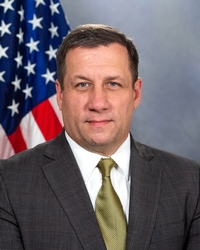
Rep. Paul Friel
Sponsored bills
Maddy summaryHB 1513 would amend Pennsylvania's criminal code to establish criminal liability for internet publishers and distributors who knowingly make material harmful to minors available online. The bill targets content such as explicit sexual material deemed harmful to minors, creating a legal framework for prosecution without requiring proof of intent to harm minors. It directly affects online platforms, website operators, and content distributors that host or share such material. The bill is currently pending in the Communications & Technology committee for further review.
Maddy summaryHB 1499 updates Pennsylvania's child custody laws under Title 23. It clarifies definitions, establishes clearer rules for awarding primary physical custody, and requires courts to consider criminal convictions when making custody decisions. The bill also mandates parenting plans and specifies factors judges must evaluate, directly affecting parents, judges, and child welfare agencies involved in custody cases. The legislation was recently referred to the Judiciary Committee on May 28, 2025.
Maddy summaryHB 79 requires hospitals to establish clear financial assistance programs for patients who cannot afford care, including standardized forms and easily accessible information about eligibility and coverage. It mandates that hospitals publicly share details about their financial aid policies and report their program rules to the Department of Health. These requirements directly affect hospitals operating in the state and patients seeking financial help with medical bills. The bill aims to standardize and increase transparency in hospital financial aid offerings.
Maddy summaryHB 504, the Community Energy Act, establishes a framework for third-party-owned community energy projects (like solar gardens) in Pennsylvania. It requires electric distribution companies to connect these facilities, provides bill credits to subscribers (homeowners, renters, and businesses) for energy generated, and ensures guaranteed savings by linking subscription payments to bill reductions. Key provisions include setting size limits (max 5,000 kW for most facilities), mandating that at least 50% of subscriptions come from small users or farms, and requiring fair wages for construction workers. The bill directly affects electric companies (with new connection duties), community energy organizations (as owners/operators), and subscribers (who gain access to shared renewable energy).
Maddy summaryHB 500 repeals existing tax credit provisions for local resource manufacturing (petrochemicals/fertilizers) and Pennsylvania milk processing, while creating new tax credits for clean energy and advanced manufacturing sectors. It establishes tax credits for reliable energy investments, regional clean hydrogen hubs, semiconductor manufacturing, biomedical research, geothermal energy, and sustainable aviation fuel. Eligible businesses must meet specific criteria for capital investment, job creation, and project location to apply for these credits through the Department of Revenue. The bill also updates definitions and application processes for these new credits, with annual funding limits and rules for credit usage.
Maddy summaryHB 265 amends Pennsylvania's unemployment compensation law to change eligibility rules for workers at educational institutions, such as teachers or staff employed on a term-by-term basis. It removes a prior requirement that these workers must prove they would not return to the same institution for the next academic term to receive benefits during breaks between terms. This change applies to service performed after the bill's effective date and aligns with federal guidelines (26 U.S.C. § 3304(a)(6)). The bill directly affects temporary and part-time employees in schools and colleges who experience academic breaks.
Maddy summaryHB 1354 requires Pennsylvania public school districts to allow private school students who reside in the district to participate in after-school sports, clubs, and other extracurricular activities if their private school does not offer the same activity and they meet all participation requirements. The law directly affects private school students seeking access to public school programs and public school districts managing extracurricular offerings. It mandates inclusion only when the private school does not provide equivalent opportunities, without changing funding or administrative requirements. The bill takes effect 60 days after enactment.
Maddy summaryHB 1294 amends Pennsylvania's Municipal Police Pension Law to clarify how police service credit transfers between municipalities work when regional police departments form or existing departments disband. It directly affects municipal police officers and the pension funds of boroughs, towns, and townships that merge or disband police services. The bill requires actuarial valuations before pension plan changes and mandates that service credits for officers moving between departments be fully transferred, with assets from disbanded departments needing to transfer to the new department within one year or face penalties. The bill corrects a discrepancy in the title (which mentions "military service" but contains no such provisions) and focuses solely on pension credit administration for police departments.
Maddy summaryHB 503 establishes the Pennsylvania Climate Emissions Reduction (PACER) Program, creating a state-run "cap-and-invest" system to reduce carbon dioxide emissions from the power sector. The program requires the Department of Environmental Protection to conduct Pennsylvania-run auctions for CO2 allowances, with specific rules for eligible participants, such as electricity generators and financial institutions. Revenue from these auctions will be directed into several designated accounts, including those for consumer protection, energy transformation, workforce enhancement, and low-income support. Upon the program's establishment, Pennsylvania would cease participation in other carbon auction programs related to the electric generation sector.