

Maddy summaryHB 1804 would require the Commonwealth to withhold state payments to the federal government, strengthen claims against federal property, and prohibit sharing personal data with federal agencies. It creates a legal pathway for the Commonwealth to sue the federal government over withheld payments or data misuse. The bill directly affects how the state interacts with federal agencies on financial transactions and data privacy. Key provisions include blocking state funds to the federal government, allowing legal action for property claims, and banning the sharing of personally identifiable information.
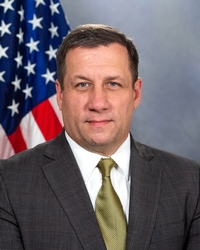
Rep. Paul Friel
Sponsored bills
Maddy summaryThis bill adds a new sales and use tax exemption for specific agricultural and horticultural products in Pennsylvania. It excludes from tax the retail sale or use of fruit seeds, vegetable seeds, fruit plants, vegetable plants, fruit trees, and other seeds, plants, or trees intended for human consumption. This change directly affects retailers selling these items and consumers purchasing them for personal gardening or food production. The exemption becomes effective 60 days after the bill's enactment.
Maddy summaryHB 1751 creates a new Office of Employee Ownership within the state's Department of Community and Economic Development to support employee-owned businesses. It establishes an Employee Ownership Advisory Board to guide the program and a Main Street Employee Ownership Grant Program to provide funding for these businesses. The bill also directs the state to offer technical and financial assistance to help employee-owned enterprises grow and operate. This bill directly affects employee-owned businesses seeking support, grants, and guidance through state programs.
Maddy summaryHB 1714 updates Pennsylvania's school transportation rules under the Public School Code. It requires school districts to provide free transportation for public school students to and from school (within 10 miles, with exceptions for career schools and field trips), and extends this same free transportation requirement to nonprofit nonpublic schools during their regular school hours. The bill also allows districts to use local funds for urban mass transit to cover school transportation costs without state reimbursement, and mandates the State Board of Education to set school bus driver qualifications. Finally, it prohibits districts from funding transportation to schools located outside Pennsylvania.
Maddy summaryHB 615 expands legal protection for individuals and organizations donating food to charities by strengthening the existing Donated Food Limited Liability Act. It directly affects food donors (like grocery stores, farms, and businesses) and food banks/receiving organizations by shielding them from liability claims if donated food causes harm - unless the donor acted with gross negligence. The key provision clarifies that donors cannot be sued for injuries related to donated food, provided they followed safety standards. This policy change aims to encourage more food donations by reducing legal risks for donors.
Maddy summaryThis resolution urges Pennsylvania school districts to consider later start times for secondary schools (high schools), citing studies showing teens need 8-10 hours of sleep but 98% of PA schools begin before 8:30 a.m. It references CDC and AAP research linking later start times to improved academic performance, reduced absenteeism, and better mental health outcomes. The bill encourages districts to collaborate with health professionals and educators to develop schedules that maintain educational activities while adopting later start times, and asks state agencies to provide resources and public education on adolescent sleep needs. As a non-binding resolution, it does not require policy changes but recommends action based on existing evidence.
Maddy summaryHB 1326 amends Pennsylvania's Public School Code to change how school districts calculate student travel distances for attendance purposes and requires standardized reporting of pupil transportation data. It directly affects school districts by altering the method for measuring distance to determine if a student qualifies for transportation under attendance rules, and it impacts state funding by mandating specific data collection for reimbursement between districts and the Commonwealth. The bill establishes clear requirements for districts to track and submit transportation information, ensuring consistent data for state funding decisions. This policy change aims to standardize processes related to student transportation eligibility and funding allocation.
Maddy summaryHB 1500 establishes a Cyber Charter School Funding and Policy Council to develop recommendations on funding, governance, and accountability for cyber charter schools by April 2026. The bill requires public school entities to report advertising and sponsorship spending annually, and mandates detailed cost-tracking for special education services based on individualized student plans. It also adds provisions for student wellness checks, enrollment notifications, and fund balance limits for cyber charter schools, while maintaining a moratorium on new cyber charter school approvals. The law directly affects cyber charter schools, public school districts, and students with disabilities in Pennsylvania.
Maddy summaryHB 242 amends Pennsylvania's 1971 Tax Code to expand tax credits for beginning farmers. It creates a new "beginning farmer management tax credit" and clarifies definitions to streamline eligibility. The credit reduces tax liability for new farmers who use management services to start operations. This directly affects Pennsylvania farmers beginning agricultural businesses, making the tax benefit clearer and more accessible.
Maddy summaryHB 1415 amends Pennsylvania's Safe Drinking Water Act (1984) to modify the powers and duties of the Environmental Quality Board. The bill's specific policy changes or direct impacts on communities, utilities, or regulations are not described in the provided context. Committee referrals (Veterans Affairs, Environmental Protection) indicate its focus but do not reveal the bill's concrete provisions. Without details on the amendments, a substantive summary of its mechanisms or affected parties cannot be provided. This bill appears to be a procedural or administrative update to the board's authority, but the context lacks the necessary policy specifics.