

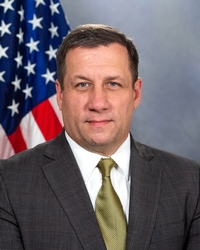
Photo of Paul Friel
D Pennsylvania House · District 26 On the 2026 ballot

Rep. Paul Friel

Compare
Total votes
3,788
all sessions
Attendance
100%
of floor votes
Near the chamber average
With party
99%
of cast votes
Higher than 88% of chamber peers
Bipartisan score
0%
crosses aisle rarely
Lower than 93% of chamber peers
Sponsored
221
bills & resolutions
Near the chamber average
Committees
5
assignments
221 bills and resolutions

Sponsored bills

Total
221
Primary
41
Co-sponsor
180
This page
221
matching current filters
Co-sponsor HB 285
In committee · Pennsylvania House · Co-sponsor
An Act amending Title 44 (Law and Justice) of the Pennsylvania Consolidated Statutes, in constables, further providing for restricted account and for fees.

Maddy summaryHB 285 increases fees for constables in Pennsylvania for specific court-related services in both civil and criminal cases. It raises civil service fees (e.g., from $13 to $20 for serving a complaint) and criminal fees (e.g., from $25 to $50 per warrant execution), with updated amounts for levies, sales, returns, and transportation. The bill clarifies that counties do not pay surcharges for indigent defendants in criminal cases. These changes directly affect constables who perform court services and the defendants or counties paying these fees. The bill amends existing statutes to update fee schedules without altering eligibility or procedural requirements.

In committee Jan 23, 2025 1 co-sponsor
Co-sponsor HB 65
In committee · Pennsylvania House · Co-sponsor
An Act amending Title 23 (Domestic Relations) of the Pennsylvania Consolidated Statutes, in support of the indigent, further providing for relatives' liability and procedure; and making an editorial change.

Maddy summaryHB 65 modifies Pennsylvania's domestic relations law to clarify that certain relatives (spouses, children, parents) must financially support indigent family members receiving medical assistance for long-term care. The bill requires these relatives to cover costs if they received assets, property, or income from the indigent person below fair market value within five years before the assistance application, or if they refuse to cooperate with eligibility processes. Exceptions include cases where a child was abandoned by a parent for ten years during minority, or if transfers comply with federal or state asset transfer rules. The amount owed is capped at the lesser of six times the relative's excess monthly income or the actual cost of the medical services, with potential full elimination of liability by state regulation.

In committee Jan 10, 2025 1 co-sponsor
Co-sponsor HB 2565
Passed · Pennsylvania House · Co-sponsor
An Act amending the act of March 4, 1971 (P.L.6, No.2), known as the Tax Reform Code of 1971, in Pennsylvania Economic Development for a Growing Economy (PA EDGE) Tax Credits, repealing provisions relating to local resource manufacturing and for Pennsylvania Milk Processing and providing for Reliable Energy Investment Tax Credit and for Pennsylvania Milk Processing; in Regional Clean Hydrogen Hubs, further providing for definitions, for eligibility, for application and approval of tax credit, for use of tax credits and for applicability; in semiconductor manufacturing and biomedical manufacturing and research, further providing for definitions and for application and approval of tax credit and providing for sustainable aviation fuel; and, in application of Prevailing Wage Act, further providing for definitions.

Maddy summaryThis bill updates Pennsylvania's tax credit program to support semiconductor, biomedical, and clean energy industries while removing older credits for local resource manufacturing and milk processing. Companies seeking these credits must meet specific requirements, such as investing at least $20 million in new facilities, creating 100 permanent jobs, and paying prevailing wages. The legislation also introduces a new tax credit for sustainable aviation fuel and clarifies rules for clean hydrogen hubs. Additionally, the bill expands definitions for early-stage semiconductor businesses to include those with less than $10 million in revenue.

Passed Nov 7, 2024 1 co-sponsor
Co-sponsor HB 2583
Passed · Pennsylvania House · Co-sponsor
An Act amending Title 34 (Game) of the Pennsylvania Consolidated Statutes, in Pennsylvania Game Commission, further providing for Game Commission officers and employees.

Maddy summaryThis bill updates how Pennsylvania Game Commission officers are classified and paid. It establishes that full-time officers responsible for enforcing game laws will be compensated in the same way as members of the Pennsylvania State Police. All other personnel, except the director, will continue to be hired and paid according to the state's standard classification and compensation plans. The changes apply to earnings starting from the bill's effective date, which is set to occur 60 days after it is passed.

Passed Nov 7, 2024 1 co-sponsor
Co-sponsor HB 1409
Signed into law · Pennsylvania House · Co-sponsor
An Act amending Title 30 (Fish) of the Pennsylvania Consolidated Statutes, in Pennsylvania Fish and Boat Commission, further providing for power to set fees; and, in fishing licenses, further providing for license, permit and issuing agent fees.

Maddy summaryHB 1409 updates the Pennsylvania Fish and Boat Commission's authority to set fees for fishing licenses, permits, and issuing agents. The bill allows the commission to adjust specific amounts for various licenses, such as resident annual and senior resident lifetime licenses, as well as different tourist and replacement options, by referencing existing administrative rules. It also establishes fixed fees for special permits, including those for trout fishing and charter boat guides, while capping transaction costs for the automated licensing system at one dollar. This legislation directly impacts anglers and fishing businesses by defining the current fee structure and providing the legal framework for the commission to manage these costs.

Signed into law Oct 31, 2024 1 co-sponsor
Co-sponsor HB 2094
Passed · Pennsylvania House · Co-sponsor
An Act amending Title 23 (Domestic Relations) of the Pennsylvania Consolidated Statutes, in support of the indigent, further providing for relatives' liability and procedure; and making an editorial change.

Maddy summaryThis bill updates Pennsylvania laws to hold certain relatives financially responsible for the long-term care costs of indigent family members who receive state medical assistance. It specifically targets spouses, children, and parents, requiring them to pay a portion of the costs for nursing home or home-based services if they have transferred assets or failed to cooperate with the eligibility process. The legislation sets specific payment limits based on the liable relative's income and allows courts to impose jail sentences of up to six months for those who intentionally refuse to comply with support orders. Additionally, the bill clarifies definitions for courts and the Department of Human Services while removing outdated references to public welfare agencies.

Passed Oct 24, 2024 1 co-sponsor
Primary HB 2393
Passed · Pennsylvania House · Lead sponsor
An Act amending the act of July 7, 1980 (P.L.380, No.97), known as the Solid Waste Management Act, in general provisions, further providing for definitions and for powers and duties of department; in applications and permits, further providing for permits and licenses required, transition scheme and reporting requirements and providing for food processing residuals; and imposing penalties.

Maddy summaryThis bill amends Pennsylvania's Solid Waste Management Act to specifically regulate the handling and application of food processing residuals, such as food waste used in farming. It requires the Department of Agriculture and the State Conservation Commission to create a tiered system for managing these materials based on odor potential and to establish new standards for storage facilities and land application sites. Under the new rules, businesses must use certified haulers or brokers and maintain detailed data sheets that track the origin, composition, and transfer history of the residuals. The legislation also mandates that operators provide evidence of compliance with local zoning laws and implement specific odor mitigation measures to protect nearby communities.

Passed Oct 24, 2024 0 co-sponsors
Primary HB 2594
Passed · Pennsylvania House · Lead sponsor
An Act establishing the hauler or broker of food processing residuals certification program; providing for the transportation of food processing residuals; imposing duties on the Department of Agriculture and the State Conservation Commission; and imposing penalties.

Maddy summaryThis document is a set of amendments to House Bill 2594 that standardizes terminology by replacing the phrase "residual waste" with "residuals" throughout the text. The changes also update specific definitions to align with the term "food processing waste" and adjust references from "secretary" to "department." These edits do not introduce new policies or alter the bill's core functions but rather refine the language for consistency and clarity.

Passed Oct 24, 2024 0 co-sponsors
Co-sponsor HB 976
In committee · Pennsylvania House · Co-sponsor
An Act amending the act of June 3, 1937 (P.L.1333, No.320), known as the Pennsylvania Election Code, in preliminary provisions, further providing for definitions; in qualifications of electors, further providing for qualifications of electors at primaries; in party organization, further providing for only enrolled electors to vote at primaries or hold party offices; in nomination of candidates, further providing for candidates to be nominated and party officers to be elected at primaries and providing for procedure for unenrolled electors to cast primary ballots; in preparation for and conduct of primaries and elections, further providing for manner of applying to vote, persons entitled to vote, voter's certificates, entries to be made in district register, numbered lists of voters and challenges; in voting by qualified absentee electors, further providing for applications for official absentee ballots; in voting by qualified mail-in electors, further providing for applications for official mail-in ballots; in returns of primaries and elections, further providing for computation of returns by county board, certification and issuance of certificates of election; and, in penalties, further providing for election officers refusing to permit elector to vote in proper party at primaries and repealing provisions relating to elector voting ballot of wrong party at primary.

Maddy summaryThis bill modifies Pennsylvania's Election Code to clarify rules for primary elections, specifically regarding who can vote and how unaffiliated voters participate. It establishes that only voters registered with a political party can normally vote in that party's primary or hold party offices, while also creating a new process for unenrolled electors to temporarily join a party to cast a single primary ballot. The legislation defines "unenrolled electors," outlines procedures for them to select a party at the polls, and updates requirements for absentee and mail-in voting applications. Additionally, it clarifies how election returns are computed and certified by county boards and adjusts penalties for election officers who improperly deny a voter access to their preferred party's primary.

In committee Oct 21, 2024 1 co-sponsor
Co-sponsor HB 2412
Passed · Pennsylvania House · Co-sponsor
An Act providing for interagency cooperation regarding employee misclassification; and establishing the Employee Misclassification Working Group.

Maddy summaryThis Pennsylvania bill creates a new Employee Misclassification Working Group to coordinate efforts among state agencies in identifying and addressing cases where workers are incorrectly classified as independent contractors rather than employees. The legislation mandates that the Department of Revenue share tax information with specific labor and unemployment offices to help investigate these misclassification issues and requires the use of federal identification numbers to streamline data matching. The working group itself will be led by a representative from the Department of Labor and Industry and will include members from the Department of Revenue and the Office of Attorney General, with optional participation from local prosecutors and labor enforcement officers. Meetings of the group are required to occur at least every three months to develop and oversee enforcement strategies.

Passed Oct 18, 2024 1 co-sponsor
Showing 121 to 130 of 221 bills
Previous 1 … 12 13 14 … 23 Next