

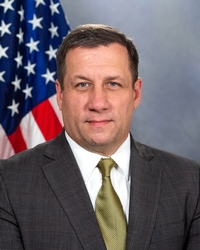
Photo of Paul Friel
D Pennsylvania House · District 26 On the 2026 ballot

Rep. Paul Friel

Compare
Total votes
3,788
all sessions
Attendance
100%
of floor votes
Near the chamber average
With party
99%
of cast votes
Higher than 88% of chamber peers
Bipartisan score
0%
crosses aisle rarely
Lower than 93% of chamber peers
Sponsored
221
bills & resolutions
Near the chamber average
Committees
5
assignments
221 bills and resolutions

Sponsored bills

Total
221
Primary
41
Co-sponsor
180
This page
221
matching current filters
Co-sponsor HB 1065
In committee · Pennsylvania House · Co-sponsor
An Act amending Title 18 (Crimes and Offenses) of the Pennsylvania Consolidated Statutes, in firearms and other dangerous articles, further providing for definitions and providing for the offense of sale of firearm or firearm parts without serial numbers and for privately made firearms.

Maddy summaryHB 1065 creates a new felony offense for selling unmarked firearm components in Pennsylvania. It specifically targets the sale of firearm frames/receivers, silencer frames, split/modular frames, or partially complete frames without serial numbers registered to a federal firearms licensee. The bill defines "privately made firearm" as one assembled by non-licensed individuals without federal serial markings. This law directly affects sellers of homemade or unlicensed firearm parts, making such sales a third-degree felony. It does not change laws regarding firearm ownership or purchase, only penalizing the sale of unmarked components.

In committee Mar 31, 2025 1 co-sponsor
Co-sponsor HB 1004
In committee · Pennsylvania House · Co-sponsor
An Act amending the act of March 4, 1971 (P.L.6, No.2), known as the Tax Reform Code of 1971, in research and development tax credit, further providing for limitation on credits.

Maddy summaryHB 1004 amends Pennsylvania's 1971 Tax Reform Code to increase annual limits on research and development (R&D) tax credits. It raises the total annual credit cap from $60 million to $120 million, with $24 million specifically reserved for small businesses (up from $12 million). Unused allocations for either small businesses or other qualifying businesses can roll over to the other group within the same fiscal year. The changes take effect 60 days after the bill's passage.

In committee Mar 24, 2025 1 co-sponsor
Co-sponsor HB 998
In committee · Pennsylvania House · Co-sponsor
An Act amending Title 75 (Vehicles) of the Pennsylvania Consolidated Statutes, in licensing of drivers, further providing for qualifications for school bus driver endorsement; and, in commercial drivers, further providing for requirement for commercial driver's license.

Maddy summaryHB 998 exempts drivers of small school buses (carrying 11-15 passengers, including the driver) from needing a school bus driver endorsement or commercial driver's license. The bill amends Pennsylvania’s vehicle code to remove these requirements for buses transporting students to or from public, private, or parochial schools or school-related events. This directly affects school bus drivers operating smaller vehicles under the specified passenger capacity. The key provision eliminates a licensing hurdle for these specific school transportation roles, aligning with existing exemptions for similar vehicle types. The changes take effect 60 days after enactment.

In committee Mar 24, 2025 1 co-sponsor
Co-sponsor HB 861
In committee · Pennsylvania House · Co-sponsor
An Act amending the act of April 9, 1929 (P.L.343, No.176), known as The Fiscal Code, in additional special funds and restricted accounts, further providing for distributions from Pennsylvania Race Horse Development Fund.

Maddy summaryHB 861 amends Pennsylvania's Fiscal Code to change how funds from the Pennsylvania Race Horse Development Fund are distributed. It requires annual transfers to the State Racing Fund specifically for medication testing costs at horse racing facilities, including personnel, equipment, and supplies (excluding stables). These funds must be transferred in 52 equal weekly installments before other distributions, with the provision expiring June 30, 2028. This directly affects horse racing facilities, the commission overseeing medication testing, and the fund's allocation process.

In committee Mar 19, 2025 1 co-sponsor
Co-sponsor HB 966
In committee · Pennsylvania House · Co-sponsor
An Act amending the act of May 17, 1921 (P.L.682, No.284), known as The Insurance Company Law of 1921, in quality health care accountability and protection, further providing for departmental powers and duties and providing for additional penalties.

Maddy summaryHB 966 amends Pennsylvania's Insurance Company Law of 1921 to strengthen consumer protections in health insurance. It requires insurance companies to pay penalties if over 50% of their denied health claims (excluding administrative denials) are later overturned through internal or external review processes. Penalties start at $50,000 for the first overturned claim and increase to $250,000 per claim for subsequent violations. Collected penalties must fund consumer protection activities, in addition to any other existing penalties. This directly affects health insurers operating in Pennsylvania.

In committee Mar 19, 2025 1 co-sponsor
Co-sponsor HB 957
In committee · Pennsylvania House · Co-sponsor
An Act amending Title 18 (Crimes and Offenses) of the Pennsylvania Consolidated Statutes, in other offenses, further providing for the offense of invasion of privacy.

Maddy summaryHB 957 amends Pennsylvania's invasion of privacy law to increase penalties for repeated violations and require convicted individuals to destroy related recordings. It upgrades the offense to a third-degree felony if there are multiple violations (previously a second-degree felony), while single violations remain a first-degree misdemeanor. The bill also adds a new requirement that anyone convicted under this law must delete or destroy all associated recordings (photos, videos, etc.) they possess; failing to do so becomes a separate third-degree felony. This directly affects individuals convicted of privacy violations involving recorded media, such as secretly filming or sharing intimate images without consent. The changes take effect 60 days after enactment.

In committee Mar 18, 2025 1 co-sponsor
Co-sponsor HB 685
In committee · Pennsylvania House · Co-sponsor
An Act amending the act of March 10, 1949 (P.L.30, No.14), known as the Public School Code of 1949, in duties and powers of boards of school directors, providing for admission fees for school-sponsored activities.

Maddy summaryHB 685 requires Pennsylvania schools to accept U.S. currency as payment for admission to school-sponsored activities, such as athletic events, assemblies, or field trips. It applies to all school entities, including public school districts, charter schools, and private schools participating in school activities. The bill mandates that cash must be accepted when fees are charged, while allowing schools to also accept other payment methods like credit cards. It defines "cash" as U.S. coins and paper money recognized as legal tender and clarifies that schools may refuse payments in large denominations that exceed the fee amount.

In committee Mar 18, 2025 1 co-sponsor
Co-sponsor HB 883
In committee · Pennsylvania House · Co-sponsor
An Act providing for collateral requirements for virtual currency lenders and for segregation of funds; and imposing penalties.

Maddy summaryHB 883, the Digital Asset Regulation Act, requires virtual currency lenders operating in Pennsylvania to hold collateral equal to 100% of the value of virtual currency lent (using cash or cash equivalents) and to keep client funds separate from the lender’s own money. Lenders must notify the Department of Banking and Securities 90 days before operating in Pennsylvania and obtain written agreements with clients about collateral. Failure to comply results in fines starting at $5,000 for the first violation, increasing to $20,000 for third or subsequent violations, with potential business bans after three violations. The bill directly affects virtual currency lenders and protects clients by ensuring funds are secured and segregated.

In committee Mar 11, 2025 1 co-sponsor
Primary HB 860
In committee · Pennsylvania House · Lead sponsor
An Act amending the act of March 10, 1949 (P.L.30, No.14), known as the Public School Code of 1949, in terms and courses of study, providing for prohibited review of curriculum, instructional materials and voluntary inquiry material in public school entities.

Maddy summaryHB 860 amends Pennsylvania's Public School Code to prohibit public schools from removing library books or instructional materials based on specific reasons, such as an author's race, gender identity, political views, or content about sexuality. It directly affects public school entities (including districts, charter schools, and libraries) by banning "soft censorship" - removing materials outside formal review processes - and requires schools to publicly report such removals. The bill mandates that materials can only be removed following a defined procedure, ensuring decisions are based on educational appropriateness, not personal views. It also requires schools to provide online complaint forms for students or parents who experience unauthorized removals, referencing data showing 457 book challenges in Pennsylvania from 2021-2022. The law aims to protect students' access to diverse learning resources while aligning with First Amendment principles.

In committee Mar 11, 2025 0 co-sponsors
Co-sponsor HB 790
In committee · Pennsylvania House · Co-sponsor
An Act amending the act of July 19, 1979 (P.L.130, No.48), known as the Health Care Facilities Act, in licensing of health care facilities, providing for hospital emergency abortion services.

Maddy summaryHB 790 requires Pennsylvania hospitals with emergency departments to provide abortion services when an individual has an emergency medical condition that necessitates an abortion to stabilize their health. This applies to all hospitals in the state with emergency departments, directly affecting those facilities and the patients seeking emergency care. The bill defines "emergency medical condition" to include life-threatening situations like ectopic pregnancy, preeclampsia, or complications from pregnancy loss, requiring hospitals to offer the service unless the patient or their legal representative refuses after being informed of risks and benefits. Hospitals must take reasonable steps to secure written consent for refusal to ensure compliance. The law takes effect 60 days after enactment.

In committee Mar 3, 2025 1 co-sponsor
Showing 101 to 110 of 221 bills
Previous 1 … 10 11 12 … 23 Next