

Maddy summaryHB 860 amends Pennsylvania's Public School Code to prohibit public schools from removing library books or instructional materials based on specific reasons, such as an author's race, gender identity, political views, or content about sexuality. It directly affects public school entities (including districts, charter schools, and libraries) by banning "soft censorship" - removing materials outside formal review processes - and requires schools to publicly report such removals. The bill mandates that materials can only be removed following a defined procedure, ensuring decisions are based on educational appropriateness, not personal views. It also requires schools to provide online complaint forms for students or parents who experience unauthorized removals, referencing data showing 457 book challenges in Pennsylvania from 2021-2022. The law aims to protect students' access to diverse learning resources while aligning with First Amendment principles.
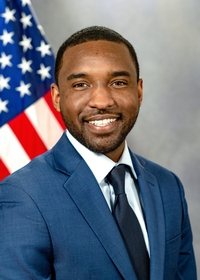
Rep. Anthony Bellmon
Sponsored bills
Maddy summaryHB 769 requires Pennsylvania public schools (excluding fully online cyber charters) to provide dedicated physical space for libraries or information centers and maintain a library collection of at least 1,000 items per grade served, including print and nonprint materials like audio-visual equipment, starting in the 2026-2027 school year. The State Board of Education will establish building standards for library spaces and review these requirements every ten years. School boards must design spaces following the State Board's guidance, and the Secretary of Education can deny approval for construction projects that fail to meet the standards. This bill amends the Public School Code to ensure schools have adequate library resources for student learning.
Maddy summaryHB 98 creates a licensing system for electrical contractors, electricians, and apprentice electricians in Pennsylvania. It establishes the State Board of Electrical Licensure to set qualifications, require continuing education, mandate liability insurance, and enforce standards. The bill directly affects individuals and businesses performing electrical work in buildings, including installation, repair, and maintenance of electrical systems. Key provisions include setting licensing fees, imposing fines for violations, and creating enforcement mechanisms for the Board to suspend or revoke licenses. The bill also includes an appropriation for the Board's operations.
Maddy summaryThis bill adds music therapy to Pennsylvania's existing licensing framework for mental health professionals. It creates a new "licensed professional music therapist" category and defines "practice of music therapy" to include clinically proven techniques like music improvisation, songwriting, and music-based assessments. The State Board of Social Workers, Marriage and Family Therapists, Professional Counselors, and Professional Music Therapists will regulate this new license. It directly affects individuals who provide music therapy services independently, requiring them to hold this specific license while clarifying that existing healthcare providers (like hospitals or schools) aren't required to obtain it for their employment.
Maddy summaryHR 12 is a ceremonial resolution recognizing February 2025 as "Black History Month" in Pennsylvania. It does not create new laws or policies but formally acknowledges the month through the House of Representatives. The resolution highlights the historical origins of Black History Month, including Dr. Carter Godwin Woodson's founding of the Association for the Study of African American Life and History, and notes the 2025 theme focused on African Americans and labor. This resolution directly affects Pennsylvania residents by designating the month for commemoration, without altering any legal rights or obligations.
Maddy summaryHB 489 establishes Pennsylvania's Public Arts Grant Program and Public Arts Fund, administered by the Department of Community and Economic Development. The bill provides grants to community organizations and artists (based in Pennsylvania) to create free, publicly accessible public art - such as murals or sculptures - that depicts or benefits historically marginalized communities. Grants are capped at $100,000 per recipient, require a three-year completion timeline, and mandate that applications include details on accessibility, community impact, and required permits. The bill also transfers $10 million from the General Fund to the Public Arts Fund upon enactment.
Maddy summaryHB 428 establishes the Pennsylvania Artist Fellowship Grant Program, providing $100,000 annual grants to up to 25 eligible artists in the state. The program directly affects Pennsylvania residents aged 18+ who are visual, media, film, or performing artists with regular creative practice, not enrolled in school, and who produce community-accessible work. Key provisions include the Pennsylvania Council on the Arts administering applications, disbursement, and record-keeping, with grants permitted for project costs (materials, travel, housing) but prohibited for political activities or lobbying. The bill appropriates $2.5 million for grants and $250,000 for administration from the General Fund, effective 60 days after enactment.
Maddy summaryHB 339 requires Pennsylvania public schools (including districts, charter schools, and cyber charters) and eligible nonpublic schools to implement daily mental health check-ins for all kindergarten through 12th-grade students starting in the 2025-2026 school year. The bill mandates school entities to adopt policies identifying students experiencing stress, anxiety, depression, or at risk of suicide/self-harm based on their check-in responses. The state Department of Education must create and provide a model policy to all schools upon request. This policy change directly affects all K-12 students and school staff in Pennsylvania's public and qualifying nonpublic schools.
Maddy summaryHB 332 requires Pennsylvania public schools (K-12) to incorporate media literacy education into their curriculum starting the school year after the law takes effect. The state Department of Education must develop an age-appropriate model curriculum within six months, covering skills like identifying bias, recognizing misinformation, understanding media influence, and evaluating messages. School districts must adopt this curriculum, and the state will provide free resources and teacher training through public websites. This law directly affects all Pennsylvania public school students and educators by mandating concrete media literacy instruction.
Maddy summaryHB 215 requires every public school in Pennsylvania to employ at least one certified professional librarian. The bill amends the Public School Code of 1949 to mandate that each school must have a librarian certified under Pennsylvania law (24 Pa.C.S. § 9319). This directly affects all public schools statewide by establishing a new staffing requirement for library professionals. The provision takes effect 60 days after the bill is enacted, with no exemptions specified. The change applies uniformly to all public schools, regardless of size or location.