

Maddy summaryHB 371 amends Pennsylvania's Keystone Opportunity Zone Act to add new requirements for businesses seeking tax exemptions, deductions, or credits. It directly affects businesses operating within designated Keystone zones that make capital investments exceeding $25,000 for construction, reconstruction, or facility repairs. The key provision mandates that 70% of workers on such projects must be "skilled craft laborers" (defined as those with relevant training or apprenticeship completion), and all workers must receive the state-mandated prevailing wage rate. Businesses must verify these requirements annually through the Department of Labor and Industry, enforcing existing Pennsylvania Prevailing Wage Act standards for qualifying projects.
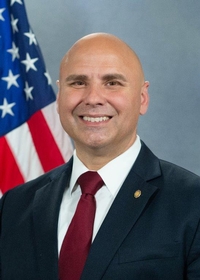
Rep. Bob Merski
Sponsored bills
Maddy summaryHB 367, the Flexible Working Arrangements Act, gives employees in Pennsylvania with employers of 50+ staff the right to request flexible work options like adjusted hours, remote work, or job sharing once yearly. Employers must consider these requests in good faith, respond in writing if requested, and cannot retaliate - though they may deny requests only if they would harm business operations (e.g., cause excessive costs or disrupt service). The Department of Labor and Industry will enforce the law, issuing warnings for first violations and imposing up to $500 per violation for repeat offenses. The bill does not override existing employment rights or collective bargaining agreements.
Maddy summaryHB 317 requires creators and distributors of AI-generated content in Pennsylvania to watermark at least 30% of images, text, simulations, or videos with 50% opacity and the label "Artificial Intelligence Generated Material." It directly affects individuals and businesses producing AI content, with exceptions for film/TV productions using AI for visual effects without involving specific individuals or with their written consent. Violations carry a $1,000 fine for a first offense and $10,000 for repeat offenses within five years. The law takes effect 60 days after enactment.
Maddy summaryHB 341 requires Pennsylvania public schools to install certified point-of-use filters on all drinking water outlets by January 1, 2027, and replace older fountains without filters with bottle-filling stations or filtered fountains (at least one per 100 students/staff). It establishes a $10 million annual Safe Schools Drinking Water Fund to provide grants for filter installation and fountain replacement, prioritizing schools built before 2014 and those serving prekindergarten students. The bill also mandates schools to publicly report their compliance plans, filter maintenance schedules, and lead risk information online, while new outlets must meet strict lead-leaching standards (NSF 61). This directly affects all Pennsylvania public school entities, focusing on reducing lead exposure in drinking water.
Maddy summaryHB 288 amends Pennsylvania's Tax Reform Code to add new requirements for construction tax credits, affecting taxpayers making capital expenditures over $25,000 for facility construction or renovation. To qualify for these credits, taxpayers must verify good-faith local hiring efforts and confirm that all workers on the project are paid the prevailing wage rate under Pennsylvania's Prevailing Wage Act. The Department of Labor and Industry will enforce these rules, requiring pre-construction wage rate determinations and compliance with prevailing wage standards for all new construction jobs. Violations of these requirements could trigger a 10% refund of the awarded tax credit.
Maddy summaryHB 292 creates a new offense for candidates or their representatives who fail to remove campaign signs from public property by the legally required deadline - either as set by local ordinance or within 10 days after an election. Violators face a minor offense penalty, including a $50-$300 fine and 5-30 hours of community service focused on removing campaign signs and litter. The law specifically targets political campaign signage on public property, directly affecting candidates and their agents during election cycles. It does not alter existing local signage rules but adds a statewide penalty for non-compliance after elections.
Maddy summaryHouse Resolution 24 designates January 23, 2025, as "Maternal Health Awareness Day" in Pennsylvania to honor women who have died from pregnancy or childbirth complications. The resolution aims to raise public and healthcare awareness about maternal mortality, particularly highlighting racial disparities where Black women in Pennsylvania face a maternal mortality rate of 163 deaths per 100,000 live births - over twice the rate of other groups. It does not create new laws or funding but encourages community and healthcare engagement through designated awareness activities. This symbolic gesture aligns with Pennsylvania’s existing Maternal Mortality Review Committee efforts established under Act 24 of 2018.
Maddy summaryThis resolution designates February 2025 as "Career and Technical Education Month" in Pennsylvania. It does not create new laws or funding but formally recognizes the importance of career and technical education (CTE) programs through a state-wide observance. The resolution highlights CTE's role in providing students with skills, credentials, and pathways to stable careers, noting that approximately 68,576 students (12% of high school grades) participated in CTE programs in 2024. It directly affects Pennsylvanians by raising public awareness of CTE's value to students, businesses, and the state's economy.
Maddy summaryHB 286 allows Pennsylvania seniors meeting specific criteria to lock their property tax payments at the "base year" amount. To qualify, applicants must be at least 65 years old (or meet widow/widower/disabled criteria), live in their home for 10+ years, and have household income under $45,000 annually. Political subdivisions would implement the program through annual applications requiring proof of ownership, tax payment history, and income eligibility. The Department of Revenue would track participation and submit a legislative report by 2030.
Maddy summaryHB 215 requires every public school in Pennsylvania to employ at least one certified professional librarian. The bill amends the Public School Code of 1949 to mandate that each school must have a librarian certified under Pennsylvania law (24 Pa.C.S. § 9319). This directly affects all public schools statewide by establishing a new staffing requirement for library professionals. The provision takes effect 60 days after the bill is enacted, with no exemptions specified. The change applies uniformly to all public schools, regardless of size or location.