

Maddy summaryHB 1650 establishes Pennsylvania's Home Preservation Grant Program, administered by the Department of Community and Economic Development. It provides grants to local governments (counties, cities, townships) to fund repairs and improvements on existing owner-occupied homes, targeting households earning 80-120% of the area median income. Grants can cover up to $50,000 per unit for habitability fixes, energy/water efficiency upgrades, or accessibility modifications, with local governments allowed to use up to 10% of funds for administration. Applications must demonstrate experience in housing rehabilitation and include plans for using funds per the bill's requirements, with priority given to projects leveraging additional funding sources.
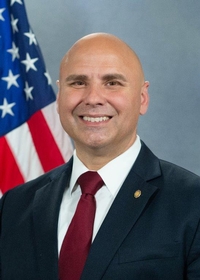
Rep. Bob Merski
Sponsored bills
Maddy summaryHR 173 is a non-binding resolution urging Congress to establish a National Infrastructure Bank. It does not create new laws or funding but formally requests Congress take action to create this bank, which would provide financing for infrastructure projects. The resolution directly affects Congress itself, as it calls on the legislative body to initiate this specific action. This is a procedural measure with no immediate policy impact, as it only expresses a recommendation.
Maddy summaryHB 1610 amends Pennsylvania's corporate tax rules to change how businesses with multiple related entities (unitary businesses) calculate their state tax liability. Starting in 2026, these businesses will determine Pennsylvania tax based on their total sales within the state relative to their nationwide sales, using a new "water's-edge" apportionment method. The bill specifically revises definitions and tax calculation rules for corporations, including adjustments to how income from intercompany transactions is treated and how nonbusiness income is allocated. This primarily affects large corporations operating across state lines as unified business groups. The changes aim to align Pennsylvania's tax calculation with federal reporting requirements for such entities.
Maddy summaryHB 1445 requires health insurers in Pennsylvania to cover medically necessary health services provided in schools - such as mental health care, behavioral health services, and speech therapy - without denying coverage solely because the service occurs in a school setting. It prohibits insurers from excluding coverage based on location (e.g., through "school setting" or "place of service" exclusions), applying to public, charter, cyber charter, and private schools. Exceptions allow denials if services are provided by unlicensed individuals, are not medically necessary per insurer policies, or conflict with existing legal obligations (like IEPs). This law directly affects students receiving school-based care, insurers, and school entities, ensuring coverage parity for services delivered on school premises.
Maddy summaryThis resolution designates June 8, 2025, as "Lieutenant Colonel George Hardy Day" in Pennsylvania to honor his military service and community leadership. It specifically recognizes Lieutenant Colonel George Hardy, a Tuskegee Airmen veteran who flew 21 combat missions in WWII, later served in the Korean and Vietnam Wars, and received the Distinguished Flying Cross and Congressional Gold Medal. The resolution commemorates his 100th birthday and his post-military work mentoring pilots and supporting community organizations. As a ceremonial resolution, it has no policy impact beyond this symbolic recognition.
Maddy summaryHB 1347 establishes a framework for creating tourism improvement districts (TIDs) in local areas. These districts can collect special fees from participating businesses to fund tourism promotion, infrastructure, and marketing projects. The bill requires each TID to form a management association to oversee funds and operations, with mandatory annual financial audits. This directly affects local governments, tourism businesses within designated districts, and residents who may see changes to tourism-related services and facilities.
Maddy summaryHB 1403 modifies Pennsylvania's teacher certification rules to make it easier for educators between jobs to maintain their licenses. It creates "inactive certification" for teachers not employed by a school district, allowing them to reactivate their license by either completing 30 hours of professional development within 18 months or securing a job offer that guarantees 30 hours of training during their first two years. The bill directly affects currently licensed teachers who are not actively teaching but wish to preserve their certification status. Key provisions include eliminating cost for inactive status and establishing two clear pathways to reactivation, with specific guidelines for schools to follow. The changes take effect 60 days after enactment.
Maddy summaryHB 350 updates Pennsylvania's laws on inheritance, parentage, and court procedures. It establishes the Uniform Parentage Act, creating new rules for establishing parent-child relationships through assisted reproduction, surrogacy agreements, and genetic testing, while repealing outdated paternity acknowledgment provisions. The bill modifies hearing requirements for adoption and parental rights termination, requiring specific notice to putative fathers and clarifying when parental rights may be terminated without their presence. It also adds protections for executors who fail to notify estates about assisted reproduction births that could affect inheritance. These changes directly affect families navigating adoption, surrogacy, inheritance disputes, and court cases involving parentage.
Maddy summaryHB 1404 amends Pennsylvania's teacher certification rules to create new pathways for career-changers and technical educators. It establishes a "Career and Technical Second Career Certificate" valid for up to five years while completing 18 semester hours in an approved program, and adds "Career and Technical Intern" and "Career and Technical Instructional" certificates for those with occupational experience. The bill replaces outdated regulations (22 Pa. Code Ch. 49) and requires postbaccalaureate programs to offer flexible training for candidates with bachelor's degrees in relevant fields. These changes directly affect individuals seeking teaching roles in career and technical education programs who lack traditional teaching credentials.
Maddy summaryHB 811 would create civil liability for political candidates who make false statements about themselves or others during campaigns. It allows affected individuals or entities to sue for damages if a candidate knowingly makes a fraudulent misrepresentation. The bill directly affects candidates running for office and voters who may be misled by false claims. Key provisions establish a legal pathway for civil lawsuits rather than criminal penalties, requiring proof of intentional falsehoods. This bill is currently in the Communications & Technology committee after passing final passage.