

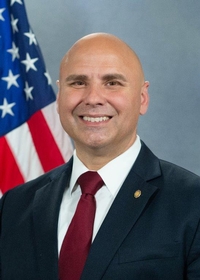
Photo of Bob Merski
D Pennsylvania House · District 2 On the 2026 ballot

Rep. Bob Merski

Compare
Total votes
6,242
all sessions
Attendance
99%
32 missed
Near the chamber average
With party
98%
of cast votes
Near the chamber average
Bipartisan score
1%
crosses aisle rarely
Near the chamber average
Sponsored
770
bills & resolutions
Higher than 75% of chamber peers
Committees
5
assignments
770 bills and resolutions

Sponsored bills

Total
770
Primary
51
Co-sponsor
719
This page
770
matching current filters
Co-sponsor HB 1775
In committee · Pennsylvania House · Co-sponsor
An Act amending the act of March 4, 1971 (P.L.6, No.2), known as the Tax Reform Code of 1971, in entertainment production tax credit, further providing for definitions and for limitations, providing for audits, further providing for limitations and providing for formal review by department, for creative professionals tax credit and for miscellaneous provisions.

Maddy summaryHB 1775 modifies Pennsylvania's entertainment production tax credit program under the 1971 Tax Reform Code. It updates definitions, adds limitations on credit eligibility, and establishes new audit procedures for businesses claiming the credit. The bill also creates a formal review process for the Department of Revenue to examine credit claims. Additionally, it introduces a separate tax credit for creative professionals working in the entertainment industry. The bill was recently referred to the Finance Committee for further consideration.

In committee Aug 4, 2025 1 co-sponsor
Co-sponsor HB 1319
Passed · Pennsylvania House · Co-sponsor
An Act amending the act of August 24, 1963 (P.L.1175, No.497), known as the Mechanics' Lien Law of 1963, in definitions, further providing for definitions.

Maddy summaryHB 1319 amends Pennsylvania's Mechanics' Lien Law of 1963 by updating the definition of "Materials" to explicitly include "rented equipment reasonably necessary for construction." This change directly affects contractors, suppliers, and property owners involved in construction projects who use lien claims to secure payment. The bill clarifies that equipment rented for construction - like scaffolding or heavy machinery - counts as "Materials" under lien law, ensuring it qualifies for payment protection. The amendment makes the existing law clearer but does not create new requirements or obligations. The bill passed in July 2025 and takes effect 90 days after enactment.

Passed Jul 24, 2025 1 co-sponsor
Co-sponsor HB 1697
Passed · Pennsylvania House · Co-sponsor
An Act amending the act of June 13, 1967 (P.L.31, No.21), known as the Human Services Code, providing for liability for false claims, for adoption of congressional intent of the Federal False Claims Act, for damages, costs and civil penalties, for powers of Attorney General, for qui tam actions and for civil investigative demands; and establishing the Fraud Prevention and Recovery Account.

Maddy summaryHB 1697 amends Pennsylvania's Human Services Code to create a state-level False Claims Act, directly affecting healthcare providers, contractors, and organizations receiving state funds (like Medicaid or welfare programs). It makes individuals or entities liable for three times the damages plus penalties if they knowingly submit false claims, make false records, or conceal obligations to the state. The bill establishes "qui tam" lawsuits allowing whistleblowers to sue on behalf of the state and creates a Fraud Prevention and Recovery Account to hold recovered funds. These provisions align Pennsylvania's law with the federal False Claims Act to combat fraud in public spending.

Passed Jul 23, 2025 1 co-sponsor
Co-sponsor HB 938
Passed · Pennsylvania House · Co-sponsor
An Act amending the act of March 10, 1949 (P.L.30, No.14), known as the Public School Code of 1949, in the State System of Higher Education, further providing for Board of Governors.

Maddy summaryHB 938 amends the Public School Code of 1949 to update governance rules for the Board of Governors overseeing the State System of Higher Education. It directly affects the board members, public universities, and the administrative structure of the higher education system. The bill modifies provisions related to the board's composition, responsibilities, or operational procedures under the existing code, though specific changes are not detailed in the provided context. The bill passed the legislature on July 14, 2025, and was referred to the Education committee for further action.

Passed Jul 22, 2025 1 co-sponsor
Co-sponsor HB 1429
Passed · Pennsylvania House · Co-sponsor
An Act amending the act of June 13, 1967 (P.L.31, No.21), known as the Human Services Code, in public assistance, providing for report on transition to chip-enabled access cards.

Maddy summaryHB 1429 requires the state agency administering public assistance programs (like food stamps or cash aid) to submit a report detailing a transition plan to replace current access cards with secure chip-enabled electronic cards. The bill directly affects recipients of public assistance and the agencies managing these programs by mandating a formal report on how the switch to chip cards will be implemented. Key provisions include specifying the report must cover timelines, costs, and how the transition will ensure continued access for beneficiaries. This is a procedural bill focused on reporting requirements, not altering benefit eligibility or funding.

Passed Jul 17, 2025 1 co-sponsor
Co-sponsor HB 1575
Passed · Pennsylvania House · Co-sponsor
An Act amending the act of March 4, 1971 (P.L.6, No.2), known as the Tax Reform Code of 1971, in tax credit and tax benefit administration, further providing for definitions; and providing for factory or mill building economic revitalization.

Maddy summaryHB 1575 creates a new tax credit program to revitalize vacant industrial properties in Pennsylvania. It directly affects building owners of pre-1973 factories or mills that have been at least 75% vacant for 24 months and are designated by their municipality for rehabilitation. The bill establishes a credit equal to 20% of qualified renovation costs (like structural repairs or equipment upgrades) that meet specific value thresholds, applied against certain business taxes. To qualify, properties must be rehabilitated for mixed commercial/residential use, and the program is administered by the Department of Community and Economic Development.

Passed Jul 14, 2025 1 co-sponsor
Co-sponsor HB 1708
In committee · Pennsylvania House · Co-sponsor
An Act amending Title 75 (Vehicles) of the Pennsylvania Consolidated Statutes, in licensing of drivers, further providing for schedule of convictions and points; in rules of the road in general, further providing for meeting or overtaking school bus; in other required equipment, further providing for general requirements for other vehicles transporting school children; and making editorial changes.

Maddy summaryHB 1708 updates Pennsylvania's vehicle laws to strengthen school bus safety and adjust driver point penalties. It adds 5 points (and 60-day suspension for repeat offenses) to the driver point system for failing to stop for a school bus with flashing red lights or for a school vehicle, directly affecting drivers who violate these rules. The bill also requires school vehicle drivers to activate hazard lights 100-300 feet before stopping and prohibits passing while the bus is stopped for loading/unloading. Violations carry a $250 fine plus a $35 surcharge deposited into the School Bus Safety Grant Program.

In committee Jul 8, 2025 1 co-sponsor
Co-sponsor HB 1234
Passed · Pennsylvania House · Co-sponsor
An Act amending the act of June 13, 1967 (P.L.31, No.21), known as the Human Services Code, in public assistance, providing for coverage for blood pressure monitors.

Maddy summaryHB 1234 amends Pennsylvania's Human Services Code to require public assistance programs to cover the cost of blood pressure monitors for eligible recipients. This change directly affects individuals enrolled in state public assistance programs who need blood pressure monitoring for health management. The bill adds blood pressure monitors to the list of covered medical equipment under the public assistance program, ensuring these devices are provided without cost to recipients. It does not change eligibility requirements but expands existing coverage to include this specific monitoring tool. The bill passed final passage on July 1, 2025, and was referred to the Health & Human Services committee.

Passed Jul 8, 2025 1 co-sponsor
Co-sponsor HB 309
Signed into law · Pennsylvania House · Co-sponsor
An Act amending the act of October 5, 1978 (P.L.1109, No.261), known as the Osteopathic Medical Practice Act, further providing for power to license, for visiting team physician and for licenses, exemptions, nonresident practitioners, graduate students, biennial registration and continuing medical education.

Maddy summaryHB 309 amends Pennsylvania's Osteopathic Medical Practice Act (1978) to update licensing rules for osteopathic physicians and related healthcare providers. It changes registration requirements from annual to biennial (every two years), clarifies rules for visiting team physicians at sports events, and adjusts continuing medical education requirements. The bill directly affects licensed osteopathic physicians, nonresident practitioners, medical students, and healthcare facilities employing osteopathic staff. Signed into law on July 7, 2025 (Act No. 29), it streamlines administrative processes without creating new licensing barriers.

Signed into law Jul 7, 2025 1 co-sponsor
Co-sponsor HB 1590
Passed · Pennsylvania House · Co-sponsor
An Act amending the act of June 13, 1967 (P.L.31, No.21), known as the Human Services Code, in public assistance, providing for abrogation of regulatory requirements for payment for clinic services within physical confines of clinic facilities.

Maddy summaryHB 1590 removes specific regulatory requirements that clinics must meet to receive payment for services provided within their own facilities under public assistance programs like Medicaid. This change directly affects clinics offering on-site care covered by these programs, simplifying their billing process. The bill amends the Human Services Code to eliminate the need for clinics to comply with certain prior payment rules when services occur inside their physical premises. It focuses solely on modifying reimbursement procedures without altering eligibility or funding levels.

Passed Jul 1, 2025 1 co-sponsor
Showing 191 to 200 of 770 bills
Previous 1 … 19 20 21 … 77 Next