

Maddy summaryHB 2195 establishes a $1,000 tax credit for Pennsylvania resident individuals who adopt a child under 18 years old in the year the adoption is finalized. The credit applies only once per adopted child and may be claimed jointly by filing spouses, but not for children who are the spouse's biological child. To claim the credit, taxpayers must submit proof with their tax return, and the Department of Revenue must annually report usage statistics (including total claims and amounts) to the General Assembly starting in 2027. The credit applies to tax years beginning after December 31, 2025.
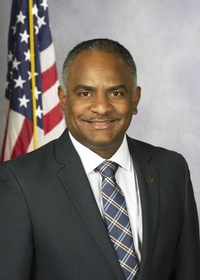
Rep. Danilo Burgos
Sponsored bills
Maddy summaryHB 2152 amends Pennsylvania's Public School Code to allow school districts to use state grant funds for shifting secondary school start times to no earlier than 8:30 a.m., requiring the new time to be at least 15 minutes later than current start times. School entities must adopt a policy for the later start time and inform communities about the health and academic benefits of adequate sleep for students before implementation. The Department of Education must provide guidance and support to schools planning this change, including public awareness campaigns. This applies to all Pennsylvania school districts and charter schools serving grades 7-12.
Maddy summaryHB 603 extends the time employees have to file a lawsuit after retaliation under Pennsylvania's Whistleblower Law, changing the deadline from 180 days to two years. It clarifies that successful whistleblowers can recover back pay, reinstatement of benefits and seniority, and full legal costs including attorney fees. The bill also specifies that punitive damages may be awarded only if retaliation was intentional or showed reckless disregard for employee rights. These changes directly affect Pennsylvania employees who report violations of state, local, or federal law and face retaliation. The bill does not create new protections but strengthens enforcement mechanisms for existing whistleblower safeguards.
Maddy summaryHB 1648 amends Pennsylvania's Public School Code to establish "mental health days" as an excused absence for students, directly affecting public, nonpublic, and private school students. Schools must adopt policies by the 2026-2027 school year allowing up to two consecutive days off for mental or physical fatigue due to mental health-related stressors, whether certified (like anxiety) or uncertified (like bullying or family trauma). The bill prohibits more than three mental health days in a week or two consecutive weeks, except as permitted by school policies. The state Department of Education will develop model guidelines within 90 days to help schools implement these policies.
Maddy summaryThis is a symbolic resolution, not a law, recognizing February 27, 2026, as "Dominican Republic Independence Day" in Pennsylvania. It has no policy impact or effect on any specific group; it is purely a ceremonial acknowledgment. The resolution cites the Dominican Republic's independence from Haiti in 1844 and the state's Dominican-American community as context. It does not create new requirements, change existing laws, or allocate funding.
Maddy summaryHR 244 is a resolution directing the Legislative Budget and Finance Committee to review how Philadelphia's Public Health Department enforces tobacco sales restrictions at retail outlets. It specifically examines whether investigations into compliance with tobacco sales rules are conducted consistently and fairly across the city. The audit will assess if the department meets its goals for reducing tobacco use, as outlined in its state-funded program. The committee must report findings within 18 months of the resolution's adoption.
Maddy summaryThis House Resolution urges Pennsylvania's Secretary of the Commonwealth to collaborate with the U.S. Secretary of State and federal partners to compile and publicly share a list of vetted humanitarian, nonprofit, and faith-based organizations in Haiti. It aims to help Pennsylvania residents - particularly those with Haitian connections - safely and effectively support relief efforts amid Haiti's ongoing crisis. The resolution also encourages state agencies and community groups to identify ethical partnership opportunities for aiding Haitian recovery, aligning with recent UN humanitarian reports on Haiti's needs. As a non-binding resolution, it does not create new laws but requests coordinated action to streamline assistance pathways.
Maddy summaryThis Pennsylvania House resolution (HR 397) urges the U.S. Congress to pass H.R. 2540, the SSI Savings Penalty Elimination Act. The resolution supports increasing Supplemental Security Income (SSI) resource limits from $2,000 (individual) and $3,000 (couple) to $10,000 and $20,000, respectively - adjusting for inflation since 1989. It directly affects SSI recipients (primarily seniors, people with disabilities, and low-income individuals) who currently lose benefits or face penalties for holding savings or assets above current limits. The resolution notes that current rules cause over 70,000 annual benefit reductions and 40,000 terminations, limiting financial security and housing options.
Maddy summaryHB 2148 requires Pennsylvania school entities (including school districts, charter schools, and cyber charters) to adopt policies ensuring all students, parents, guardians, and school personnel can access school property regardless of immigration status. Specifically, schools must develop and publicly adopt inclusive policies within 90 days of the bill’s effective date, requiring school boards to approve these policies via public resolution with 45 days’ notice. Policies must be published in all languages spoken by students at home and reviewed quarterly to maintain accessibility. The bill explicitly prohibits immigration or law enforcement officials (including ICE, Customs, and local agencies acting under federal immigration authority) from restricting access to school zones without proper legal process. This directly affects all Pennsylvania public and private schools serving students, mandating concrete procedural changes to protect school access.
Maddy summaryHB 2135 requires Pennsylvania employers to reasonably accommodate employees experiencing pregnancy, childbirth, menopause, or related medical conditions (like lactation or managing vasomotor symptoms). Key provisions include prohibiting employers from refusing such accommodations unless it creates an "undue hardship" (considering cost and business size), banning forced leave when alternatives exist, and mandating written notices about these rights to all employees. Employers must provide accommodations like modified schedules, more breaks, or temporary position changes, while protecting employees from retaliation for requesting them. The bill applies to all Pennsylvania employers and takes effect 60 days after enactment.