

Maddy summaryHB 658 allows first-class cities and townships in Pennsylvania to temporarily hire retired police officers back for up to five years to address staffing shortages. Police departments must establish a program where retired officers complete an eight-week training course and agree not to have disciplinary records. Retired officers must choose between keeping their full retirement benefits or temporarily pausing them during participation, with credited service for retirement benefits applied upon return. The program expires six years after implementation and only applies to officers retiring before the bill's effective date.
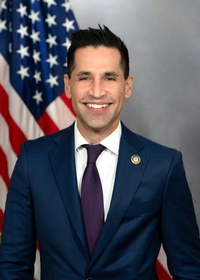
Rep. Tarik Khan
Sponsored bills
Maddy summaryHB 669 amends Pennsylvania's Election Code to establish standardized early voting procedures for all county elections. The bill requires counties to offer in-person early voting for 30 days before each election (ending the day before Election Day), with specific operating hours: weekday mornings to mid-afternoon, extended hours on the final weekend, and additional holiday hours. It mandates county boards to set up permanent early voting locations based on population size (e.g., at least one location in each of the three largest municipalities in counties over 250,000 people). This directly affects all registered Pennsylvania voters by expanding access to early voting through structured, location-based provisions.
Maddy summaryHB 676 establishes the First Responder Resilience Grant Program to help first responder organizations (like police, fire, and emergency medical services) cover costs for embedding mental health resilience coaches. The program provides competitive grants to defray salaries and overtime for these coaches, who deliver evidence-based support such as stress reduction, peer mentoring, and suicide prevention services. The Pennsylvania Emergency Management Agency will administer the program and manage the dedicated First Responder Resilience Grant Fund. This bill directly affects first responder organizations by enabling them to access funding for mental wellness support tailored to the unique stressors of their work.
Maddy summaryHR 83 is a resolution directing Pennsylvania's Joint State Government Commission to study how to require sustainable building materials in state-funded and private construction projects. The study will examine feasible methods, implementation criteria, and projected cost impacts (both savings and increases) for expanding such requirements. The Commission must submit a report to relevant House committees within 180 days of the resolution's adoption. This resolution does not create new requirements but seeks to inform future policy decisions.
Maddy summaryHB 671 requires oil and gas companies and land brokers to use plain language in contracts with landowners for property leases or sales. It mandates contracts be written with short sentences, active verbs, clear definitions of industry terms, and easy-to-read formatting (like bold section headings and clear fonts). Landowners who sign non-compliant contracts can seek $10,000 in statutory damages, actual losses, attorney fees, and other remedies. The law applies to all new contracts or modifications signed on or after its effective date (one year after enactment) and excludes cases where landowners drafted the contract or companies made good-faith compliance efforts.
Maddy summaryHB 662 amends Pennsylvania's Hazardous Sites Cleanup Act to clarify definitions and add new requirements for site owners. It updates the definition of "department" to specify the Department of Environmental Protection and creates a new section requiring owners of identified contaminated sites to conduct annual release testing for hazardous substances. Owners must also reimburse the department as outlined in existing section 507. This bill directly affects property owners at sites containing hazardous substances above background levels, including federal Superfund sites. The changes take effect 60 days after enactment.
Maddy summaryHB 665 amends Pennsylvania's Solid Waste Management Act to strengthen testing requirements for residual waste facilities. It requires facilities handling residual waste to test incoming waste and outgoing drainage water (leachate) for specific contaminants: water quality chemicals (chloride, bromide, sulfate, nitrate), hazardous characteristics (toxicity, corrosivity, ignitability), and naturally occurring radionuclides (uranium, radium, radon). Facilities must compare these test results quarterly and report them to the state environmental department and local municipalities. This directly affects waste processing and landfill operators managing residual waste, ensuring more comprehensive monitoring of potential environmental impacts.
Maddy summaryHB 619 requires Pennsylvania employers to provide employees with up to two hours of paid time off to vote in elections, affecting all public and private sector workers in the state. The bill mandates that employees give employers at least two working days' notice before an election and prohibits employers from asking about voting preferences or party affiliation. Employers must post a uniform notice about this policy (available from the Secretary of the Commonwealth) at least 10 days before an election and face fines of $100-$500 for violations. The law aims to ensure voting access without penalty, with employees required to verify voting attendance to retain paid time off.
Maddy summaryHB 642 increases penalties for oil and gas regulation violations in Pennsylvania. It raises fines for general violations from $1,000 to $2,000 per day and for willful violations from $5,000 to $10,000 per day, with potential jail time. The bill also prohibits the department from waiving these fines and specifies that the department, Attorney General, or county prosecutors can pursue penalties. This directly affects oil and gas operators who violate state regulations.
Maddy summaryHB 675 bans the sale or distribution of firefighting personal protective equipment (PPE) containing intentionally added PFAS chemicals in Pennsylvania starting January 1, 2028, directly affecting manufacturers, sellers, and distributors of such gear. The law includes an exception if the State Fire Commissioner determines PFAS use is unavoidable and issues official guidance. Violations carry civil penalties of up to $5,000 for first offenses and $10,000 for repeat offenses, with fines split equally between the Fire Company Grant Program and Emergency Medical Services Grant Program. This bill aims to reduce exposure to harmful PFAS chemicals while maintaining safety standards for firefighters.