

Maddy summaryHB 698 would require all food and beverage containers sold in Pennsylvania to contain no more than 0.1 parts per billion of bisphenol A (BPA), directly affecting manufacturers, sellers, and distributors of such containers. The bill prohibits containers with BPA above this level and mandates that manufacturers replace BPA with the least toxic alternative, while banning substitutions with known carcinogens or reproductive toxicants identified by the EPA. Violations would be enforced under Pennsylvania’s existing Unfair Trade Practices and Consumer Protection Law, and the law would take effect 60 days after enactment. This focuses on setting a measurable safety standard for consumer products without advocating for specific outcomes.
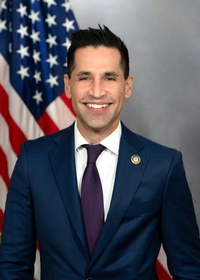
Rep. Tarik Khan
Sponsored bills
Maddy summaryHB 623 amends Pennsylvania's Tax Reform Code of 1971 to clarify the definition of "compensation" for personal income tax purposes. It adds a new subsection defining "domestic abuse" to include physical, psychological, sexual, emotional, or economic abuse, including control tactics and abuse targeting family members. This change specifically allows tax-free withdrawals from retirement benefits (under 26 U.S.C. § 72) for individuals who have self-certified as victims of domestic abuse within the past five years, without triggering standard penalties. The bill directly affects Pennsylvania taxpayers who qualify under this new definition and access retirement funds for domestic abuse-related hardship.
Maddy summaryHB 612 amends Pennsylvania's Scrap Material Theft Prevention Act to require scrap processors and recycling facilities to collect specific identification details from sellers during scrap material transactions exceeding $100 or involving catalytic converters. Key provisions include collecting driver's license copies, vehicle license plate numbers, seller signatures, and for catalytic converters, vehicle details (year/make/model/VIN), photographs of the converter, and the seller. The bill also mandates a 48-hour payment hold on catalytic converter transactions until law enforcement or a judge authorizes release, with facilities required to keep converters intact during this period. Violations carry fines starting at $5,000 for catalytic converter non-compliance and up to $2,500 for other failures, with repeat offenses classified as misdemeanors.
Maddy summaryHB 611 requires deconstruction (systematic dismantling to maximize material reuse) for primary dwelling structures (1-4 unit homes built before January 1, 1930) prior to demolition or renovation. It mandates a documented 85% landfill diversion rate by weight and one salvaged item per 500 square meters of structure, with exceptions for economic or practical infeasibility. Only certified deconstruction contractors - verified by the Department of Labor and Industry through a training program - may perform work, and owners or their agents are responsible for compliance. The bill creates new enforcement standards under Pennsylvania's Construction Code Act, focusing on material reuse over recycling or landfill disposal.
Maddy summaryHB 614 establishes Pennsylvania's Shared Housing and Resource Exchange Program, designed to help residents aged 60 or older who need housing find shared living arrangements with approved hosts. The Department of Aging will operate the program, requiring hosts to have at least two bedrooms (with one exclusively for the participant), charge no more than 30% of the participant's gross monthly income in rent, and sign a home-sharing agreement. The department will match participants with hosts based on location, lifestyle, and preferences, then facilitate the agreements. The program will be funded by state appropriations and take effect 60 days after enactment.
Maddy summaryHB 609 requires builders to notify residential property owners about construction defects they discover. Builders must send a written notice within 30 days via certified mail, including a description of the defect, the reason for knowing about it, and their contact information. This applies only to residential properties and does not apply if 15+ years have passed since construction. Builders who fail to notify (without reasonable cause) must pay the owner’s actual damages, but the notice itself doesn’t create liability or limit other legal remedies. The bill takes effect in 60 days.
Maddy summaryHB 631 proposes adding a new "economic bill of rights" to Pennsylvania's state constitution, guaranteeing four specific rights: a living wage for supporting a family (Section 30a), affordable healthcare and health opportunities (30b), safe transportation infrastructure (30c), and safe working conditions (30d). This constitutional amendment would directly affect all Pennsylvania residents by establishing these economic rights as fundamental. The resolution outlines the process requiring two legislative passages by the General Assembly, followed by voter approval at the next eligible election. If approved by voters, it would become part of Pennsylvania's constitution.
Maddy summaryThis resolution urges Pennsylvania's Department of Agriculture and Department of Education to jointly conduct a statewide study of school cafeteria services across all school districts. The study would establish meal quality standards (including portion sizes and vegetarian/vegan options by grade level), compare current meals to those standards, analyze preparation and student meal costs, and recommend legislative actions to improve nutrition. It requires the departments to issue a public report with findings and recommendations within one year. The resolution directly affects all Pennsylvania public school districts by initiating a formal review of meal services and costs.
Maddy summaryHB 637 establishes Pennsylvania's Youth Summer Employment Grant Program, administered by the Department of Labor and Industry. The program provides grants to eligible employers (including businesses, nonprofits, and municipalities) who hire residents aged 15-18 for at least eight weeks during summer, pay at least $15/hour or the state minimum wage, and offer work or educational experiences. Grants amount to $5,000 for 10-20 youth, $10,000 for over 20 youth, with an additional $5,000 if 50% of hired youth live in historically disadvantaged communities (defined as areas with ≥20% poverty for 30+ years). Funding comes from a new nonlapsing Youth Summer Employment Fund in the State Treasury, with the department required to advertise the program to employers and schools.
Maddy summaryHB 629 amends Pennsylvania's 1966 recreational liability law to expand protections for landowners, volunteers, and volunteer organizations that provide unpaid recreational access to the public. It adds definitions clarifying that "volunteers" are unpaid individuals caring for recreational land, and "volunteer organizations" include 501(c)(3) nonprofits or similar groups. The bill states these entities owe no duty to keep premises safe, give warnings about hazards, or assume liability for injuries to recreational users, including during hunting activities. This directly affects landowners who open areas for public recreation through volunteer efforts, ensuring they face no legal liability for ordinary risks. The changes take effect 60 days after enactment.