

Maddy summaryHB 638 prohibits "confession of judgment" clauses in Pennsylvania contracts, which are terms allowing one party to automatically admit a debt and obtain a court judgment without a trial. This affects businesses and consumers by making such clauses void and unenforceable in new agreements. Exceptions apply to contracts signed before the law's effective date or government contracts entered under existing statutes. The bill takes effect 60 days after enactment.
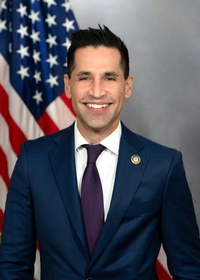
Rep. Tarik Khan
Sponsored bills
Maddy summaryHB 639 amends Pennsylvania's 1974 Loan Interest and Protection Law to require lenders to provide clear, upfront disclosures to small businesses about commercial loan terms. It defines "small business" as a company with fewer than 500 employees and "provider" as lenders or nondepository institutions arranging loans via online platforms. The bill mandates that providers disclose six specific details before finalizing a loan, including total funds, total cost, payment schedule, prepayment policies, and the annualized interest rate. These disclosures must be signed by the small business's agent. The law takes effect 60 days after enactment.
Maddy summaryHB 656 amends Pennsylvania's Public School Code to allow trained school staff to administer emergency anti-seizure medication during seizures when a nurse is unavailable. It directly affects students with epilepsy in public schools who have been prescribed such medication, requiring parental request and adherence to approved training guidelines. The bill establishes that non-nurse staff may provide emergency assistance only after completing designated training and following protocols approved by the Department of Education. It specifies that nasal spray or similar FDA-approved treatments may be used, while ensuring students' rights under disability laws like IDEA and the Rehabilitation Act are upheld. The policy change is voluntary for staff and requires schools to notify parents about potential accommodations under 504 plans or IEPs.
Maddy summaryHB 663 requires bodywork facilities in Pennsylvania - including massage studios, spas, and similar businesses offering bodywork services like massage therapy or acupressure - to obtain a license from the Department of State. The bill establishes a licensing process involving background checks, application reviews, and regular inspections to ensure facilities meet health and safety standards, while prohibiting on-site dormitories. It excludes medical offices, solo practitioners who display their license in advertisements, and businesses offering only non-manipulative services (like topical skin treatments). Violations, such as operating without a license, could result in penalties, and the Department of State will oversee enforcement.
Maddy summaryHB 654 amends Pennsylvania's State Lottery Law to expand access to the Pharmaceutical Assistance Contract for the Elderly Needs Enhancement Tier (PACENET). It raises the income eligibility thresholds for seniors: single individuals with annual incomes between $14,500 and $45,000, and married couples with combined incomes between $17,700 and $55,000, will now qualify. The bill also allows applicants to round income amounts to the nearest whole dollar when reporting. This change directly affects Pennsylvania seniors who rely on PACENET for subsidized prescription drugs by making the program available to more low-to-moderate-income elderly residents.
Maddy summaryHB 77 updates Pennsylvania's food protection laws to align with the 2022 FDA Food Code. It requires retail food facilities (like restaurants and grocery stores) to prominently display employee allergy awareness posters detailing major allergens and symptoms, and to include allergen information on menus or written materials for customers. The bill also revises definitions of "potentially hazardous food" and mandates that the Pennsylvania Department of Agriculture adopt the FDA Food Code standards, with updates published in the Pennsylvania Bulletin. The law takes effect 60 days after enactment.
Maddy summaryHB 600 requires businesses that buy and sell residential homes (without living in them) to obtain a state license. To get licensed, they must pay a $200 fee, provide insurance proof, and pass a background check for recent fraud or dishonesty convictions. Before making an offer to buy a home, these businesses must give homeowners a written disclosure explaining how to find property value estimates and access legal or real estate help. Homeowners can also add their property to a public "do-not-solicit" list to stop being contacted by these businesses. The bill directly affects home-buying businesses and homeowners.
Maddy summaryHB 607 amends Pennsylvania's 1951 Landlord and Tenant Act to protect residential tenants during declared disaster emergencies. It prohibits landlords from evicting tenants who lost jobs due to the emergency or entering rental units to show properties without consent during such periods. Violations carry a minimum $500 penalty per occurrence, and the law specifically applies to residential leases, not commercial properties. The bill takes effect immediately upon enactment and is currently under review by the Housing & Community Development committee.
Maddy summaryHB 592 amends Pennsylvania law to require that full-time waterways conservation officers (who enforce fishing and boating regulations) be paid at the same scale as Pennsylvania State Police officers. The bill directly affects these conservation officers by changing their compensation classification under the Pennsylvania Fish and Boat Commission. It specifies that their pay must align with State Police classifications, rather than existing commission pay scales. The change applies to compensation earned 60 days after the bill's effective date. This is a procedural pay adjustment, not a change to enforcement duties or waterway regulations.
Maddy summaryHB 597 establishes a one-year pilot program allowing Pennsylvania municipalities to hire underemployed and unemployed residents for daily community projects like park repairs and beautification. Participants would receive same-day pay for their work, with the Department of Conservation and Natural Resources required to set eligibility rules, track data, and evaluate the program’s feasibility. The bill directs the department to report findings to the legislature after the pilot ends, without creating a permanent statewide program. It affects local governments and job seekers in participating communities, focusing on testing a temporary work model.