

Maddy summaryHB 899 requires Pennsylvania employers to provide workers with paid sick leave for their own health needs or to care for family members. Employees earn one hour of paid sick time for every 30 hours worked, with a minimum annual accrual of 40 hours. The law prohibits employers from retaliating against workers who use this leave and mandates clear posting of rights. It covers most private-sector employees (excluding federal workers) and applies to all employers with 15+ employees in Pennsylvania, effective upon enactment.
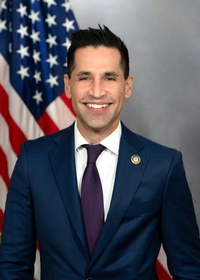
Rep. Tarik Khan
Sponsored bills
Maddy summaryHB 884 establishes Pennsylvania's Four-Day Workweek Pilot Program, allowing private and public employers to test a four-day workweek for at least 30 employees without pay or benefit cuts. Employers participating must apply to the Department of Labor and Industry, submit a transition plan, and allow the department to study impacts through surveys. Qualifying employers receive tax credits of either $250,000 per business or $5,000 per participating employee, capped at $15 million total annually. The program requires the Department of Labor and Revenue to coordinate administration, study outcomes, and encourage public-sector adoption, with the pilot set to expire after its initial implementation period.
Maddy summaryHB 875 amends Pennsylvania's fireworks laws by standardizing definitions and use rules while repealing all existing municipal regulations. It defines "consumer fireworks" to align with federal safety standards (CPSC) and specifies that users must be 18+, avoid certain locations (like near buildings or livestock facilities), and obtain property owner permission for use. The bill eliminates local authority over fireworks by repealing provisions that allowed municipalities to set rules on sales, permits, fees, use hours, and prohibited days. This change means statewide uniform rules replace varying local ordinances, directly affecting consumers, property owners, and livestock facilities. The key policy shift is transferring regulation from local governments to state-level standards.
Maddy summaryThis Pennsylvania House resolution (HR 109) urges the U.S. Congress to establish "Patriots' Day" as a federal holiday. It specifically references the historical significance of the April 19, 1775, battles at Lexington, Concord, and Menotomy (now Arlington) as the start of the American Revolution. The resolution notes that several states (including Massachusetts since 1894, Maine since 1907, and Connecticut since 2018) already observe Patriots' Day on the third Monday in April. As a resolution, it does not create the holiday itself but formally requests Congress take action.
Maddy summaryThis resolution designates March 18, 2025, as "National Transit Worker Appreciation Day" in Pennsylvania. It recognizes the work of approximately 16,800 public transit employees (including bus/train operators, drivers, and maintenance staff) who support over 237 million annual trips for Pennsylvania residents. The resolution does not create new laws or funding but encourages the public to thank transit workers for their role in connecting communities to jobs, healthcare, and education. It specifically highlights concerns about safety risks transit workers face, including recent incidents of violence. The resolution is symbolic and non-binding, limited to Pennsylvania's House of Representatives.
Maddy summaryHB 860 amends Pennsylvania's Public School Code to prohibit public schools from removing library books or instructional materials based on specific reasons, such as an author's race, gender identity, political views, or content about sexuality. It directly affects public school entities (including districts, charter schools, and libraries) by banning "soft censorship" - removing materials outside formal review processes - and requires schools to publicly report such removals. The bill mandates that materials can only be removed following a defined procedure, ensuring decisions are based on educational appropriateness, not personal views. It also requires schools to provide online complaint forms for students or parents who experience unauthorized removals, referencing data showing 457 book challenges in Pennsylvania from 2021-2022. The law aims to protect students' access to diverse learning resources while aligning with First Amendment principles.
Maddy summaryHB 833 proposes a constitutional amendment to add a 4% tax on Pennsylvania residents with annual taxable income exceeding $1 million. This tax would apply only to income above the $1 million threshold, directly affecting high-income earners in the state. The amendment includes an annual cost-of-living adjustment for the income threshold, aligning it with federal tax bracket methodology. This is a policy change to the state constitution, not an immediate law, requiring approval through the constitutional amendment process.
Maddy summaryHouse Resolution 103 designates April 2025 as "National Volunteer Month" in Pennsylvania. The resolution encourages all residents to engage in volunteer activities, highlighting community benefits such as building social connections, supporting local resilience, and providing personal fulfillment as outlined in the resolution's preamble. It does not create new laws or require specific actions, serving as a symbolic recognition of volunteerism's value.
Maddy summaryHB 850 requires hydraulic fracturing service providers and chemical vendors to include a specific tracer substance in the fluid used for unconventional oil and gas well fracturing. The Pennsylvania Department of Environmental Protection must specify tracers that are traceable to the operator and safe for public health and the environment. The Environmental Quality Board will create regulations to implement these requirements. The law applies to all fracturing activities performed on or after its effective date.
Maddy summaryHB 840 establishes the Targeted Industry Cluster Certificate Scholarship Program to provide financial assistance for Pennsylvania residents pursuing specific short-term education programs. The program, administered by the Pennsylvania Higher Education Assistance Agency, offers grants for eligible students enrolled in approved courses that take two to four years to complete, including nursing, public health, and community health bachelor's degrees. The Department of Education and Department of Labor and Industry will collaborate to identify workforce-focused programs and approve eligible educational providers. This bill directly affects students seeking credentials in high-demand fields and requires the agency to set grant awards based on available funding.