

Maddy summaryHB 845 creates a new administrative process for Pennsylvania residents to legally change their name, allowing applications to be submitted directly to the Department of Health (online or at driver's license centers) instead of requiring court petitions for most cases. It requires applicants to provide background information and a county-level criminal record check to confirm no outstanding judgments. The bill maintains court oversight for name changes involving minors when a parent or guardian does not consent, requiring additional documentation to demonstrate reasonable efforts to obtain consent. This change primarily affects individuals seeking name changes, streamlining the process for adults while preserving judicial review for minor-related cases.
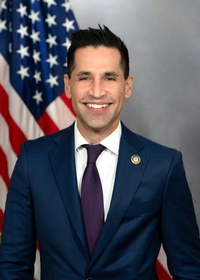
Rep. Tarik Khan
Sponsored bills
Maddy summaryHB 843 amends Pennsylvania's Manufactured Home Community Rights Act to strengthen residents' ability to purchase their community when it faces closure. It requires community owners to provide 120 days' written notice to residents, local authorities, and the Pennsylvania Housing Finance Agency before closing, with residents given at least 180 days to vacate. The bill mandates that owners negotiate in good faith with resident associations representing 25% of spaces or nonprofits acting on residents' behalf, and establishes a process for residents to match competing offers or use a mutually agreed appraiser to set purchase prices if negotiations fail. This ensures residents can prevent displacement by buying the community, with the option to assign purchase rights to local housing authorities to maintain affordable housing.
Maddy summaryHB 851 amends Pennsylvania's Game Code to allow temporary Sunday hunting and dog training for small game, repealing the previous ban on Sunday hunting. It creates new offenses for trespassing on private land while hunting or trapping without written permission and replaces prior rules about Sunday hunting without permission. The bill also requires the Pennsylvania Game Commission to include at least one member actively engaged in agriculture with wildlife management expertise, prohibits the commission from hiring lobbyists to influence state decisions, and mandates an ethics policy emphasizing respect for sportsmen. Additionally, it adds annual reporting requirements for the commission to legislative committees on budget and accountability measures.
Maddy summaryHB 844 creates Pennsylvania's Housing Construction Loan Program and a dedicated Housing Construction Loan Fund under the Pennsylvania Housing Finance Agency. The program provides loans to eligible builders (those operating in Pennsylvania for at least three years) for constructing new homes sold to low- and moderate-income households, and to those households for financing such homes. Key provisions limit loans to 80% of a county’s median home price, cap terms at 15 years, and require all sales to remain affordable to target households. Funds for the program come from state appropriations, grants, and loan repayments, managed through the State Treasury.
Maddy summaryHB 838 creates a program allowing qualified health care facilities - such as hospitals, medical specialist centers, and physical therapy centers - to issue temporary disability parking placards valid for up to six months. Individuals seeking a temporary placard must apply directly to an enrolled facility and sign a statement confirming they meet the disability criteria. The facility then requires a health care provider to certify the disability and submit the application electronically to the state department to update records. This change streamlines access to temporary parking permits without requiring individuals to go through the state’s standard application process.
Maddy summaryHB 831 establishes a 24-month moratorium on transferring hospital ownership to for-profit entities in Pennsylvania. It directly affects hospitals and health systems seeking to change ownership structures, pausing approvals for such transactions. The bill also requires the Joint State Government Commission to study for-profit hospital ownership patterns, including causes for their rise, cost/benefit comparisons with non-profits, and policy recommendations. The Commission must issue a report to state leaders within 18 months of the law's effective date. The moratorium and study requirements expire 24 months after the bill takes effect.
Maddy summaryHB 841 requires Pennsylvania state agencies to complete an annual survey of all Commonwealth-owned real property by March 1 each year. Agencies must identify surplus land and, in consultation with the Department of Community and Economic Development, assess each surplus parcel's potential for affordable housing development for very low-income, low-income, and middle-income households. The Department of Community and Economic Development will compile these surveys, report to the legislature, and evaluate whether surplus properties can be transferred to other agencies for more appropriate use. This bill amends the Administrative Code of 1929 to establish these annual requirements for managing state-owned property.
Maddy summaryHB 837 limits handgun purchases and sales in Pennsylvania to one per person within any 30-day period, applying to most individuals but excluding licensed dealers, collectors, law enforcement, correctional facilities, security companies, antique firearms, and documented cases of stolen or lost handguns (with specific reporting requirements). It establishes the Violence Prevention Account, funded by fines from violations, to support youth violence prevention programs and law enforcement training grants. Sellers must conduct a purchase history check and inform buyers about the 30-day limit and penalties. Violations are misdemeanors for first offenses and felonies for repeat offenses.
Maddy summaryThis resolution directs Pennsylvania's Joint State Government Commission to study Housing First programs across the U.S. and their potential application in Pennsylvania. The study must examine program costs, effectiveness in reducing homelessness (especially among chronically unhoused individuals and veterans), comparisons with traditional shelter models, and impacts of recent events like the pandemic. The commission will compile a report within 18 months covering specific aspects, including Pennsylvania's homeless population demographics and academic effects on unhoused children. This study aims to inform future housing policy decisions without mandating program implementation.
Maddy summaryHB 826 amends Pennsylvania's Human Relations Act to require public venues (like theaters, sports arenas, and events charging admission) to provide free admission for personal care attendants accompanying eligible individuals with disabilities. It defines "attendant care services" to include daily living support such as bathing, mobility assistance, and managing transportation, and specifies that "eligible individuals" are those needing such services due to a disability. The bill prohibits venues from charging personal care attendants for entry when their presence is necessary for the eligible individual to access the event. This directly affects people with disabilities who rely on attendants to participate in public activities and the venues hosting those events.