

Maddy summaryThis bill creates a new Office of Housing Opportunity within Pennsylvania's Department of Community and Economic Development to oversee housing production goals. The office will be led by a Deputy Secretary appointed by the Governor and will work with other state agencies to develop and meet ten-year housing targets. A new advisory committee will be formed to guide the office, including representatives from the General Assembly, local governments, and housing experts. The office will also manage a grant program for residential economic development districts and publish annual reports on housing progress.
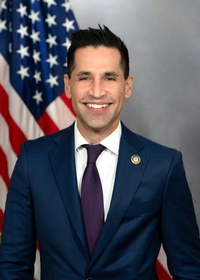
Rep. Tarik Khan
Sponsored bills
Maddy summaryThis Pennsylvania House resolution designates September 2026 as "Healthy Hunger-Free Kids Month" to raise awareness about child hunger and food waste in the state. The document highlights statistics on food insecurity among students and discusses strategies like "share tables" to help reduce waste while providing extra meals. It serves as a symbolic gesture to focus attention on these issues rather than implementing new laws or funding changes.
Maddy summaryThis bill amends Pennsylvania's Construction Code Act to create a funding mechanism for residential construction workforce training. It allows municipalities to charge an optional fee of up to $10 on residential permits, which would be collected and deposited into a new state account. Money from this account would be used to award grants to nonprofits, educational institutions, and local governments for training programs, apprenticeships, and equipment. A key provision requires that these grants be directed to counties where the original permit fees were collected to support local housing needs. The bill also mandates detailed annual reports on how the funds are spent and the outcomes of the training programs.
Maddy summaryThis bill amends Pennsylvania's Municipalities Planning Code to create a streamlined approval process for high-density housing in designated growth areas. It requires the state Department of Community and Economic Development to establish rules that allow municipalities to fast-track land use decisions for vacant lots in zones where such housing is already permitted by right. The expedited process applies specifically to attached or detached homes, including accessory dwelling units, provided they meet minimum density standards and do not involve environmentally sensitive or hazard-prone areas. To support this initiative, the bill mandates the use of pre-approved building plans, concurrent review procedures, and a technical assistance hub to help local governments reduce delays and meet permitting timelines.
Maddy summaryThis bill creates a new Office of Transformation and Opportunity within the Governor's Office to streamline economic development projects and coordinate resources across state agencies. The office will act as a central hub to speed up permit reviews, manage funding applications, and ensure that projects benefit disadvantaged communities. It also establishes a Commonwealth Housing Ombudsman to resolve disputes and align policies related to residential housing needs. The office will be led by a Chief Officer appointed by the Governor, who will report directly to the Governor and produce annual reports on economic progress.
Maddy summaryHB 135 amends Pennsylvania's corporate law to update rules for worker cooperatives, which are businesses owned and managed by their employees. It revises the legal requirements for forming a worker cooperative (including the "articles of incorporation") and clarifies governance rules for directors and officers. This directly affects worker-owned businesses in Pennsylvania by changing how they establish their legal structure and manage leadership roles. The bill proposes concrete changes to state statutes but has not yet been enacted.
Maddy summaryThis bill creates a new grant program in Pennsylvania to encourage the construction of workforce housing in areas that might otherwise resist such development. Local governments can apply for funding if they commit to adopting at least five specific pro-housing policies, such as reducing permit fees, allowing higher-density zoning, or eliminating parking requirements. The program aims to increase home ownership and support major economic projects by providing financial assistance to counties and municipalities that streamline their housing approval processes.
Maddy summaryHB 1706 requires Pennsylvania schools to integrate student mental health awareness into existing health education standards and school operations. It mandates the State Board of Education to update health standards, the Department of Health and Education to develop public guidelines on mental health warning signs for students and families, and schools to notify students and parents twice yearly about local mental health services. The bill also requires school entities to report student absences or injuries in activities to student assistance programs and directs the Pennsylvania Interscholastic Athletic Association to add mental health training to coach certification by the 2025-2026 school year. This bill directly affects all public, private, and parochial schools in Pennsylvania, their students, families, and athletic staff.
Maddy summaryHB 586 amends Pennsylvania's Solid Waste Management Act to update definitions, clarify department responsibilities, and revise permit requirements for waste management entities. It specifically adds new rules for handling food processing residuals (waste from food processing plants) and includes reporting obligations. The bill also establishes penalties for noncompliance with these updated provisions. These changes directly affect waste management companies, food processors, and local departments overseeing waste handling. The amendment focuses on modernizing regulatory processes rather than creating new programs.
Maddy summaryThis bill directs the Joint State Government Commission to study the creation of a statewide housing accelerator and review current approval processes that delay construction. The study will examine how inconsistent zoning rules, conservation district backlogs, and permitting steps slow down residential projects, while also looking at successful strategies used by other states. The commission is tasked with developing recommendations to streamline these procedures and expand housing availability, with a final report due to the General Assembly within one year.