

Maddy summaryThis bill establishes an independent Office of Child Advocate within Pennsylvania's Human Services Code to protect the interests of children. The Governor will appoint a Child Advocate who must have at least six years of relevant experience and a bachelor's degree, and the office will operate independently of the department regarding decision-making. The Advocate and their staff are required to complete specific trainings on topics like trauma-informed care and crisis intervention, and they are designated as mandated reporters for suspected child abuse. Additionally, the bill defines the scope of child health, safety, and well-being programs, which include preventing abuse, providing foster care, and offering early intervention services.
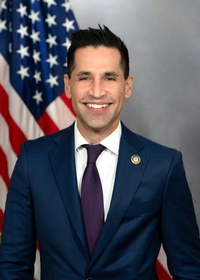
Rep. Tarik Khan
Sponsored bills
Maddy summaryThis bill requires all Pennsylvania public and private schools to have automated external defibrillators (AEDs) available at every interscholastic athletic event, including practices. It mandates that schools create a written emergency action plan for sudden cardiac events, which must include a list of trained staff and detailed steps for responding to a medical emergency. The legislation also updates teacher certification requirements to include CPR and AED training, replacing previous rules that focused on CPR instruction alone.
Maddy summaryThis bill updates Pennsylvania's teacher certification rules to define specific grade spans and age levels for instructional certificates issued after December 31, 2027. It establishes new categories for early childhood, elementary/middle, secondary, and specialized areas, each with distinct grade ranges and age limits that teachers must meet to be certified. The legislation also allows teachers currently enrolled in preparation programs to finish their training under the old rules if they complete their studies before December 31, 2025, ensuring they can still receive appropriate certification. These changes directly affect the Pennsylvania Department of Education and the thousands of teachers seeking or holding instructional certificates in the state.
Maddy summaryHB 2492 amends Pennsylvania's Election Code to clarify how county boards of elections manage their operations and handle election results. The bill requires county commissioners to provide suitable offices for these boards and mandates that primary and general election expenses be paid by the county. It also establishes specific procedures for counting votes, including public notice of meeting times and places, the preparation of official forms, and the requirement that all assistants be sworn in before performing their duties. Finally, the legislation sets a timeline for completing vote counts, requiring boards to begin the process by 9 a.m. on the third day after an election and continue until finished.
Maddy summaryThis bill updates Pennsylvania laws to require public utilities to give customers at least 60 days' notice before changing their rates. Under the new rules, companies must send clear, plain-language notices to customers and other interested parties, highlighting proposed changes on the outside of mailings. The bill also mandates that utilities file updated rate schedules with the state commission and allows the commission to grant exceptions to the notice period for good cause.
Maddy summaryThis bill requires Pennsylvania public utilities to provide customers with clear instructions on how to submit comments regarding proposed rate changes or system acquisitions. Under the new rules, the Public Utility Commission must accept these consumer comments via mail or through an accessible online platform. The legislation aims to streamline the process for utility customers to participate in regulatory decisions affecting their services. It applies to all public utilities operating in the state and will become effective 60 days after enactment.
Maddy summaryThis bill establishes the Agriculture Innovation Grant Program within the Pennsylvania Department of Agriculture to provide financial reimbursement grants to eligible farms and agribusinesses. The program specifically targets projects that utilize new technologies or methods to improve energy efficiency, water quality, production processes, biosecurity, and farm management systems. To oversee the initiative, the legislation creates a new Agriculture Innovation Board composed of representatives from government agencies, higher education, cooperatives, financial institutions, and the legislative branches. Eligible applicants include individuals with anticipated agricultural sales over $2,000 annually or processors with sales exceeding $10,000, as well as service providers and entities utilizing agricultural commodities for product creation.
Maddy summaryThis bill designates the month of July 2024 as "Parks and Recreation Month" throughout Pennsylvania to highlight the importance of public parks and recreational programs. It serves as a commemorative resolution that recognizes the benefits of outdoor spaces for community health, economic growth, and environmental resilience. The measure does not create new laws, allocate funding, or change existing regulations, but rather formally acknowledges the value of these resources in the state.
Maddy summaryThis Pennsylvania resolution designates July 19, 2024, as "Parks and Recreation Professionals Day" to honor the workers who maintain local parks and recreation facilities. The bill does not create new laws or change funding; instead, it serves as a symbolic gesture to recognize the contributions of these professionals to community health and environmental well-being. By adopting this designation, the Pennsylvania House of Representatives acknowledges the role of parks in promoting physical activity, mental wellness, and economic prosperity for residents.
Maddy summaryThis bill creates a new grant program in Pennsylvania to provide operating assistance for public transportation in counties that are experiencing growth. It allows counties with increasing populations or rising employment numbers to apply for funding, with the available money split evenly between these two categories. To receive the grants, eligible entities must already be recipients of other state transportation funds and will be awarded money based on their county's percentage growth over the past five years. The program includes a limit on local matching funds and requires annual appropriations to operate.