

Maddy summaryThis bill amends the Administrative Code to update definitions and powers for Pennsylvania's Energy Development Authority. It clarifies what counts as a "project" and "cost" for energy initiatives, specifically including expenses for energy audits, environmental surveys, and infrastructure resilience. The legislation also changes how the Authority's board is structured, reducing the number of governor-appointed members from nine to five and adjusting the voting requirements for board decisions. These changes aim to streamline the Authority's governance while expanding its scope to support various energy-related activities.
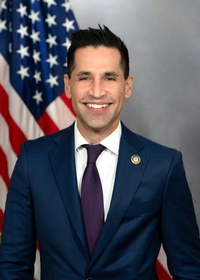
Rep. Tarik Khan
Sponsored bills
Maddy summaryThis bill requires Pennsylvania hospitals to publish their standard prices for medical items and services on their websites and provide these lists to the public upon request. The law mandates that hospitals display both a comprehensive list of all charges and a simplified, consumer-friendly version for specific services that patients can schedule in advance. Additionally, the bill prohibits hospitals from taking debt collection actions against patients if the hospital fails to comply with these price transparency requirements. By enforcing these rules, the legislation aims to increase clarity on healthcare costs for patients while holding hospitals accountable for maintaining accurate pricing information.
Maddy summaryThis bill updates Pennsylvania's historic preservation tax credit program by increasing the annual funding limit from $5 million to $20 million. It allows the Department of Community and Economic Development to award these tax credits on a first-come, first-served basis if the full amount is not claimed during the initial application window. The changes apply to fiscal years starting after June 30, 2025, and take effect immediately, providing more financial incentives for property owners and developers to restore historic buildings.
Maddy summaryThis bill amends Pennsylvania's motorcycle laws to require a small nominal fee for motorcycle safety education courses. Any money collected from this fee that is not refunded will be placed into a specific state account designated for motorcycle safety programs. The change directly affects individuals taking these courses and the state's funding for the education initiative.
Maddy summaryThis Pennsylvania bill creates a new Alzheimer's, Dementia and Related Disorders Office within the Department of Aging to coordinate state efforts for people affected by these conditions. The office will oversee existing programs, identify service gaps, manage grants, and update the state's strategic plan every five years based on expert advice. To support this work, the law also establishes a large advisory committee made up of government officials, healthcare providers, researchers, and individuals with personal experience caring for those with dementia. This committee will guide the office's activities, review progress, and ensure that the state's approach remains current and effective.
Maddy summaryThis bill creates the Keystone Fresh Program to increase the amount of locally grown food served in Pennsylvania school meals. It establishes a grant system administered by the Departments of Education and Agriculture to reimburse school districts for purchasing local fruits, vegetables, grains, and other minimally processed foods. The program prioritizes funding for schools that source from veteran farmers, socially disadvantaged groups, new farmers, or those using sustainable agriculture techniques. A separate fund is also created to support the administration of these initiatives, aiming to improve child nutrition and provide economic benefits to local producers.
Maddy summaryThis bill amends Pennsylvania's Election Code to regulate political spending by corporations, specifically targeting those with significant foreign ownership or influence. It defines a "foreign-influenced corporation" as one where a single foreign investor owns at least 1% of equity, multiple foreign investors collectively own 5% or more, or a foreign entity participates in political decision-making. Under the new rules, these specific corporations are prohibited from making any contributions or expenditures to support or oppose candidates, ballot measures, or political parties. To ensure compliance, any corporation making a political contribution must certify within seven days that it does not meet the foreign-influenced criteria, with penalties including fines up to $10,000 for individuals who violate these restrictions. The law explicitly excludes domestic corporations from these restrictions and does not limit news media reporting or editorial content.
Maddy summaryThis bill amends Pennsylvania's Human Services Code to update how medical assistance is handled for individuals who are incarcerated. It requires the state to temporarily suspend health coverage when a recipient is sent to a correctional facility and to automatically restore it upon their release, provided they still meet standard eligibility rules. Starting in January 2026, the law allows counties to voluntarily join a new reentry program that offers substance use disorder treatment before release and a 30-day medication supply after release. Counties must formally apply and demonstrate the capacity to support these services before participating, while the state department retains the authority to approve or deny requests based on program readiness.
Maddy summaryThis bill updates Pennsylvania election laws to establish strict timelines for handling election results and disputes. It requires the Secretary of the Commonwealth to finish counting and certifying votes within five days after an election, while also mandating that county boards and courts resolve appeals and recounts within seven days. The legislation creates a specific process where the Secretary must notify state lawmakers if they anticipate missing the certification deadline, and it allows immediate appeals to the Supreme Court for recount decisions. These changes directly affect election officials, candidates, and voters by aiming to speed up the finalization of election outcomes.
Maddy summaryThis Pennsylvania bill establishes a new legal framework to combat anticompetitive practices in the state's markets, specifically targeting monopolies, collusion, and unfair market power. It allows private individuals and businesses to sue for damages if they are indirectly harmed by these illegal actions, expanding who can seek justice beyond just direct victims. The legislation also requires companies to notify state officials before merging health care facilities or forming provider networks, aiming to prevent deals that could reduce competition in medical services. Finally, the bill authorizes the state Attorney General to investigate violations and imposes significant fines on entities that break the new rules.