

Maddy summaryThis bill modifies Pennsylvania's tax laws to exclude sales tax from the calculation of interchange fees charged on credit and debit card transactions. It requires payment card networks to either deduct the tax amount from these fees at the time of settlement or refund a proportional portion of the fee if the tax was not initially separated. The legislation defines specific terms like "interchange fee" and "electronic payment transaction" to clarify which fees are affected and outlines penalties for networks that fail to comply, including fines and mandatory refunds to merchants.
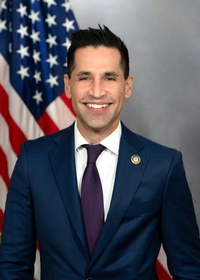
Rep. Tarik Khan
Sponsored bills
Maddy summaryThis bill expands Pennsylvania's existing Freedom to Breastfeed Act by requiring all state-owned buildings to provide dedicated nursing rooms for employees and the public. Under the new rules, the Department of General Services must ensure these rooms meet specific standards, including a minimum size of 80 square feet, a lockable door, privacy features, and amenities like a sink, electrical outlet, and refrigerator where possible. The department is also tasked with creating a publicly available online list of these room locations and posting signage to guide visitors to them. These changes apply to any building under the control of the Department of General Services or administered by other executive agencies. The legislation will take effect one year after it is passed.
Maddy summaryThis bill establishes the Microfiber Filtration Protection Act to require all washing machines sold or installed in Pennsylvania to include a built-in or in-line filter capable of capturing microfibers. The Environmental Quality Board must create regulations mandating these filters have a mesh size of 100 micrometers or smaller and display a consumer notice about checking and disposing of captured lint. Starting in 2030, manufacturers cannot sell non-compliant machines, and by 2031, installers cannot fit them unless they meet the new standards. The Department of Environmental Protection will enforce these rules through testing, inspections, and complaints, while charging manufacturers for any testing costs related to non-compliance.
Maddy summaryThis bill allows teachers in Pennsylvania who have voluntarily placed their teaching certificates on inactive status for at least seven years to take college courses for free or at a 50% discount. The State Board of Education will create and update a list of approved colleges offering these specific tuition-reduced credits every three years. To fund this program, the state will reimburse colleges annually for the waived tuition costs, with reports on enrollment numbers submitted to the General Assembly each June.
Maddy summaryHB 2500 legalizes the adult use of cannabis in Pennsylvania by establishing a regulatory framework for its possession, sale, and consumption. The bill designates the Department of Agriculture as the primary agency responsible for overseeing the industry, including licensing businesses and enforcing rules on advertising, packaging, and laboratory testing. It creates two new funds to support the industry and promote social equity, while also imposing specific sales and excise taxes on cannabis products. Additionally, the legislation consolidates existing medical cannabis provisions and transfers certain regulatory powers from the Department of Health to the Department of Agriculture.
Maddy summaryThis bill designates Allegheny River Boulevard in western Pennsylvania as an official scenic byway to recognize its scenic, historic, and recreational value. The primary mechanism of the law restricts the placement of outdoor advertising signs near the road to preserve the visual quality of the route, with specific distance limits and exceptions for official signs, real estate listings, and directional markers. Additionally, the legislation requires state travel maps to highlight this route and explain the reasons for its designation. The changes directly affect property owners along the corridor and state agencies responsible for transportation and tourism mapping.
Maddy summaryThis bill creates the Maternal Care Access Program within the Pennsylvania Department of Health to improve maternal health outcomes by directing resources to underserved areas. The legislation defines specific terms like "maternity care desert" and "at-risk" zones based on the availability of obstetric care, birth centers, and medical providers. It authorizes the department to distribute funds to birth centers, obstetrician-gynecologists, certified nurse midwives, and hospitals located in designated zones that lack adequate care options. Additionally, the bill establishes criteria for identifying distressed hospitals and outlines various health and social indicators used to assess maternal vulnerability.
Maddy summaryThis bill requires correctional officers in Pennsylvania to use safety seat belts when transporting detained individuals or inmates in vehicles. It allows for exceptions if using a seat belt would endanger the officer or others, or if the person is being transported on a bus. The Department of Corrections must create specific regulations for seat belt use within 120 days, including rules for transporting pregnant individuals. The law applies to all peace officers and other authorized personnel who transport detainees under official detention.
Maddy summaryThis bill amends Pennsylvania's eminent domain laws to clarify definitions, streamline condemnation procedures, and expand protections for property owners. It introduces new terms such as "blighted property" and "marginalized community" to ensure consistent legal interpretation and requires that replacement housing for displaced residents be affordable and located in areas with similar school districts and amenities. The legislation also mandates that title transfer only occurs after a court makes a final determination, while simultaneously allowing owners to recover limited costs for appraisals, legal fees, and engineering services. Additionally, the bill provides for compensation for the loss of business goodwill and ensures that mortgages and liens are addressed during the condemnation process.
Maddy summaryThis bill prohibits employers in Pennsylvania from punishing, disciplining, or retaliating against employees for refusing to attend meetings or listen to communications about religious or political topics. It defines "voluntary" participation as attendance that is not incentivized by benefits or threatened with negative employment consequences, ensuring employees can opt out without fear of reprisal. To enforce these protections, the law allows aggrieved workers to sue for remedies like reinstatement and back pay, while also requiring employers to post a notice explaining these rights. Additionally, the bill mandates that the Department of Labor and Industry investigate complaints and provides a framework for interested parties to report violations.