

Maddy summaryThis Pennsylvania bill creates a new Alzheimer's, Dementia and Related Disorders Office within the Department of Aging to coordinate state efforts for people affected by these conditions. The office will oversee existing programs, identify service gaps, manage grants, and update the state's strategic plan every five years based on expert advice. To support this work, the law also establishes a large advisory committee made up of government officials, healthcare providers, researchers, and individuals with personal experience caring for those with dementia. This committee will guide the office's activities, review progress, and ensure that the state's approach remains current and effective.
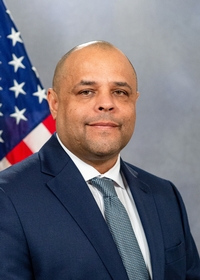
Rep. José Giral
Sponsored bills
Maddy summaryThis bill creates the Keystone Fresh Program to increase the amount of locally grown food served in Pennsylvania school meals. It establishes a grant system administered by the Departments of Education and Agriculture to reimburse school districts for purchasing local fruits, vegetables, grains, and other minimally processed foods. The program prioritizes funding for schools that source from veteran farmers, socially disadvantaged groups, new farmers, or those using sustainable agriculture techniques. A separate fund is also created to support the administration of these initiatives, aiming to improve child nutrition and provide economic benefits to local producers.
Maddy summaryThis bill amends Pennsylvania's Election Code to regulate political spending by corporations, specifically targeting those with significant foreign ownership or influence. It defines a "foreign-influenced corporation" as one where a single foreign investor owns at least 1% of equity, multiple foreign investors collectively own 5% or more, or a foreign entity participates in political decision-making. Under the new rules, these specific corporations are prohibited from making any contributions or expenditures to support or oppose candidates, ballot measures, or political parties. To ensure compliance, any corporation making a political contribution must certify within seven days that it does not meet the foreign-influenced criteria, with penalties including fines up to $10,000 for individuals who violate these restrictions. The law explicitly excludes domestic corporations from these restrictions and does not limit news media reporting or editorial content.
Maddy summaryThis bill amends Pennsylvania's Human Services Code to update how medical assistance is handled for individuals who are incarcerated. It requires the state to temporarily suspend health coverage when a recipient is sent to a correctional facility and to automatically restore it upon their release, provided they still meet standard eligibility rules. Starting in January 2026, the law allows counties to voluntarily join a new reentry program that offers substance use disorder treatment before release and a 30-day medication supply after release. Counties must formally apply and demonstrate the capacity to support these services before participating, while the state department retains the authority to approve or deny requests based on program readiness.
Maddy summaryHB 2491 amends Pennsylvania's Tax Reform Code to exempt sales and use taxes on building materials, supplies, and services purchased by construction contractors for affordable housing projects. This change directly affects contractors working on projects that meet the state's legal definition of affordable housing, allowing them to avoid paying sales tax on these specific items. The bill does not alter tax rates or create new taxes but instead clarifies and expands existing exclusions to support the construction and maintenance of designated affordable housing.
Maddy summaryHB 2492 amends Pennsylvania's Election Code to clarify how county boards of elections manage their operations and handle election results. The bill requires county commissioners to provide suitable offices for these boards and mandates that primary and general election expenses be paid by the county. It also establishes specific procedures for counting votes, including public notice of meeting times and places, the preparation of official forms, and the requirement that all assistants be sworn in before performing their duties. Finally, the legislation sets a timeline for completing vote counts, requiring boards to begin the process by 9 a.m. on the third day after an election and continue until finished.
Maddy summaryThis Pennsylvania House resolution urges the U.S. Congress to update federal copyright laws to protect human creative workers from displacement by artificial intelligence. The bill proposes that only works created primarily by humans should be eligible for copyright protection, while works generated mainly by non-human entities would be considered public domain. Additionally, it suggests that using copyrighted material to train AI systems should not qualify as fair use because it harms the market value of the original works. The resolution does not become law itself but serves as a formal request to the federal government to consider these specific legal changes.
Maddy summaryThis bill establishes the Agriculture Innovation Grant Program within the Pennsylvania Department of Agriculture to provide financial reimbursement grants to eligible farms and agribusinesses. The program specifically targets projects that utilize new technologies or methods to improve energy efficiency, water quality, production processes, biosecurity, and farm management systems. To oversee the initiative, the legislation creates a new Agriculture Innovation Board composed of representatives from government agencies, higher education, cooperatives, financial institutions, and the legislative branches. Eligible applicants include individuals with anticipated agricultural sales over $2,000 annually or processors with sales exceeding $10,000, as well as service providers and entities utilizing agricultural commodities for product creation.
Maddy summaryThis bill designates the month of July 2024 as "Parks and Recreation Month" throughout Pennsylvania to highlight the importance of public parks and recreational programs. It serves as a commemorative resolution that recognizes the benefits of outdoor spaces for community health, economic growth, and environmental resilience. The measure does not create new laws, allocate funding, or change existing regulations, but rather formally acknowledges the value of these resources in the state.
Maddy summaryThis Pennsylvania resolution designates July 19, 2024, as "Parks and Recreation Professionals Day" to honor the workers who maintain local parks and recreation facilities. The bill does not create new laws or change funding; instead, it serves as a symbolic gesture to recognize the contributions of these professionals to community health and environmental well-being. By adopting this designation, the Pennsylvania House of Representatives acknowledges the role of parks in promoting physical activity, mental wellness, and economic prosperity for residents.