

Maddy summaryHB 1032 establishes a new grant program called Solar for Schools to fund solar energy projects at educational institutions. The bill also creates a legal framework requiring owners of solar facilities on leased land to provide financial guarantees that cover the cost of removing the equipment when it stops producing electricity. These financial assurances must remain in place even if the facility is sold to a new owner, ensuring that the original landowner is protected. Additionally, the legislation authorizes the Department of Community and Economic Development to manage these grants and outlines specific rules for solar agreements to prevent future cleanup costs from falling on property owners.
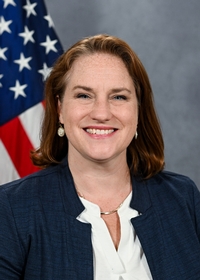
Rep. Heather Boyd
Sponsored bills
Maddy summaryThis bill amends Pennsylvania's Housing Authorities Law to expand relocation protections for tenants experiencing domestic or sexual violence. It allows tenants to request emergency transfers if they were victimized on or near their premises within the last 180 days or if they reasonably fear imminent harm. The legislation establishes specific documentation requirements, such as police reports or third-party certifications, to verify abuse while also permitting a simple tenant statement if no conflicting information exists. Additionally, the bill mandates that housing authorities assist victims in connecting with local support organizations and may release tenants from their leases upon qualification.
Maddy summaryThis bill modifies Pennsylvania law to allow courts to impose a surcharge on certain legal fees related to court facilities and supplies. The change removes an existing exception that previously prevented this surcharge from being applied to cases involving traffic citations classified as summary offenses. As a result, individuals charged with minor traffic violations will now be subject to the same fee surcharges as other defendants in similar proceedings. The amendment takes effect 60 days after the law is passed.
Maddy summaryThis bill establishes a School Meal Debt Fund and creates new rules to ensure all students in Pennsylvania public schools can access meals regardless of their ability to pay. It requires schools to provide meals to any student who requests one unless a parent has explicitly asked for them to be withheld, and it mandates that schools help families apply for free or reduced-price meal programs if a student owes money. The legislation strictly prohibits schools from stigmatizing students with debt by using wristbands, denying participation in activities, or threatening legal action, while also banning the use of collections agencies or credit reporting to recover unpaid meal costs. Additionally, the bill directs the Department of Revenue to share confidential household income data with schools to better determine eligibility for federal assistance and to identify students who need help paying off meal debts.
Maddy summaryThis bill updates Pennsylvania laws to clarify how medical records can be obtained and the fees associated with them. It directly affects patients, their attorneys, and healthcare providers by setting specific prices for copying and retrieving medical charts. Under the new rules, patients and their representatives can access their own records without needing a subpoena, while other parties must pay a set fee for search, retrieval, and copying services. The act also establishes different rates for paper copies versus electronic records and requires these fees to be adjusted annually based on inflation.
Maddy summaryThis bill amends the Administrative Code to update definitions and powers for Pennsylvania's Energy Development Authority. It clarifies what counts as a "project" and "cost" for energy initiatives, specifically including expenses for energy audits, environmental surveys, and infrastructure resilience. The legislation also changes how the Authority's board is structured, reducing the number of governor-appointed members from nine to five and adjusting the voting requirements for board decisions. These changes aim to streamline the Authority's governance while expanding its scope to support various energy-related activities.
Maddy summaryThis bill updates Pennsylvania's historic preservation tax credit program by increasing the annual funding limit from $5 million to $20 million. It allows the Department of Community and Economic Development to award these tax credits on a first-come, first-served basis if the full amount is not claimed during the initial application window. The changes apply to fiscal years starting after June 30, 2025, and take effect immediately, providing more financial incentives for property owners and developers to restore historic buildings.
Maddy summaryThis bill creates the Keystone Fresh Program to increase the amount of locally grown food served in Pennsylvania school meals. It establishes a grant system administered by the Departments of Education and Agriculture to reimburse school districts for purchasing local fruits, vegetables, grains, and other minimally processed foods. The program prioritizes funding for schools that source from veteran farmers, socially disadvantaged groups, new farmers, or those using sustainable agriculture techniques. A separate fund is also created to support the administration of these initiatives, aiming to improve child nutrition and provide economic benefits to local producers.
Maddy summaryThis bill creates the PA SITES Program to help Pennsylvania municipalities, redevelopment authorities, and other local organizations develop competitive sites for businesses to locate or expand within the state. It authorizes the Pennsylvania Economic Development Financing Authority to issue up to $500 million in bonds to fund regional planning efforts and the redevelopment or revitalization of both industrial and nonindustrial properties. The program is designed to reduce development risks by providing financing for these projects, with repayment covered by specific pledged revenues rather than general state funds.
Maddy summaryThis bill amends Pennsylvania's Human Services Code to update how medical assistance is handled for individuals who are incarcerated. It requires the state to temporarily suspend health coverage when a recipient is sent to a correctional facility and to automatically restore it upon their release, provided they still meet standard eligibility rules. Starting in January 2026, the law allows counties to voluntarily join a new reentry program that offers substance use disorder treatment before release and a 30-day medication supply after release. Counties must formally apply and demonstrate the capacity to support these services before participating, while the state department retains the authority to approve or deny requests based on program readiness.