

Maddy summaryHB 841 requires Pennsylvania state agencies to complete an annual survey of all Commonwealth-owned real property by March 1 each year. Agencies must identify surplus land and, in consultation with the Department of Community and Economic Development, assess each surplus parcel's potential for affordable housing development for very low-income, low-income, and middle-income households. The Department of Community and Economic Development will compile these surveys, report to the legislature, and evaluate whether surplus properties can be transferred to other agencies for more appropriate use. This bill amends the Administrative Code of 1929 to establish these annual requirements for managing state-owned property.
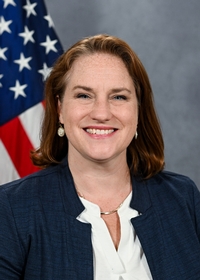
Rep. Heather Boyd
Sponsored bills
Maddy summaryHB 837 limits handgun purchases and sales in Pennsylvania to one per person within any 30-day period, applying to most individuals but excluding licensed dealers, collectors, law enforcement, correctional facilities, security companies, antique firearms, and documented cases of stolen or lost handguns (with specific reporting requirements). It establishes the Violence Prevention Account, funded by fines from violations, to support youth violence prevention programs and law enforcement training grants. Sellers must conduct a purchase history check and inform buyers about the 30-day limit and penalties. Violations are misdemeanors for first offenses and felonies for repeat offenses.
Maddy summaryHB 815, the Worker Adjustment and Retraining Notification Act, requires employers with 50+ full-time equivalent employees to provide 90 days' written notice before mass layoffs or business closings affecting 30+ employees at a single site. It directly affects large employers in Pennsylvania, mandating notification to affected employees, the Department of Labor and Industry, and local municipalities. The bill specifies that notices must be delivered to employee representatives or employees directly, and includes exceptions for unforeseeable circumstances or natural disasters. Violations may result in civil penalties enforced by the Department of Labor and Industry.
Maddy summaryHB 812 establishes a grant program to fund security improvements protecting hospital and emergency care workers from workplace violence. It directly affects hospitals and freestanding emergency medical facilities in Pennsylvania, which can apply for grants to implement violence prevention projects. The bill requires applicants to submit detailed plans with timelines, budgets, and measurable goals for reducing verbal/physical violence, with priority given to innovative, sustainable approaches. The Department of Health will administer the program, accept applications starting March 1, 2025, and manage the dedicated grant fund.
Maddy summaryHB 816 proposes a constitutional amendment to Pennsylvania's tax code, creating a new standard for homeowners to qualify for relief from real property taxes. It would allow the state legislature to establish income-based thresholds, exempting homeowners from paying the portion of their local property tax on their primary home that exceeds a certain percentage of their household income. This directly affects homeowners who pay local property taxes and meet income criteria set by the legislature. As a constitutional amendment, it requires approval by the General Assembly and then by voters in a statewide election. The bill does not specify income percentages or implementation details, only authorizing future legislation to create such standards.
Maddy summaryHB 747 increases the debt limit for Pennsylvania's Business in Our Sites Program from $300 million to $375 million under the Commonwealth Financing Authority. This change directly affects the program, which supports business development on underutilized sites across the state. The bill amends Section 1543(b)(1) of Title 64 to allow the authority to incur higher aggregate indebtedness for this specific program. The amendment takes effect 60 days after enactment.
Maddy summaryHB 778 establishes a three-year pilot program to increase pre-kindergarten (Pre-K) teacher salaries in Pennsylvania to match those of elementary school teachers with similar qualifications. It directly affects Pre-K teachers working in programs located in high-poverty areas (school districts with ≥20% poverty or census tracts at ≤80% of the statewide median poverty level). The program requires the Department of Education to calculate salary gaps using a specific formula, provide subsidies to eligible Pre-K programs to close those gaps, and collect data for a legislative report. The bill mandates strict use of funds solely for teacher salary increases and includes requirements for reporting program outcomes to the legislature.
Maddy summaryHB 780 creates a tuition assistance program for early childhood educators in Pennsylvania. It provides grants to cover tuition costs (minus other financial aid) for individuals pursuing associate degrees or certifications in early childhood education, targeting those earning under 400% of the federal poverty level, enrolled in at least six credit hours per semester, and working 25+ hours weekly in approved early childhood programs. Recipients must agree to work in Pennsylvania early childhood education for two years after completing their program. Funding comes from a new state fund, with annual reports tracking enrollment, retention, wages, and job demand. The program aims to support workforce development in early childhood education through financial assistance tied to service commitments.
Maddy summaryHB 781 creates a three-year pilot program to provide salary supplements for infant and toddler care professionals working at eligible child-care centers in Pennsylvania. The Department of Public Welfare will administer the program, establishing county-level pay parity standards that consider education and certification levels to prevent staff retention issues. Child-care centers receiving funds must use them exclusively for wage supplements and cannot reduce existing pay or replace staff costs. The program requires annual reporting to the General Assembly and expires after three fiscal years beginning in 2026-2027.
Maddy summaryHB 779 establishes a three-year pilot program to increase salaries for Head Start teachers in Pennsylvania. It targets Head Start programs located in school districts with at least 20% poverty or census tracts with 80% or lower median poverty. The program calculates a salary supplement by comparing Head Start teachers' qualifications to public elementary school teachers in the same district, then provides funds to align their pay. The Department of Education will select participating programs, collect data, and report findings to the legislature after one year.