

Maddy summaryThis bill authorizes Pennsylvania to join the National Popular Vote Interstate Compact, an agreement where participating states award their electoral votes to the candidate who wins the national popular vote. If the compact reaches 270 electoral votes (a majority), Pennsylvania would allocate its electoral votes to the national popular vote winner instead of the candidate who wins Pennsylvania's popular vote. The bill requires Pennsylvania to continue holding its usual statewide popular election for president, but the state's electors would be appointed based on the aggregated national vote totals across all compact states. This change would only take effect once the compact is operational with enough states to control a majority of electoral votes.
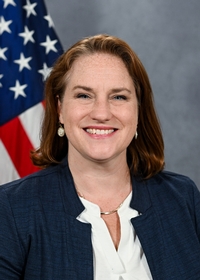
Rep. Heather Boyd
Sponsored bills
Maddy summaryThis resolution recognizes March 14, 2025, as "Black Midwives Day" in Pennsylvania. It symbolically honors Black midwives' historical and ongoing contributions to maternal health while highlighting persistent disparities, including that Black women in Pennsylvania faced nearly three times the pregnancy-related mortality rate of White women in 2020. The resolution aims to raise awareness about systemic barriers like discrimination, maternity care deserts, and preventable maternal deaths, aligning with the National Black Midwives Alliance's campaign. It does not create new laws or allocate funding but serves as a statement of recognition.
Maddy summaryHB 707 amends Pennsylvania's Freedom to Breastfeed Act to require all Commonwealth-owned buildings (like state offices, courthouses, and the State Museum) to provide dedicated nursing parent rooms. These rooms must be at least 50 square feet, lockable, accessible, and include essentials like a chair, work surface, sink, refrigerator, and privacy. The Department of General Services must install signage, maintain a public online list of room locations, and ensure compliance with accessibility standards. This directly affects employees and the public using state buildings who need to breastfeed or express milk.
Maddy summaryHB 109 creates a new permit review process for specific industrial facilities in Pennsylvania's designated "environmental justice areas" - communities with high pollution burdens and vulnerable populations (low-income, communities of color). It requires the Department of Environmental Protection to consider cumulative environmental and public health impacts when reviewing permits for facilities like large wastewater plants (50,000+ gal/day), major air polluters, waste sites (25+ tons/month), mining operations, and certain landfills. The bill mandates that permits in these areas must address disproportionate environmental impacts, as defined by demographic, economic, health, and environmental data. This directly affects developers and operators of industrial facilities seeking new or expanded permits in designated communities.
Maddy summaryHB 1152 requires insurance companies to directly reimburse non-network emergency medical services (EMS) agencies for 911 emergency calls within 45 days at 350% of the Medicare ambulance rate for the same service in the same area. EMS agencies must register with the state annually to qualify for direct payments, and insurers cannot demand contracts to facilitate this reimbursement. The insurer's payment covers the full service cost (excluding the patient's copay, coinsurance, or deductible), so EMS agencies cannot bill patients for the remaining amount. This law applies only to non-network EMS providers offering 911 emergency medical services, unless preempted by federal law.
Maddy summaryHB 1150 raises Pennsylvania's minimum wage to $15 per hour starting January 1, 2026, with annual increases thereafter. It also establishes a phased timeline for tipped employees: requiring higher base cash wages starting in 2025 (e.g., $5.00/hour after June 2025) and mandating that by July 1, 2029, employers must pay the full minimum wage without relying on tips. The bill ensures all tips received by employees remain their property and cannot be used by employers to meet minimum wage requirements. This directly affects most private-sector employers and tipped workers in Pennsylvania, particularly in hospitality and service industries.
Maddy summaryHB 1097 creates a new minor criminal offense in Pennsylvania for organizing or operating events where live pigeons are used as targets for shooting contests, either for amusement or skill testing. This applies to anyone who willfully runs such events at a designated location, including using mechanical aids to present pigeons to shooters. The bill explicitly excludes legal hunting under state game laws, dog training activities, or permitted special events. It takes effect 60 days after enactment.
Maddy summaryHR 150 is a Pennsylvania House resolution designating April 11-17, 2025, as "Black Maternal Health Week" to highlight the disproportionate maternal health disparities affecting Black women and birthing persons in the state. It references Pennsylvania data showing Black women face maternal mortality rates twice as high as White women (148 vs. 74 deaths per 100,000 live births in 2020) and higher morbidity rates. The resolution does not create new laws or funding but aims to raise public awareness about preventable maternal health outcomes. It specifically targets state-level attention to this crisis, citing local statistics from Philadelphia and Allegheny Counties. As a symbolic resolution, it has no binding effect but seeks to spur broader discussion and action.
Maddy summaryThis bill establishes a grant program to provide free menstrual products (such as pads and tampons) in Pennsylvania public schools. Schools with 25% or more students eligible for free or reduced-price lunch programs can apply for grants to purchase these products and install dispensers or disposal units. Recipients must report annual spending on products and dispenser maintenance to the state. The program is funded by a state appropriation for the 2025-2026 fiscal year.
Maddy summaryHB 1065 creates a new felony offense for selling unmarked firearm components in Pennsylvania. It specifically targets the sale of firearm frames/receivers, silencer frames, split/modular frames, or partially complete frames without serial numbers registered to a federal firearms licensee. The bill defines "privately made firearm" as one assembled by non-licensed individuals without federal serial markings. This law directly affects sellers of homemade or unlicensed firearm parts, making such sales a third-degree felony. It does not change laws regarding firearm ownership or purchase, only penalizing the sale of unmarked components.