

Maddy summaryHB 60 amends Pennsylvania's Pharmacy Act to clarify rules for transferring prescriptions between pharmacies. It specifies that prescriptions can only be transferred if the drug is not excluded by federal law, specifically referencing 21 CFR 1306.08 (which governs electronic prescriptions). This change directly affects pharmacies that transfer prescriptions, ensuring state procedures align with federal electronic prescription requirements. The bill updates existing permit rules for pharmacies but does not alter who qualifies for a pharmacy permit.
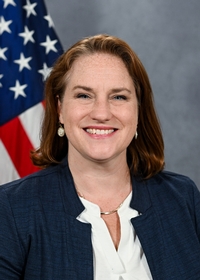
Rep. Heather Boyd
Sponsored bills
Maddy summaryThis resolution designates March 2025 as "Women's History Month" in Pennsylvania. It is a ceremonial measure with no binding policy changes, funding, or new programs. The resolution invites all Pennsylvanians to reflect on women's contributions to the state's and nation's economic, cultural, and social development. It does not affect specific groups or create legal obligations, as it is purely symbolic recognition.
Maddy summaryHB 118 amends Pennsylvania's Child Labor Act to increase penalties for employers violating child labor laws. It raises the fine for first-time violations from $500 to $1,000 per violation and increases penalties for repeat offenses to $3,000 per violation or up to 10 days in jail. The bill directly affects employers who hire minors in prohibited work situations. These changes are concrete policy adjustments to enforcement, not new work restrictions. The amendment takes effect 30 days after enactment.
Maddy summaryHB 535 bans Pennsylvania health insurers from setting annual or lifetime dollar limits on core health benefits for enrollees, whether services are provided by in-network or out-of-network providers. It applies to all individual and group health insurance policies (excluding specific types like Medicare supplements or dental/vision-only plans) and prohibits limits on benefits that were already covered without such caps in 2025 policies. The Insurance Department can enforce this through fines up to $5,000 per violation (or $10,000 for willful violations), with annual caps of $500,000 for insurers. The law does not require coverage of specific benefits but eliminates existing dollar limit practices for covered services.
Maddy summaryHB 618, the Health Insurance Access Protection Act, prohibits health insurers from denying coverage or charging higher premiums based on a person's health condition, including preexisting conditions. This law applies to both individual and group health insurance policies, protecting enrollees and their dependents from discrimination in enrollment or pricing. The Insurance Department and Commissioner are tasked with enforcing these rules, and the bill includes penalties for insurers that violate the prohibitions.
Maddy summaryHB 404 amends Pennsylvania's Insurance Company Law to extend health insurance coverage for children under family policies. It requires policies to cover dependent children up to age 26 (previously 19) and prohibits insurers from denying or restricting coverage based on a child's financial dependency, residency, marital status, school enrollment, or employment. The bill also allows group health plans to extend coverage for adult children up to age 29 if they meet specific conditions, such as not being married, having no dependents, and residing in Pennsylvania or attending school full-time. This affects all health insurance policies sold in Pennsylvania that provide dependent child coverage.
Maddy summaryHB 1029 amends Pennsylvania's 1937 Labor Relations Act to clarify worker protections and union election processes. It defines "employe" more broadly (excluding independent contractors) and bans agreements that prevent workers from joining class or collective lawsuits. Employers must post notices about labor rights and provide detailed voter lists for union elections within two business days of a board order. The bill also adds new unfair labor practices, including coercing workers to sign agreements that limit their right to pursue collective claims. These changes directly affect Pennsylvania workers, employers, and labor organizations involved in union representation efforts.
Maddy summaryHB 974 amends Pennsylvania's Right-to-Know Law to clarify how agencies assess the specificity of written public records requests. It requires agencies to consider three factors when determining if a request is specific enough: the burden on the agency to locate records within time limits, potential privacy or proprietary harm to third parties, and compliance with federal or state disclosure laws. This change directly affects agencies handling public records requests and requesters seeking information under the law. The bill does not alter who can request records or basic submission methods, but refines the process for evaluating request clarity. The amendment takes effect 60 days after enactment.
Maddy summaryThis resolution designates March 17, 2025, as "Bayard Rustin Day" in Pennsylvania. It honors Bayard Rustin, a key organizer of the 1963 March on Washington for Jobs and Freedom and a prominent civil rights leader who advocated for nonviolent activism, racial equality, and LGBTQ+ rights. The resolution does not create new laws or policies; it is a ceremonial designation to recognize Rustin's historical contributions. It directly affects Pennsylvania residents through official recognition of this date in state government communications and public events.
Maddy summaryHB 362 amends Pennsylvania's 1929 Administrative Code to authorize the Energy Development Authority to administer federal funds from the Inflation Reduction Act of 2022 for the Solar for All Program. It directs the Authority to distribute funds for residential solar installations, storage, and upgrades to qualifying households across all Pennsylvania counties, prioritizing rural, suburban, and urban communities. The bill specifically prohibits using funds for solar panels or parts made with forced labor (defined as work performed under threat of penalty without voluntary consent) and requires the Public Utility Commission to protect non-participating ratepayers from cross-subsidization. This creates a clear administrative framework for implementing the federal program while adding labor and ratepayer safeguards.