

Maddy summaryHB 2241 requires Pennsylvania hospitals and medical offices to publish standard charges for services online in a readable digital format and provide printed copies upon request. It mandates that hospitals list all standard charges - including gross charges, negotiated rates with insurers, and discounted cash prices - for every item or service, including both inpatient and outpatient care. The bill specifically requires a simplified, consumer-friendly list of "shoppable services" (like elective procedures patients can schedule in advance) alongside the full charge list. This applies directly to all hospitals operating under Pennsylvania's Health Care Facilities Act, aiming to help patients compare costs before receiving care.
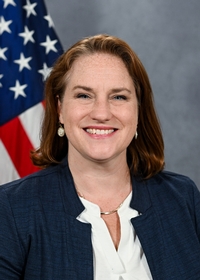
Rep. Heather Boyd
Sponsored bills
Maddy summaryHB 2242 amends Pennsylvania law to clarify the Governor's authority as Commander-in-Chief over state military forces. It specifically prohibits armed military forces from other states or territories from entering Pennsylvania for military duty without the Governor's express permission, except when federal service under the President's authority is involved. The Governor may grant permission for up to 30 days per calendar year, or longer if approved by a concurrent resolution of the General Assembly. This directly affects Pennsylvania's military operations and limits how neighboring states' forces can operate within Pennsylvania. The bill takes effect 60 days after enactment.
Maddy summaryHB 660 establishes minimum energy and water efficiency standards for specific products sold in Pennsylvania, directly affecting businesses that sell or install these items. The bill covers commercial equipment like dishwashers, fryers, and ovens, as well as residential products including faucets, showerheads, and water coolers. It requires these products to meet defined efficiency levels to reduce energy/water waste, save consumers money, and lower environmental impact, with fines for non-compliance. The law updates existing rules but excludes products sold outside Pennsylvania, used items, and certain installations like mobile homes.
Maddy summaryHB 1935 requires individuals convicted of terroristic threats to pay restitution for costs incurred during evacuations, including emergency response, transportation, and employee wages for first responders. It also mandates a sentencing enhancement for threats targeting schools or institutions of higher education, which the Pennsylvania Commission on Sentencing must consider. The bill defines "school entity" to include public, charter, private, and cyber charter schools, and "institution of higher education" to cover specific universities like Penn State, Pitt, Temple, and others. These changes directly affect offenders who make terroristic threats in educational settings, holding them financially accountable for the costs their actions trigger.
Maddy summaryHB 1556 amends Pennsylvania's Tax Reform Code of 1971 to add new tax credits under the PA EDGE program specifically for "advanced clean manufacturing projects." This bill directly affects businesses constructing or expanding facilities that produce clean energy technology, such as solar panels or battery components. The key change expands the existing PA EDGE tax credit program to include these advanced clean manufacturing projects, providing financial incentives for qualifying investments. The bill does not alter other existing PA EDGE provisions or create new tax credit categories beyond this specific addition.
Maddy summaryHB 144 amends Pennsylvania's juvenile justice laws to adjust the process for "informal adjustment" in court cases involving minors. It directly affects youth and families involved in juvenile court by changing how cases can be resolved without formal court proceedings. The bill modifies specific provisions related to informal adjustment procedures within juvenile matters, while also making minor editorial corrections to the statute. This is a procedural change focused on streamlining court handling of certain juvenile cases, not a major policy shift.
Maddy summaryHB 1936 amends Pennsylvania's juvenile justice laws to change procedures for handling cases involving minors. It specifies when courts must hold hearings before releasing or committing a juvenile, alters where juveniles can be placed for treatment or supervision, and adds requirements for reviewing dispositions (how cases are resolved) after commitment. The bill directly affects juveniles charged with offenses, their families, and juvenile court judges and probation officers who manage these cases. Key changes include setting clearer timelines for hearings, limiting where juveniles can be committed (e.g., away from home), and mandating periodic reviews of their case plans. These provisions aim to standardize court processes while prioritizing youth safety and appropriate supervision.
Maddy summaryHB 2216 creates new court procedures in Pennsylvania for juvenile courts to issue "predicate orders" required for immigrant youth to apply for federal Special Immigrant Juvenile Status. It directly affects immigrant youth under 21 who have experienced abuse, abandonment, or neglect and need these court orders to seek U.S. immigration protections. Key provisions include establishing a lower burden of proof (preponderance of evidence), presuming it is not in the juvenile’s best interest to return to their home country, and allowing courts to issue orders without parental notice if abandonment occurred for six months. The bill adds specific court procedures to Pennsylvania’s juvenile law to streamline this process, ensuring youth can access federal immigration pathways.
Maddy summaryThis bill prohibits Pennsylvania State Police from stopping, detaining, or questioning individuals based solely on immigration status, except when necessary for unrelated criminal investigations. It bans prolonging detention due to immigration status or conducting immigration checks without a prior criminal arrest. Police must share immigration detainer information with federal authorities only if discovered during lawful detention for unrelated matters. The law directly affects all individuals interacting with Pennsylvania State Police, limiting state involvement in federal immigration enforcement.
Maddy summaryHB 2152 amends Pennsylvania's Public School Code to allow school districts to use state grant funds for shifting secondary school start times to no earlier than 8:30 a.m., requiring the new time to be at least 15 minutes later than current start times. School entities must adopt a policy for the later start time and inform communities about the health and academic benefits of adequate sleep for students before implementation. The Department of Education must provide guidance and support to schools planning this change, including public awareness campaigns. This applies to all Pennsylvania school districts and charter schools serving grades 7-12.