

Maddy summaryHR 390 is a ceremonial resolution recognizing March 2026 as "Women's History Month" in Pennsylvania. It does not create new laws or policies but formally acknowledges women's historical contributions to Pennsylvania and the nation through symbolic recognition. The resolution invites all Pennsylvanians to reflect on women's economic, cultural, and social roles, as detailed in the preamble's historical context. This is a non-binding gesture with no direct impact on specific groups or funding.
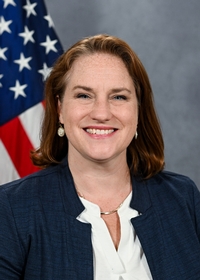
Rep. Heather Boyd
Sponsored bills
Maddy summaryHouse Resolution 408 designates April 2026 as "Financial Literacy Month" in Pennsylvania. This symbolic resolution does not create new laws or requirements but encourages public awareness and education about financial literacy, aligning with national observances like President Biden's 2021 proclamation. It follows Pennsylvania's history of supporting financial education initiatives without imposing obligations on individuals or organizations.
Maddy summaryHB 728 establishes Pennsylvania's Identification Upon Reentry Program, requiring prisons to provide newly released inmates with essential identification documents (like state ID cards) before their release. This directly affects individuals transitioning from incarceration back into the community, who often face barriers to accessing services without valid ID. The key provision mandates that correctional facilities coordinate with state agencies to issue these documents during the reentry process, replacing the current inconsistent practice. This policy change aims to streamline access to housing, employment, and government services for returning citizens.
Maddy summaryThis Pennsylvania bill updates the Public School Code to strictly limit the use of artificial intelligence in charter and cyber charter schools. It defines artificial intelligence as machine-based systems that make predictions or decisions and prohibits these schools from using AI to replace human teachers for direct instruction. The law requires local school boards and the state Department of Education to reject applications from schools relying on such models and allows for the nonrenewal or immediate termination of charters that adopt them. Additionally, the bill clarifies the powers and duties of the State Board of Education regarding charter school oversight.
Maddy summaryThis bill updates Pennsylvania's Capital Facilities Debt Enabling Act to clarify what counts as a redevelopment assistance capital project and removes a spending cap on housing construction. It defines these projects as those that generate economic activity, have regional impact, and include at least 50% non-state funding, while explicitly excluding highways, bridges, and waste or water facilities. Additionally, the legislation repeals a specific provision that previously limited the use of funds for building housing units to $50 million. These changes aim to provide clearer guidelines for borrowing money to fund large-scale community and economic development initiatives.
Maddy summaryThis bill amends the Pennsylvania Human Relations Act to increase the maximum civil penalties that can be imposed on individuals or entities found guilty of discrimination. It raises the fine limits to $26,262 for first-time offenders, $65,653 for those with one prior violation, and $131,308 for those with multiple prior violations, while also extending the time window for considering past offenses. Additionally, the legislation extends the deadline for filing discrimination complaints from 180 days to 365 days and establishes a mechanism to automatically adjust these penalty amounts annually based on changes in the Consumer Price Index. These changes directly affect employers, employment agencies, and other entities subject to the Act by altering the financial consequences and procedural timelines for handling discrimination cases.
Maddy summaryThis bill prohibits law enforcement officers from detaining or arresting individuals for civil immigration violations on the property of houses of worship. The only exception allows for arrests if the officer is acting in an official capacity and holds a valid judicial warrant. Additionally, the legislation bars state and local agencies from using taxpayer funds to conduct immigration enforcement and imposes a $10,000 civil penalty for any violations of these rules.
Maddy summaryThis bill amends Pennsylvania's Human Relations Act to strengthen protections against discrimination in housing and commercial property transactions. It directly affects landlords, sellers, lenders, and financial institutions by explicitly prohibiting them from refusing services or making decisions based on a person's source of income, such as public assistance or child support. The legislation also clarifies that discrimination is illegal when it involves a person's use of guide or support animals due to blindness, deafness, or physical disabilities. Additionally, the bill bans the publication of advertisements that express preferences or limitations based on these protected characteristics.
Maddy summaryThis bill designates the week of April 11 through 17, 2026, as "Black Maternal Health Week" in Pennsylvania to raise awareness about maternal health disparities affecting Black women. The resolution highlights statistics showing that Black women in the state face significantly higher pregnancy-related death rates compared to other groups, with many cases deemed preventable. It does not create new funding or policy requirements but serves as a symbolic gesture to focus public and legislative attention on the issue. The measure is sponsored by multiple representatives and referred to the Committee on Children and Youth for consideration.
Maddy summaryHB 1800 would repeal the current legal provisions in Pennsylvania that recognize marriage between people of the same sex by removing specific sections from the domestic relations code. The bill directly affects same-sex couples currently married in Pennsylvania, as it would eliminate the statutory basis for their marriages. Key provisions include amending definitions in the preliminary sections of the code and striking down existing language that addresses same-sex marriage. The bill is currently referred to the Judiciary committee and has not been enacted.