

Maddy summaryHB 255 establishes a 5-year pilot program offering toll credits to Pennsylvania residents who own qualifying green vehicles. It provides $100 in toll credits for hybrid electric vehicles and $200 for battery electric or plug-in hybrid vehicles, available through the Pennsylvania Turnpike Commission after applicants submit registration and a completed form. The program directly affects residents purchasing eligible vehicles, incentivizing adoption by reducing toll costs on the Turnpike. The bill expires five years from its effective date, with the Commission responsible for developing application rules.
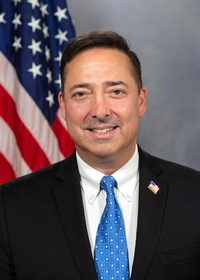
Rep. Chris Pielli
Sponsored bills
Maddy summaryHB 253 adds a new exemption from vehicle registration in Pennsylvania for new or leased motor vehicles (excluding motorcycles and motorized bicycles) that achieve at least 40 miles per gallon in city driving, as certified by the U.S. EPA and Department of Energy's 2024 Fuel Economy Guide. This exemption applies only during the vehicle's first two years of registration, after which standard registration rules apply. The bill directly affects owners of qualifying fuel-efficient vehicles who would otherwise need to pay registration fees during those initial two years. It modifies Pennsylvania's vehicle registration statutes to align with federal fuel efficiency standards without changing existing registration requirements for other vehicles. The exemption is limited to vehicles meeting specific EPA-defined efficiency thresholds.
Maddy summaryHB 125 proposes a constitutional amendment to change when the Pennsylvania General Assembly must convene, moving the regular session start date from the first Tuesday in January to December 1 each year. The amendment would require the legislature to meet annually on December 1, unless the Governor calls a special session under existing rules. The bill also outlines the approval process: after two legislative votes, the amendment must be advertised and then submitted to voters at the next applicable primary, general, or municipal election. If approved by voters, the change would take effect, altering the annual meeting schedule for the state legislature.
Maddy summaryHB 169 creates a program allowing local and regional police departments in Pennsylvania to purchase used pursuit vehicles (police patrol vehicles) from the state at fixed prices. The Department of General Services must allocate up to 10% of the Pennsylvania State Police's used pursuit vehicle inventory for this program, requiring payment via organization check before purchase. Police departments must submit a form detailing desired vehicles, and the state will notify them when matching vehicles become available. The bill specifies that prices are set by the department and not subject to negotiation, with rules for administration to be developed by the department. This applies only to existing state-owned patrol vehicles, not new purchases.
Maddy summaryHB 181 requires all political subdivision authorities (like water districts or housing boards) in Pennsylvania to maintain a publicly accessible website with specific transparency details. The bill mandates that these websites include each board member's name, term length and expiration date, contact email, the appointing official's name and office, and links to the governing government entity's website. It directly affects every authority created by a local government, ensuring residents can easily identify leadership and accountability structures. The law takes effect 60 days after enactment, requiring authorities to update their public information practices.
Maddy summaryHB 119 permanently prohibits Pennsylvania from observing daylight saving time, requiring all timekeeping in the state to follow Eastern Standard Time year-round. The bill amends an 1887 law to remove the existing provision allowing daylight saving time (which previously shifted clocks forward between April and October) and declares Eastern Standard Time as the sole legal standard. This directly affects all residents, businesses, and government operations across Pennsylvania, eliminating the need for biannual clock changes. The policy change would take effect 60 days after the bill's passage.
Maddy summaryHB 168 amends Pennsylvania's Taxpayer Relief Act to update the definition of "income" for senior citizens' property tax and rent rebate eligibility. It adds a provision allowing seniors who were eligible for these rebates as of December 31, 2018, to retain benefits if household income temporarily exceeds limits solely due to Social Security cost-of-living adjustments (COLAs). This replaces a previous temporary rule that expired in 2016 for seniors eligible as of December 31, 2012. The bill directly affects Pennsylvania seniors receiving property tax or rent rebates who experience automatic income increases from Social Security COLAs.
Maddy summaryHB 186 amends Pennsylvania's 1936 Unemployment Compensation Law to adjust appeal deadlines for unemployment benefit disputes. It extends the standard appeal window from 21 to 30 days for claimants and employers challenging benefit determinations, and adds a 60-day appeal period when a decision date is revised more than one year after the original notice. These changes directly affect unemployed workers (claimants) and employers who dispute benefit awards or payment decisions. The bill takes effect 60 days after enactment.
Maddy summaryHB 192 repeals outdated language requiring psychological services to be provided on school premises for nonpublic school students. It updates the definition of "professional employees" to explicitly include school social workers, counselors, psychologists, and nurses in Pennsylvania schools. The bill mandates that school social workers must hold a new educational specialist certificate issued by the Department of Education, which must be created within 60 days. Additionally, it adds rules requiring schools to share student health records when students transfer and to retain those records for at least two years after a student leaves.
Maddy summaryHB 195 establishes Pennsylvania's Mental Health Workforce Retention Program under the Human Services Code. It provides $5,000 grants to mental health workers who are Pennsylvania residents and have worked with adolescents for at least seven consecutive years, using a lottery system to select recipients. The program allocates up to $1 million annually from a $5 million appropriation (continuing from the General Fund), with grants exempt from income tax. The program expires on June 30, 2030, and is open to workers in psychology, counseling, social work, or human services.