

Maddy summaryHB 231 amends Pennsylvania's election code to allow nomination petitions for candidates to be printed on multiple sheets, with each sheet used for signers from different counties. The sheets must be bound together, numbered consecutively, and include a circulator's statement verifying signers' qualifications, residences, and party registration (with exceptions for certain local offices like school boards). This change directly affects candidates seeking nomination and the people collecting signatures for petitions across Pennsylvania. The bill streamlines the petition process without altering voter requirements or eligibility standards. It takes effect 60 days after enactment.
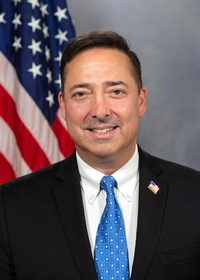
Rep. Chris Pielli
Sponsored bills
Maddy summaryThis bill amends Pennsylvania's Election Code to set annual contribution limits for political campaigns. It caps individual donations to a single candidate at $10,000 per calendar year and limits political action committee (PAC) contributions to $20,000 per candidate annually. These restrictions apply directly to donors and PACs supporting candidates for any office within Pennsylvania. The changes take effect 60 days after enactment.
Maddy summaryHB 281 requires health insurance policies in Pennsylvania to cover prostate cancer screenings with no out-of-pocket costs for men aged 40+ who are at high risk. High-risk individuals include those with a family history of prostate cancer, genetic factors, or physician-determined medical need. The law mandates annual coverage for screenings like PSA tests and digital rectal exams, eliminating deductibles or copays. It applies to all health insurance policies issued or renewed 180 days after enactment, with full implementation in 60 days. This directly affects insurers, healthcare providers, and Pennsylvania residents meeting the specified risk criteria.
Maddy summaryHB 272 establishes a grant program to help Pennsylvania municipalities and emergency service facilities (like fire stations, police departments, and ambulance services) install solar energy systems. The Department of Environmental Protection will administer the program, awarding competitive grants to cover eligible costs such as solar equipment, installation, permits, and site assessments. Applicants must submit a site assessment and verify contractors meet licensing, safety, and legal requirements through an affidavit. The program also requires the department to provide technical assistance and educational resources about solar energy projects.
Maddy summaryHB 203 amends Pennsylvania's Public School Code to require public schools to close on Veterans' Day, adding it to the list of fixed holidays (alongside Memorial Day, Fourth of July, Thanksgiving, and Christmas) when schools must be closed. It also allows school districts to designate up to five additional local holidays for closures and permits canceling these holidays during weather emergencies. The bill further mandates that schools hold special exercises on Veterans' Day as part of required observances. These changes apply directly to all public schools in Pennsylvania, affecting school calendars and holiday closures.
Maddy summaryHB 210 requires businesses (such as restaurants, hotels, and retail stores) to post signs in visible restroom locations - including stalls, mirrors, and above hand dryers - with the National Human Trafficking Resource Center Hotline number (1-888-373-7888) and a statement about legal protections for trafficking victims. The signs must be at least 8.5x11 inches, feature the hotline number in bold and large font, and be available in English, Spanish, and any other language required by the Voting Rights Act in the business's county. The Department of Labor and Industry will design and provide the sign template online for businesses to print. This law takes effect 60 days after enactment.
Maddy summaryThis bill strengthens mental health support for emergency responders in Pennsylvania. It creates new confidentiality protections, prohibiting peer support staff, healthcare providers, or helplines from sharing an emergency responder's mental health information without consent (except in clear danger situations). Specifically for 911 dispatchers, it requires employers to provide free mental health evaluations for PTSD symptoms upon the dispatcher's request or a supervisor's recommendation. If symptoms are identified, the employer must cover treatment until a provider determines the dispatcher can return to full duties, with administrative duty assigned during this period.
Maddy summaryHB 244 exempts the sale or use of alternative fuel vehicles and hybrid vehicles from Pennsylvania's sales and use tax during 2026 and 2027. It directly affects consumers purchasing qualifying vehicles during those years, as well as dealers and the state's tax administration. The bill requires the Secretary of Environmental Protection to certify eligible vehicle models, using definitions from Pennsylvania's existing Alternative Fuels Incentive Act (2004). This creates a temporary tax break for specific vehicle types to encourage adoption during the 2026-2027 period. The exemption applies only to vehicles meeting the defined criteria and takes effect 60 days after enactment.
Maddy summaryHB 254 creates a new tax credit for Pennsylvania residents who install electric vehicle charging stations at their primary homes. It allows eligible taxpayers to claim a credit equal to 100% of the installation cost, up to $2,000 per year, which is refundable if it exceeds their state income tax liability. To qualify, residents must have lived in Pennsylvania for over half the previous year, have a valid taxpayer ID, and install the station at their owned primary residence. The credit applies to tax years starting after December 31, 2025, with the Department of Revenue responsible for implementing guidelines.
Maddy summaryHB 250 amends Pennsylvania's Alternative Fuels Incentive Act to update rebates for residents purchasing alternative fuel vehicles. It provides specific rebates: $3,000 for new electric/hydrogen vehicles, $1,500 for plug-in hybrids, and $1,000 for other qualifying new, pre-owned (under 75,000 miles), or demonstration vehicles (500-10,000 miles) priced at $50,000 or less. Low-income residents (at or below 200% of the federal poverty level) receive an additional $2,000 rebate. Applications must be submitted within six months of purchase, with proof of registration and purchase, and rebates are funded based on annual availability. The bill directly affects Pennsylvania residents buying eligible alternative fuel vehicles.