

Maddy summaryHB 194 creates Pennsylvania's Mental Health Professional Student Loan Forgiveness Program, targeting mental health workers serving children and adolescents. It allows eligible residents who complete qualifying degrees (like social work, counseling, or psychology) and work in early childhood-to-adolescence mental health roles to receive up to $22,500 in loan forgiveness after signing a 7-year employment contract. The Pennsylvania Higher Education Assistance Agency (PHEAA) administers the program, requiring applicants to prove residency, partial degree completion, faculty recommendations, and secure employment in the specified field. Participants must maintain employment for seven years or repay the forgiven amount if they leave the field early, fail to comply, or provide false information. This directly affects mental health professionals in Pennsylvania seeking relief from student debt while addressing workforce needs in youth mental health.
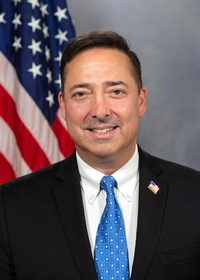
Rep. Chris Pielli
Sponsored bills
Maddy summaryHB 52 requires developers seeking building permits in Pennsylvania to submit information about potential impacts on endangered or threatened species to three state agencies: the Fish and Boat Commission, Game Commission, and Department of Conservation and Natural Resources. These agencies must review the information within 90 days to determine if construction would harm protected species, providing written confirmation to both the developer and the municipality. If agencies fail to complete the review within 90 days, it is presumed no harm exists, allowing the municipality to issue the permit. The bill also includes funding to support this process. This directly affects developers, municipalities, and state agencies involved in building permit approvals.
Maddy summaryHB 53 waives fees for certain state documents for individuals affected by domestic abuse. It applies to people who received protection orders within 90 days or verified recent abuse (within 120 days) through a victim service provider, medical professional, or standardized form. The bill covers duplicate/corrected documents like driver's licenses, vehicle titles, and birth certificates from the Departments of Transportation and Health. Eligible individuals with dependents also receive fee waivers for their dependents' documents. The Departments of Transportation and Health must create public policies for this waiver within 90 days of the law's effective date.
Maddy summaryHB 107 amends Pennsylvania's Local Option Small Games of Chance Act to allow licensed organizations (such as nonprofits and charities) to accept electronic payments for games of chance and conduct online raffles. The bill requires organizations to verify that online raffle buyers are physically located in Pennsylvania and at least 18 years old before accepting payment. It permits credit/debit cards and mobile payment services for raffle tickets but prohibits sales outside Pennsylvania or to minors. The legislation also removes a conflicting regulation in the Pennsylvania Code to align with these new provisions.
Maddy summaryHB 66 creates a Pennsylvania program providing $5,000 semester stipends to residents enrolled in accredited Master of Social Work (MSW) programs with a 3.0+ GPA. It directly affects students pursuing social work careers by funding their education through paid internships. The program requires internships at state-approved facilities to meet clinical training and licensing requirements, with stipends adjusted annually for inflation. Funding is contingent on available state budget resources, administered by the Department of Human Services.
Maddy summaryHB 49 amends Pennsylvania's 1993 Plain Language Consumer Contract Act to strengthen protections for consumers in standard form contracts (like those for services or products sold without negotiation). It makes standardized contract terms unenforceable if they materially alter a consumer's legal rights or obligations, requiring courts to evaluate factors like whether the term caused surprise or hardship, whether the consumer was aware of it, and the business context. The bill specifically creates a rebuttable presumption that certain terms - such as those restricting intellectual property rights, limiting liability, or mandating exclusive use of a merchant's products - are materially altering. This directly affects consumers signing standard contracts with businesses and merchants using such agreements across Pennsylvania. The law applies to all form contracts executed after its effective date, regardless of paper or electronic format.
Maddy summaryHB 45 requires businesses (vendors) selling services through contracts with automatic renewal clauses to clearly disclose renewal terms to consumers. Specifically, vendors must display renewal details in bold, 10-point font or larger, and provide written/electronic notice 30-60 days before renewal - detailing cancellation deadlines and how to opt out. If a business changes ownership, the new owner must notify consumers within 60 days and offer cancellation options. The law applies to contracts where renewal extends beyond six months, mandating vendors to retain proof of notification for six years. This affects consumers who sign service contracts and vendors operating in Pennsylvania.
Maddy summaryHB 42, the Well Operation Response Team Act, requires oil and gas operators in Pennsylvania to establish certified response teams for wells during exploration, drilling, and production phases. These teams must include trained members familiar with well operations, available within one hour of an emergency, and undergo annual first aid/CPR training and site-specific drills. Operators must report team details annually to the Department of Labor and Industry, provide emergency communication technology, and train local first responders on well hazards. The bill directly affects operators of active onshore oil/gas wells (excluding plugged/abandoned wells) and mandates specific response protocols to enhance emergency preparedness.
Maddy summaryHB 29 establishes Pennsylvania's HUB Zone Business Procurement Program to increase state contract opportunities for businesses owned by women, minorities, veterans, or located in historically underutilized business zones (HUB zones). It requires state agencies to set specific participation goals: 20% for contracts between $100,000-$750,000 and 25% for larger contracts, with exceptions if qualified businesses aren't available. The bill defines "diverse and disadvantaged businesses" to include HUB zone businesses and mandates agencies to compile verified business lists, monitor compliance, and provide training to support these businesses. This directly affects state purchasing agencies and qualifying businesses seeking state contracts.
Maddy summaryHB 44 amends the 1988 Local Option Small Games of Chance Act to clarify which businesses can offer tavern gaming under Pennsylvania law. It updates definitions for "restaurant licensee" and "tavern" to specifically include licensed brewpubs, microbreweries, and wineries (with limited licenses), while excluding grocery stores, fuel businesses, and certain hotels or wineries. These changes directly affect licensed restaurants, taverns, and beverage establishments seeking to operate small games of chance under existing rules. The bill focuses solely on defining eligibility - no new gaming rules or restrictions are introduced.