

Maddy summaryThis Pennsylvania House resolution urges the U.S. Congress to pass two federal bills aimed at improving food and drug safety for people with allergies and gluten intolerance. The proposed legislation would require updated ingredient lists on packaged foods and mandate clear front-of-package labels that specifically disclose the presence of gluten-containing grains. Additionally, it would require drug labels to identify any ingredients derived from major food allergens or gluten sources, helping consumers avoid harmful substances. The resolution is based on the need to protect the approximately 23 million Americans, including many Pennsylvanians, who suffer from celiac disease or gluten intolerance.
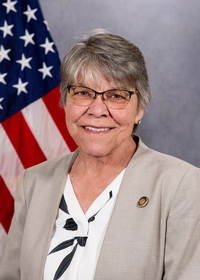
Rep. Nancy Guenst
Sponsored bills
Maddy summaryThis bill asks the Pennsylvania House of Representatives to officially recognize October 2024 as "Energy Awareness Month" within the state. It does not create new laws or change any regulations but serves as a symbolic resolution to highlight the importance of managing energy resources. The text supports this recognition by citing statistics on Pennsylvania's energy production and the growing use of energy-efficient products and renewable sources like wind and solar. Ultimately, the measure is a commemorative action intended to raise public awareness rather than to alter policy or affect specific groups directly.
Maddy summaryThis bill establishes a new program to freeze property taxes for eligible senior citizens and disabled individuals in Pennsylvania. To qualify, applicants must own and live in their home for at least 10 years, have a household income of $45,000 or less, and meet specific age or disability criteria. If approved, the property tax amount is locked at the level paid in the base year, and the freeze continues as long as the person remains eligible and renews their application annually. The Department of Revenue will create a standardized application form and publish annual reports detailing how many people participate and the total tax savings generated by the program.
Maddy summaryThis bill establishes a minimum hourly wage of $20 or a living wage for education support professionals in Pennsylvania public schools, effective for the 2024-2025 school year. It requires schools to pay overtime at 1.5 times the standard rate and mandates that salaried workers be paid based on their actual hours worked to meet this threshold. For employees currently covered by existing contracts with lower wages, the law requires schools to make supplemental payments to bridge the gap until the contract expires or is renewed. The Department of Labor and Industry is tasked with calculating and annually adjusting the living wage based on inflation data, while the state provides funding to school districts to cover the cost of these wage increases. Additionally, the legislation updates procedures for school boards, requiring a majority vote and proper recording for certain decisions.
Maddy summaryThis bill establishes the TRICARE Premium Reimbursement Program to provide financial grants to members of the Pennsylvania National Guard who are eligible for TRICARE Reserve Select coverage. The program allows eligible recipients to receive reimbursement for health insurance premiums paid for themselves and their immediate family members, as well as premiums for TRICARE dental coverage for themselves and their families. To qualify, individuals must submit an application with personal contact information, details about family members, a statement confirming their eligibility, and proof of premium payments. The Department of Military Affairs will manage the program, post application forms online, and create necessary rules to administer the grants.
Maddy summaryThis Pennsylvania House resolution asks the U.S. Congress to change federal rules so that military reservists who are also eligible for federal employee health insurance can join the TRICARE Reserve Select program. Currently, federal employees serving in the National Guard or armed forces reserves are barred from enrolling in this specific health coverage, which the bill argues creates a financial disincentive for them to work for the government. The measure does not alter any laws directly but serves as a formal recommendation to lawmakers to address this eligibility gap.
Maddy summaryThis Pennsylvania bill establishes the Clean Hydrogen Production Act to regulate the development of clean hydrogen projects and create a state tax credit program to support them. It directs the Environmental Quality Board to oversee applications, conduct investigations, and set specific rules for these projects while requiring investor-owned utilities to report on their activities and federal funding. The legislation defines clean hydrogen based on low emissions standards and includes provisions to consider the impact on disproportionately impacted communities during the review process. Additionally, the bill creates a tax credit system that allows businesses to claim credits for qualifying clean hydrogen production, with options to carry forward, carry back, or sell these credits.
Maddy summaryThis bill grants the Pennsylvania Commission on Game and Fisheries the authority to create and update rules regarding boat registrations, licenses, permits, and safety plates. It specifically covers procedures for transferring boat ownership, managing passenger-carrying vessels, and collecting accident statistics. A key provision explicitly prohibits the commission from requiring permits or registrations for non-motorized boats in any state park, forest, or waterway. The legislation also establishes penalty levels for violations, such as operating a passenger boat without a license or failing to display required identification numbers.
Maddy summaryThis resolution directs the Joint State Government Commission to study how Pennsylvania can increase the use of sustainable building materials in both state-funded and private construction projects. The commission will investigate the feasibility of updating construction requirements to include eco-friendly options like recycled steel and low-carbon concrete, while also analyzing the potential cost impacts of such changes. The study aims to identify suitable materials for the state's infrastructure and project direct and indirect financial savings or increases if these requirements are adopted. The commission is required to submit its findings to several House committees within 180 days of the resolution's passage.
Maddy summaryThis bill designates September of each year as "International Underground Railroad Month" throughout Pennsylvania. It aims to honor the courage of freedom seekers and the individuals who assisted them in escaping slavery through a clandestine network. The legislation includes a list of historical findings that highlight the significance of the Underground Railroad and its role in the state's history. Importantly, the bill clarifies that this designation does not require employers to treat September as a paid holiday or provide special leave for employees.