

Maddy summaryThis bill updates the membership rules for Pennsylvania's State Veterans' Commission to ensure broader representation of different veteran groups. It mandates that the commission include representatives from sixteen specific national veterans' organizations, such as the American Legion and VFW, along with four members appointed by the Governor who must be female or Vietnam-era veterans. The legislation also clarifies the roles of state-level leaders from the American Legion, Disabled American Veterans, and Veterans of Foreign Wars as nonvoting members. These changes aim to modernize the commission's composition while maintaining its existing structure under Pennsylvania law.
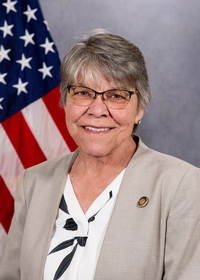
Rep. Nancy Guenst
Sponsored bills
Maddy summaryThis bill, known as the Online Safety Protection Act, requires businesses that provide online services likely to be used by children to prioritize the privacy, safety, and well-being of minors over commercial interests. Companies covered by the law must conduct data protection impact assessments to ensure their products do not cause foreseeable physical, financial, or psychological harm, nor engage in discriminatory practices or use deceptive design tricks called dark patterns. The legislation also defines specific rules for how personal information can be collected and sold, while excluding deidentified data and publicly available information from these restrictions. Penalties are imposed on entities that fail to comply with these duties to protect children's best interests.
Maddy summaryThis bill expands the scope of practice for pharmacists in Pennsylvania by allowing them to administer injectable medications, biologicals, and immunizations to patients aged three and older. It establishes new requirements for training, parental consent for minors, and reporting procedures while also permitting pharmacists to delegate these tasks to specific healthcare professionals and qualified pharmacy technicians under strict supervision. Additionally, the legislation grants pharmacies with existing federal waivers the ability to perform certain laboratory tests for common illnesses like COVID-19 and the flu without adhering to some state clinical laboratory regulations.
Maddy summaryThis Pennsylvania bill prohibits the intentional addition of perfluoroalkyl and polyfluoroalkyl substances, commonly known as PFAS, to a wide range of consumer products including cookware, cosmetics, food packaging, and artificial turf. While the law generally bans these chemicals, it allows for their use in specific items if the Department of Environmental Protection determines that no safer alternative exists and the chemical is critical for the product's function. The Department of Environmental Protection is tasked with enforcing these restrictions, managing a public database of PFAS information, and imposing penalties for violations.
Maddy summaryHB 2353 establishes civil liability for entities that use artificial intelligence or other automated systems to create deceptive campaign advertisements featuring current or former candidates. The bill defines "covered persons" as firms, political committees, foreign governments, and individuals acting on their behalf, while also clarifying that generative AI and synthetic content like deepfakes fall under these regulations. To avoid liability, covered persons must provide clear and conspicuous disclosures stating that an advertisement contains manipulated or generated content, with specific formatting requirements for text, video, and audio formats. If a covered person fails to provide such a disclosure and is found liable, the law requires the immediate removal of the advertisement and imposes financial penalties based on the jurisdiction where the candidate filed with election officials.
Maddy summaryThis bill amends the Pennsylvania Pesticide Control Act to clarify that the state's pesticide regulations take precedence over local laws and ordinances. It allows the state secretary to delegate administrative duties to designated employees and establishes that municipalities cannot regulate pesticide registration, sale, or use unless those rules conflict with state law. However, the legislation creates a specific exception permitting cities with a population density of at least 300 people per square mile to ban commercial pesticide applications on private property in designated restricted areas. To assist local governments, the Department of Community and Economic Development is tasked with creating a sample ordinance within 120 days to guide municipalities exercising this new authority.
Maddy summaryThis bill expands Pennsylvania's existing Freedom to Breastfeed Act by requiring all state-owned buildings to provide dedicated nursing rooms for employees and the public. Under the new rules, the Department of General Services must ensure these rooms meet specific standards, including a minimum size of 80 square feet, a lockable door, privacy features, and amenities like a sink, electrical outlet, and refrigerator where possible. The department is also tasked with creating a publicly available online list of these room locations and posting signage to guide visitors to them. These changes apply to any building under the control of the Department of General Services or administered by other executive agencies. The legislation will take effect one year after it is passed.
Maddy summaryThis bill establishes the Microfiber Filtration Protection Act to require all washing machines sold or installed in Pennsylvania to include a built-in or in-line filter capable of capturing microfibers. The Environmental Quality Board must create regulations mandating these filters have a mesh size of 100 micrometers or smaller and display a consumer notice about checking and disposing of captured lint. Starting in 2030, manufacturers cannot sell non-compliant machines, and by 2031, installers cannot fit them unless they meet the new standards. The Department of Environmental Protection will enforce these rules through testing, inspections, and complaints, while charging manufacturers for any testing costs related to non-compliance.
Maddy summaryThis bill allows teachers in Pennsylvania who have voluntarily placed their teaching certificates on inactive status for at least seven years to take college courses for free or at a 50% discount. The State Board of Education will create and update a list of approved colleges offering these specific tuition-reduced credits every three years. To fund this program, the state will reimburse colleges annually for the waived tuition costs, with reports on enrollment numbers submitted to the General Assembly each June.
Maddy summaryThis bill updates Pennsylvania laws to strengthen the legal protection of confidential communications between journalists and their sources during judicial and administrative proceedings. It ensures that interpreters for people with limited English proficiency or hearing impairments cannot be forced to reveal what was said in these protected conversations. Additionally, the legislation clarifies the definition of a "journalist" to include freelance and non-professional reporters while maintaining an exception for cases involving imminent threats of violence. The changes apply to all types of media, including newspapers, radio, television, and magazines, and will take effect 60 days after becoming law.