

Maddy summaryThis bill updates Pennsylvania's consumer protection laws to strictly regulate automatic renewal clauses and negative option plans in consumer transactions. It requires sellers to clearly disclose renewal terms in bold, twelve-point text and mandates that consumers receive advance notice via their chosen communication method before any charges are applied. Additionally, the law prohibits charging a customer's financial account unless the seller obtains explicit, affirmative consent for the renewal, while also setting limits on the length of introductory trial periods. These changes directly affect businesses offering subscription services and consumers who sign up for recurring payments, aiming to increase transparency and prevent unauthorized charges.
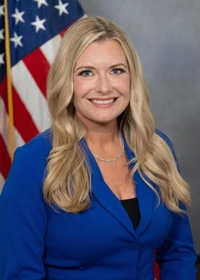
Rep. Missy Cerrato
Sponsored bills
Maddy summaryThis bill creates the Returning Heroes Supplemental Tax Credit Program in Pennsylvania to provide additional state tax credits to businesses that hire qualified veterans. To qualify, a taxpayer must receive a federal Work Opportunity Tax Credit for a veteran and submit an application with proof by September 15 of the relevant year. Eligible businesses can receive a supplemental credit of up to $2,000 per veteran, which can be carried forward for up to 15 years if not fully used in the current tax year. The program is limited to a total of $20,000,000 per fiscal year and is allocated on a first-come, first-served basis. Additionally, the bill requires the Department of Revenue to publish an annual report listing all businesses that received these credits and the amounts approved.
Maddy summaryThis bill amends Pennsylvania's State Lottery Law to expand eligibility for the Pharmaceutical Assistance Contract for the Elderly Needs Enhancement Tier. It directly affects elderly residents whose income currently falls between $14,500 and $33,500 for single individuals or $17,700 and $41,500 for married couples, raising the upper income limits to $43,500 and $51,500 respectively. The legislation also clarifies that income figures reported for eligibility purposes can be rounded to the nearest whole dollar. The changes are set to take effect 60 days after the bill becomes law.
Maddy summaryThis bill updates Pennsylvania's Vital Statistics Law to clarify the fees charged for certified copies of vital records. It ensures that no fees are required for these copies when requested by active-duty military personnel, their dependents, or the families of service members who died or were honorably discharged. The change specifically applies to members of the armed forces, including the National Guard, and their eligible family members. The new fee exemption takes effect 60 days after the bill is enacted.
Maddy summaryThis bill establishes tourism improvement districts and management associations to allow counties to create special zones for funding tourism-related projects. It outlines how these districts can be formed, how they operate, and how they can be dissolved, with a focus on ensuring transparency through open meeting laws and direct mail notifications to affected businesses. The legislation also details how special assessment fees are collected and used, requiring that these funds be spent on activities specified in an approved plan. Additionally, the bill clarifies the roles of counties and district management associations, including provisions for annual audits and reports.
Maddy summaryThis bill establishes the Health Insurance Access Protection Act to prevent insurance companies from discriminating against people based on their health status, medical history, or preexisting conditions. It requires insurers to allow individuals and their dependents to enroll in or renew health plans without denying coverage or charging higher premiums due to these health factors. The law also limits how much insurance rates can vary based on age and tobacco use while giving the Insurance Department authority to set specific rating rules and enforce penalties for violations.
Maddy summaryThis bill updates Pennsylvania's insurance laws to expand health coverage for adult children of policyholders. It requires health insurance policies to keep covering children up to age 26 without denying them based on factors like marital status, residency, or employment. Additionally, the law allows insurers to offer continued coverage until age 29 for unmarried adult children who are full-time students or residents, provided they meet specific eligibility requirements. These changes primarily affect individuals purchasing or renewing health insurance plans and the insurance companies that issue them.
Maddy summaryThis bill proposes a constitutional amendment to prevent local taxing authorities in Pennsylvania from raising their property tax millage rates to fund special real property tax provisions. The change directly affects local governments and property owners by restricting how these entities can adjust tax rates for specific property-related programs. By inserting a new clause into the existing text, the legislation ensures that any special tax provisions cannot be financed through an increase in the standard property tax rate. This measure aims to limit the ability of local officials to modify tax structures for these specific purposes without additional legislative approval.
Maddy summaryHB 155 amends the Pennsylvania Health Care Facilities Act to update licensing requirements and strengthen consumer protections for residents of health care facilities. The bill includes a specific change to strike the phrase "or other" from the text, which alters how certain regulatory language is applied within the law. By modifying the existing statute and abrogating a specific regulation, the legislation aims to refine the legal framework governing health care facility operations. This measure directly impacts health care providers and facility administrators who must comply with the revised licensing standards.
Maddy summaryThis bill amends Pennsylvania's Cosmetology Law to explicitly include natural hair braiders in its licensing requirements. It mandates that individuals performing natural hair braiding must obtain a cosmetology license and work only in licensed salons, while also prohibiting the rental of booths within those establishments. The legislation clarifies that these rules apply solely to those whose business is dedicated to braiding and does not affect emergency services, medical professionals, or licensed barbers. Additionally, the bill establishes specific eligibility criteria for taking the required examination and outlines the fees and renewal processes for these new licenses.