

Maddy summaryThis bill strengthens Pennsylvania's protection from abuse laws by expanding the types of relief courts can grant and clarifying procedures for emergency situations. It allows final protection orders to explicitly include provisions protecting companion animals from abuse, harassment, or relocation, and grants courts the authority to order temporary ownership of these animals during disputes. The legislation also enables hearing officers in certain counties to issue immediate emergency relief when regular courts are unavailable, ensuring faster protection for victims in urgent circumstances. Additionally, the bill clarifies that police officers can make warrantless arrests for violating protection orders based on probable cause, even if the violation is not witnessed directly by the officer. These changes aim to provide more comprehensive and timely safety measures for individuals and their pets facing domestic abuse.
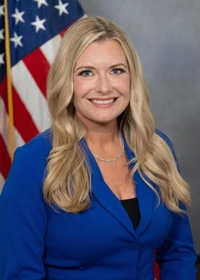
Rep. Missy Cerrato
Sponsored bills
Maddy summaryThis bill amends Pennsylvania vehicle laws to establish a new road user charge specifically for electric vehicles. The new fee, set to begin on April 1, 2025, is designed to generate revenue for state roads and bridges, while also updating motorcycle inspection requirements. The legislation takes effect immediately upon approval, with most other provisions becoming active within 60 days.
Maddy summaryThis law prohibits people in Pennsylvania from owning, using, or selling devices that can swap or hide a vehicle's license plate. The ban covers any tool, whether manual or electric, that allows a driver to change the plate shown on their car or flip it to make the number invisible. Anyone caught with or operating such a device faces a summary offense charge and a fine of up to $2,000. The rule applies to the possession, installation, sale, or distribution of these plate-flipping tools. The law became effective 60 days after it was signed into law.
Maddy summaryThis Pennsylvania House resolution designates November 2024 as Pancreatic Cancer Awareness Month to highlight the importance of early detection and support for those affected by the disease. The bill serves as a symbolic gesture to encourage public education about pancreatic cancer risks, symptoms, and the ongoing efforts of organizations seeking a cure. It does not allocate funding or change laws but instead expresses the House's support for awareness programs and research initiatives.
Maddy summaryThis bill updates Pennsylvania's tax code to provide specific definitions for volunteer firefighter retirement plans and to clarify how their contributions are treated for tax purposes. It directly affects volunteer firefighters and the fire companies or municipalities that sponsor their benefit programs by distinguishing these contributions from regular taxable compensation. The legislation establishes clear rules for two types of plans: defined benefit plans, which offer a guaranteed payout, and defined contribution plans, which rely on specific deposits. By explicitly stating that these contributions are not considered compensation, the bill aims to prevent them from being taxed as income for the firefighters. These changes apply to taxable years starting on or after January 1, 2024.
Maddy summaryThis bill updates Pennsylvania laws regarding the compensation and eligibility rules for borough and town council members and mayors. It clarifies that council members do not receive pay for unexcused absences from meetings, while allowing excused absences for reasons like illness, emergencies, or travel. The legislation also ensures that a borough cannot be forced to lower a mayor's or council member's salary if the town's population decreases, though it maintains that council pay cannot exceed the mayor's salary. These changes aim to provide clearer guidelines on how local officials are paid and when they are eligible for that pay.
Maddy summaryThis bill updates Pennsylvania's Public School Code to require schools to notify parents when a student is diagnosed with type 1 diabetes. It mandates that schools provide education about the condition and ensures parents are informed of any medical treatments or care plans involving their child. The legislation also clarifies that these requirements apply to both public and nonpublic schools, including those that operate health units. By making these changes, the law aims to improve communication between schools and families regarding diabetes management.
Maddy summaryThis bill updates Pennsylvania's Unfair Trade Practices and Consumer Protection Law to strengthen rules against deceptive automatic renewal policies. It requires businesses to clearly disclose future pricing changes and deadlines for cancellation in bold text, while also prohibiting the intentional misrepresentation of renewal terms. The law expands its scope to cover entities regulated by federal agencies like the FCC and PUC, as well as those involved in natural gas and electric utility markets. Ultimately, these changes aim to ensure consumers receive transparent information when signing up for recurring services or subscriptions.
Maddy summaryThis Pennsylvania bill establishes new pension benefits for retired public employees starting in 2025. It provides an additional monthly payment to eligible retirees from state education and government systems who retired before 2001, with the amount calculated as a percentage of their July 2025 annuity based on their original retirement date. The legislation also creates a special one-time adjustment for retired municipal police officers and firefighters, ensuring these groups receive increased benefits. Funding for these new payments will be spread over ten years beginning in 2025, and the benefits are not available to survivors of members who died before that date.
Maddy summaryThis bill updates Pennsylvania laws to hold certain relatives financially responsible for the long-term care costs of indigent family members who receive state medical assistance. It specifically targets spouses, children, and parents, requiring them to pay a portion of the costs for nursing home or home-based services if they have transferred assets or failed to cooperate with the eligibility process. The legislation sets specific payment limits based on the liable relative's income and allows courts to impose jail sentences of up to six months for those who intentionally refuse to comply with support orders. Additionally, the bill clarifies definitions for courts and the Department of Human Services while removing outdated references to public welfare agencies.