

Maddy summaryThis bill requires healthcare providers, including physicians and midwives, to offer pregnant and postpartum patients a standardized screening tool for mood and anxiety disorders in their primary language. It mandates that providers share information about available support resources with patients and, with consent, with their accompanying individuals or designated contacts. The legislation also directs the Department of Health to create a public awareness campaign about perinatal mental health and to maintain an updated list of counseling and assistance services.
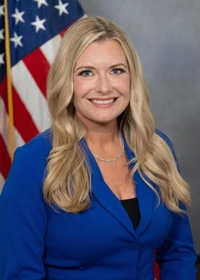
Rep. Missy Cerrato
Sponsored bills
Maddy summaryThis bill updates the funding rules for Pennsylvania highways that were transferred from state to local control. It sets the annual maintenance payment rate at $12,500 per mile for these roads and establishes a mechanism to automatically adjust these payments every two years starting in 2026. The adjustments will be based on changes in the Consumer Price Index to account for inflation, ensuring maintenance funds keep pace with rising costs. Local municipalities that received these highways will directly receive the increased payments, while the Department of Transportation will handle the calculations and notify the public of any changes.
Maddy summaryThis bill amends Pennsylvania's Construction Code Act to update regulations for parking access aisles reserved for individuals with disabilities. It requires the Department of Labor and Industry to set rules mandating that new access aisles be at least 96 inches wide. Additionally, the bill specifies that existing aisles narrower than 96 inches must be widened to that standard whenever the parking lot undergoes routine relining. These changes directly affect parking lot owners, municipalities, and contractors responsible for building and maintaining accessible parking spaces.
Maddy summaryThis bill amends Pennsylvania's vehicle laws to update parking regulations for electric vehicles. It requires the state department to create new rules for parking at locations that begin receiving electricity, replacing previous language about connected facilities. The changes specifically address how parking spaces are designated for electric vehicles as charging infrastructure expands.
Maddy summaryThis bill amends the Osteopathic Medical Practice Act to change the term "registered" to "licensed" in specific sections of the law. The change directly affects the official title and terminology used to describe osteopathic physicians within the state's regulatory framework. By updating the language, the legislation ensures consistency in how medical professionals are identified in legal documents. The bill does not alter the actual requirements for practicing medicine, only the wording used in the statute.
Maddy summaryThis bill makes a minor technical correction to the Medical Practice Act of 1985 by clarifying the definition of "registered" in the text. The amendment adds the words "licensed" to the phrase, changing it to "registered] licensed" to ensure precise terminology regarding medical professionals. This change does not alter the substantive rules or regulations of the act but serves to improve the accuracy of the legal definitions within the law.
Maddy summaryThis bill amends the Pennsylvania Human Relations Act to update the list of protected characteristics, explicitly adding sex, sexual orientation, gender identity or expression, familial status, handicap, disability, and the use of support animals to existing categories like race and age. The legislation directly affects employers, employment agencies, labor organizations, and providers of housing and public accommodations by clarifying that discrimination based on these new and existing traits is unlawful. It reinforces the state's policy of ensuring equal opportunity and mandates that the Pennsylvania Human Relations Commission enforce these protections through established procedures and penalties. Additionally, the bill includes provisions to protect religious exercise while maintaining the commission's powers and duties to prevent prejudice and handle complaints.
Maddy summaryHB 979 amends the Pennsylvania Election Code to clarify the rules for voting in primary elections, specifically addressing the rights of unenrolled electors who have no registered political party affiliation. The bill establishes that only voters enrolled in a political party can vote in that party's primary or hold party office, while allowing unenrolled voters to choose a party at the polling place and cast a ballot for that specific election. Under the new procedures, election officers must ask unenrolled voters which party they wish to support, record that choice on their certificate, and treat them as enrolled for that single vote. Additionally, the legislation updates definitions and repeals penalties related to voters accidentally using the wrong party ballot, streamlining the process for primary election administration.
Maddy summaryThis bill expands Pennsylvania's existing rules on firearm possession by clarifying the responsibilities of individuals who are legally prohibited from owning guns. It mandates that people facing certain disabilities must surrender their firearms, ammunition, and licenses to law enforcement or transfer them to eligible buyers within a specific timeframe, with stricter requirements for those subject to abuse protection orders. The legislation also introduces new penalties for failing to comply with these surrender orders and for knowingly accepting or returning weapons to prohibited individuals before a court order allows it. Additionally, the bill outlines duties for the Office of Attorney General and establishes procedures for handling firearms in community and municipal courts.
Maddy summaryThis Pennsylvania House Resolution officially designates September 15 through October 15, 2024, as Hispanic Heritage Month within the state. The measure directly affects all Pennsylvanians by formally acknowledging the cultures, history, and contributions of the state's Hispanic and Latino communities. It calls on residents to honor these groups through learning, service, and celebration, recognizing their significant role in the Commonwealth's economy and society. The resolution does not alter laws or policies but serves as a symbolic gesture to highlight the importance of Hispanic heritage.