

Maddy summaryHB 2492 amends Pennsylvania's Election Code to clarify how county boards of elections manage their operations and handle election results. The bill requires county commissioners to provide suitable offices for these boards and mandates that primary and general election expenses be paid by the county. It also establishes specific procedures for counting votes, including public notice of meeting times and places, the preparation of official forms, and the requirement that all assistants be sworn in before performing their duties. Finally, the legislation sets a timeline for completing vote counts, requiring boards to begin the process by 9 a.m. on the third day after an election and continue until finished.
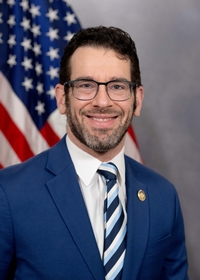
Rep. Mike Schlossberg
Sponsored bills
Maddy summaryThis bill establishes the Agriculture Innovation Grant Program within the Pennsylvania Department of Agriculture to provide financial reimbursement grants to eligible farms and agribusinesses. The program specifically targets projects that utilize new technologies or methods to improve energy efficiency, water quality, production processes, biosecurity, and farm management systems. To oversee the initiative, the legislation creates a new Agriculture Innovation Board composed of representatives from government agencies, higher education, cooperatives, financial institutions, and the legislative branches. Eligible applicants include individuals with anticipated agricultural sales over $2,000 annually or processors with sales exceeding $10,000, as well as service providers and entities utilizing agricultural commodities for product creation.
Maddy summaryThis bill designates the month of July 2024 as "Parks and Recreation Month" throughout Pennsylvania to highlight the importance of public parks and recreational programs. It serves as a commemorative resolution that recognizes the benefits of outdoor spaces for community health, economic growth, and environmental resilience. The measure does not create new laws, allocate funding, or change existing regulations, but rather formally acknowledges the value of these resources in the state.
Maddy summaryThis bill creates a new grant program in Pennsylvania to provide operating assistance for public transportation in counties that are experiencing growth. It allows counties with increasing populations or rising employment numbers to apply for funding, with the available money split evenly between these two categories. To receive the grants, eligible entities must already be recipients of other state transportation funds and will be awarded money based on their county's percentage growth over the past five years. The program includes a limit on local matching funds and requires annual appropriations to operate.
Maddy summaryThis bill requires Pennsylvania colleges and universities to clearly explain all mandatory fees students must pay, such as enrollment or incidental charges. Institutions must list these fees, along with their purpose and how the money will be spent, on their public websites and student portals before the fees are charged. Additionally, schools must report the total amount collected and how those funds were used to the state Department of Education by November 15 each year. The law applies to both public state schools and private accredited institutions operating in Pennsylvania.
Maddy summaryThis Pennsylvania House Resolution designates September 2024 as "Military Suicide Prevention and Awareness Month" to highlight the high suicide rates among veterans in the state. The measure aims to raise public consciousness about the issue by officially setting aside the month for recognition and support rather than implementing new laws or funding. It expresses support for ongoing federal and state efforts to assist veterans and their families while acknowledging the specific challenges they face.
Maddy summaryThis bill directs the Legislative Budget and Finance Committee to investigate why students are unable to enroll in career and technical education programs. The study will examine specific obstacles such as limited program availability, facility conditions, staffing shortages, and wait lists across the state. Additionally, the committee will analyze the current funding formula for these programs and review how other states address instructor credentialing to solve workforce gaps. The committee is required to submit a report with its findings and recommendations to the House of Representatives within 120 days.
Maddy summaryThis bill establishes the Pennsylvania Artist Fellowship Grant Program to provide financial support to artists living in the state. To qualify, applicants must be at least 18 years old, reside in Pennsylvania, actively practice in visual, media, film, or performing arts, and not be currently enrolled in school. The program awards up to 25 grants of $100,000 each annually, which recipients can use for a wide range of expenses including housing, studio rentals, materials, travel, and student loans, provided the funds are not used for political campaigns or regular employment. The Pennsylvania Council on the Arts is responsible for managing the application process and administering the program, which is funded by a $2.5 million appropriation for grants and an additional $250,000 for administrative costs.
Maddy summaryThis bill directs Pennsylvania's Human Services department to apply for a federal waiver that would allow SNAP and WIC benefit recipients to use their funds to buy diapers or menstrual hygiene products. The legislation authorizes the department to adopt necessary rules once the USDA approves the waiver, ensuring the state can participate in this potential program change. It does not immediately change how benefits are used but establishes the legal framework to implement such a waiver if federal approval is granted.
Maddy summaryThis resolution directs the Joint State Government Commission to study the financial impact on Pennsylvania taxpayers of state police services provided to municipalities without their own local departments. The bill requires the commission to form an advisory committee including representatives from revenue, transportation, and law enforcement sectors to analyze costs and tax burdens associated with these services. Key findings must include the per capita cost of coverage, the effect on local millage rates, and an estimate of fees needed to fund these services if the state mandated a direct charge to municipalities. The commission is tasked with submitting a report with these recommendations to the House of Representatives within one year of the resolution's adoption.