

Maddy summaryThis bill requires employers in Pennsylvania to inform the state labor department if any mass layoffs are caused by the use of artificial intelligence or other technological changes. When an employer submits a standard notice about a plant closing or mass layoff, they must also specify whether automation was the reason for the job losses. The law applies to most businesses but excludes seasonal and temporary workers, and it sets daily fines ranging from $500 to $5,000 depending on company size for failing to provide this information.
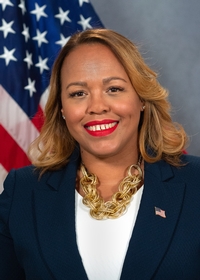
Rep. Johanny Cepeda-Freytiz
Sponsored bills
Maddy summaryThis Pennsylvania House Resolution designates June 23, 2026, as Dravet Syndrome Awareness Day to highlight a rare genetic form of epilepsy that affects approximately 20,000 people in the United States. The bill does not change laws or allocate funding but serves to raise public awareness about the condition, which often begins in infancy with temperature-sensitive seizures and can lead to developmental delays. By recognizing this specific date, the resolution aims to honor medical professionals and families impacted by the disease while acknowledging the importance of early diagnosis and comprehensive care.
Maddy summaryThis Pennsylvania House Resolution designates the week of September 14 through 20, 2026, as "Birth Center Week" to highlight the role of birth centers in maternal healthcare. The measure aims to raise public awareness about these facilities, which offer low-risk, culturally competent care in a home-like setting and are noted for potentially lower costs and reduced cesarean section rates. While the resolution does not alter laws or funding, it formally acknowledges the value of birth centers in addressing maternal health disparities and improving access to care for mothers and newborns.
Maddy summaryThis bill amends Pennsylvania's Human Services Code to give the state department authority to require child care centers to maintain financial reserves or insurance covering at least thirty days of operations. It also mandates that any child care facility planning to close must provide written notice to the department, staff, and parents at least thirty days in advance, including a plan for record preservation. Facilities that fail to give proper notice may face liability for parents' lost wages or care costs during the violation period, except in cases of declared disaster emergencies. These changes directly affect licensed child care centers and family child care homes by establishing new financial and notification requirements.
Maddy summaryHB 2527 amends Pennsylvania's Public School Code to update the definition of an 'eligible student' for early learning programs. Under the new provisions, a child qualifies if they are at least three years old, younger than the kindergarten entry age in their district, and live in a household earning no more than 400% of the federal poverty level. This legislative change directly affects eligibility criteria for early childhood education funding and services in the state.
Maddy summaryThis bill designates the week of September 21 through 27, 2026, as "Rail Safety Week" throughout Pennsylvania. The measure aims to raise public awareness about the dangers of train collisions and trespassing on railroad tracks. It does not create new laws or funding but serves as a symbolic resolution to encourage safety education during the specified period. Copies of the resolution will be sent to the Governor, the U.S. Department of Transportation, and the nonprofit organization Operation Lifesaver.
Maddy summaryThis bill requires Pennsylvania electric distribution companies to create and implement virtual power plant programs by July 1, 2027, which allow customers with eligible energy technologies like solar panels or batteries to participate in grid services. The Pennsylvania Public Utility Commission will review and approve these proposals within 180 days, requiring companies to set enrollment targets and include mechanisms for existing demand response programs. Participants can receive compensation for providing services such as peak load reduction, voltage support, and emergency grid services, with special provisions for low-income customers and disadvantaged communities to receive enhanced upfront payments. The program will establish operational rules for when and how often grid events can occur, including limits on event duration and advance notice requirements, while allowing customers to disenroll without penalties for nonperformance.
Maddy summaryThis Pennsylvania House Resolution designates September 11, 2026, as "25th Anniversary of the Terrorist Attacks of September 11, 2001, Day" in the state. The measure formally recognizes the victims of the 2001 attacks, including civilians, military personnel, and first responders who lost their lives. It serves as a commemorative acknowledgment rather than establishing new laws or funding. The resolution aims to honor the memory of those affected and reaffirm the state's commitment to remembering the events and their legacy.
Maddy summaryHB 2226 amends Pennsylvania's Unfair Trade Practices and Consumer Protection Law to explicitly prohibit pyramid schemes and similar deceptive promotional plans. The bill adds a new definition clarifying that schemes where participants pay to join and earn compensation primarily by recruiting others (rather than through product sales) are illegal, including "chain-letter plans," "pyramid clubs," and "pyramid promotional schemes." This change directly affects businesses operating such schemes and protects consumers from being misled by these fraudulent programs. The amendment specifically bans practices like requiring participants to pay for "opportunities" to recruit others, while excluding minimal initial payments of $25 or less.
Maddy summaryHR 136 is a House resolution directing Pennsylvania's Joint State Government Commission to study the financial impact of State Police services on taxpayers. It specifically examines costs for municipalities that rely on Pennsylvania State Police for full or partial police coverage instead of maintaining their own departments - currently covering over 1,700 municipalities (428 part-time, 1,293 full-time as of 2021). The study will assess how these costs affect taxpayer burdens, compare millage rates between municipalities with local police versus those using State Police, and evaluate potential fee structures based on population. The Commission must report findings and recommendations to the legislature within one year. This resolution does not enact new law but requests a factual analysis to inform future policy decisions.