

Maddy summaryHB 1826 amends Pennsylvania's Human Relations Act by updating key definitions to clarify anti-discrimination protections in employment. It lowers the minimum employee threshold for businesses to be considered "employers" from four to two workers, expanding coverage to more small businesses. The bill also explicitly includes religious, charitable, and similar organizations as employers for discrimination based on race, color, age, sex, national origin, or disability - previously excluded for these categories. Additionally, it revises the definition of "employee" to focus on employer control over work while maintaining exclusions for casual domestic workers and family employees (e.g., parents, spouses, or children).
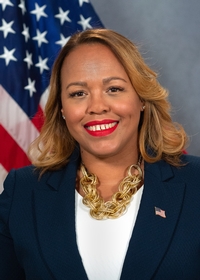
Rep. Johanny Cepeda-Freytiz
Sponsored bills
Maddy summaryHouse Bill 993 creates an official logotype for veteran-owned businesses in Pennsylvania. The Department of Military and Veterans Affairs will develop this logotype and establish an application process and eligibility guidelines for businesses to use it. A veteran-owned business is defined as one where at least 51% of the ownership is held by a veteran. The bill also establishes a penalty for fraudulently claiming veteran status to use the logotype and creates a Veteran-Owned Business Coordinator to assist veteran entrepreneurs.
Maddy summaryHB 627 creates a two-year pilot program allowing public safety agencies in select Pennsylvania communities to implement a new communication system connecting residents with emergency services. The bill amends the Pennsylvania Commission on Crime and Delinquency Law to establish this program, directly affecting participating local police departments and fire agencies, as well as residents in designated pilot areas. Key provisions require the Commission to develop guidelines for the system, track participation rates, and report findings to the legislature by 2027. This is a limited-scope pilot, not a permanent statewide requirement, with no funding specified in the bill text.
Maddy summaryThis bill allows the Pennsylvania Secretary of Education to temporarily waive a rule requiring career and technical education programs to end by the twelfth grade. Under the new provision, the secretary can approve programs that continue beyond high school graduation, though existing programs may still choose to end at grade 12. The authority to grant these waivers will last for three years or until final regulations are issued, whichever happens first. This change directly affects vocational and technical education programs within the state's public school system.
Maddy summaryThis bill authorizes Pennsylvania municipalities to install automated road safety monitoring systems in school zones to issue citations for traffic violations. Local governments may contract with private vendors to manage these systems and collect fines, which are set at $40 for each violation. The legislation establishes that the registered vehicle owner is liable for the penalty and requires detailed notifications to include photographic evidence and appeal instructions. Additionally, the bill mandates a 30-day grace period where municipalities can issue written warnings instead of fines to educate drivers before enforcement begins.
Maddy summaryThis Pennsylvania House Resolution officially designates December 29, 2026, as the 175th Anniversary of the Young Men's Christian Association (YMCA) in the state. The bill recognizes the YMCA's long history of providing community services, including youth programs, fitness activities, and child care, noting that Pennsylvania hosts more YMCA locations than any other state. It expresses appreciation for the organization's staff and volunteers while encouraging continued support for their efforts to foster community connection and well-being.
Maddy summaryThis bill updates Pennsylvania's Human Services Code to improve how the state handles pending applications for long-term care medical assistance. It requires county offices to establish a standardized process that includes sending specific pending letters within ten days, communicating weekly with providers, and reviewing new documents within ten days of receipt. Additionally, the legislation mandates an annual public report on application statistics and allows nursing facilities to request payment for uncompensated care if an application has been pending for at least sixty days. These changes directly affect county assistance offices, long-term care providers, and residents waiting for eligibility decisions.
Maddy summaryThis bill updates Pennsylvania's tax incentives for computer data centers by adding new requirements for owners and operators seeking tax refunds or exemptions. To qualify, facilities must submit detailed applications including investment projections and signed affirmations from authorized executives. Additionally, the legislation mandates that certified data centers obtain an environmental certification, such as LEED Silver or Energy Star, within two years of receiving their initial certification.
Maddy summaryThis bill creates a new tax credit for individuals employed as direct support professionals who assist people with developmental or intellectual disabilities. To qualify, workers must have an adjusted gross income of less than $100,000 and can claim a credit of up to $1,000 against their state taxes, with any unused portion refunded as cash. The program is limited to a total of $2 million per fiscal year and will be available from 2026 through 2030.
Maddy summaryThis Pennsylvania House Resolution directs the Joint State Government Commission to study why medical students choose or avoid primary care careers. The study will examine factors such as student debt, medical school training programs, and diversity initiatives to understand how these influence specialty selection. The commission is required to gather input from medical schools, health organizations, and other experts before submitting a final report to the General Assembly within one year. The resulting report will include findings and recommendations, which may propose new laws or funding to improve the state's primary care workforce.