

Maddy summaryThis bill allows local governments in Pennsylvania to automatically permit battery storage systems as accessory uses on land already approved for commercial solar projects. Under the new rules, these storage units must be located within the same property boundaries and have a capacity that does not exceed the solar facility's generating capacity. Once approved, the storage systems do not require additional special permits or land use approvals, though they must still follow all existing safety and fire codes. The legislation also clarifies that adding battery storage does not change any financial terms or tax exemptions associated with the original solar facility.
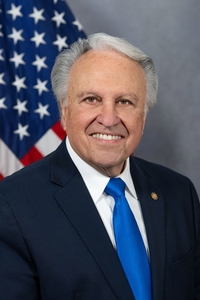
Rep. Eddie Pashinski
Sponsored bills
Maddy summaryThis bill requires individuals receiving state assistance to appear in court to establish paternity and secure child support payments when a responsible relative is absent or a potential father is involved. It creates an exception to this requirement for nonparent relatives, such as grandparents, who can choose not to cooperate if the child's parent has specific issues like addiction, incarceration, or death. The legislation defines these nonparent relatives as blood relatives within a certain degree of kinship and allows them to verify their situation through a self-attestation form. If a recipient fails to cooperate without valid reasons, the department may withhold assistance until they comply with the support enforcement process.
Maddy summaryThis bill updates Pennsylvania vehicle laws to clarify how the Department of Transportation handles personal documents submitted for identity or residency verification. It establishes that these specific documents are exempt from public inspection under the state's Right-to-Know Law, with exceptions only for criminal subpoenas, court orders, or certified law enforcement requests addressing immediate emergencies. The legislation explicitly states that immigration enforcement does not qualify as an exigent circumstance, thereby preventing the department from sharing such private records for immigration purposes.
Maddy summaryThis bill amends Pennsylvania's Controlled Substance Act to officially classify the veterinary sedative medetomidine as a Schedule III controlled substance while explicitly exempting its legitimate use in approved animal drugs and by licensed professionals. It also mandates that veterinarians store both medetomidine and xylazine under the same strict security conditions required for other controlled substances under the state Pharmacy Act. These changes directly affect veterinarians, pharmacies, and manufacturers by updating legal definitions and imposing specific storage protocols to prevent misuse of these substances.
Maddy summaryThis bill, titled the Broadcast Freemarket Agreement Act, prohibits employers in the radio, television, and digital media industries from enforcing non-compete clauses in employment contracts. It declares such agreements void if they stop workers from moving to other companies or performing services within a specific geographic area after leaving their current job. The law also ensures that employees cannot be forced to sign away these protections, while still allowing employers to maintain confidentiality agreements regarding trade secrets.
Maddy summaryThis bill grants school administrators in Pennsylvania's first-class cities and school districts the right to engage in collective bargaining with their employers. It allows these administrators to negotiate terms regarding pay, working hours, benefits, and dispute resolution through designated representatives. The Pennsylvania Labor Relations Board will handle any disagreements about these bargaining items using the same process applied to other public employees. The changes apply immediately upon the bill's enactment.
Maddy summaryThis bill requires Pennsylvania schools to offer optional hunting and trapping education courses to students in grades six through twelve by July 1, 2027. The program must include firearm safety instruction taught by certified instructors, covering topics like safe handling and maintenance, while strictly prohibiting actual firearms or ammunition from entering school buildings. Parents can request to excuse their children from these classes without penalty, and completing the course satisfies the state's basic hunter-trapper education requirement for obtaining a hunting license.
Maddy summaryThis bill amends Pennsylvania's Fiscal Code to create a disaster recovery grant program for fruit and vegetable growers affected by freeze events between April 1 and April 21, 2026. It allocates up to $20 million from previously set-aside funds for highly pathogenic avian influenza to assist growers of specialty crops, including pome and stone fruits, grapes, berries, and vegetables, who suffered production losses exceeding 30%. The legislation explicitly excludes costs already covered by federal funding, insurance, or other contracts from receiving these state grants and requires the Department of Agriculture to publish implementation guidelines within 90 days of the bill's effective date.
Maddy summaryThis resolution directs the Joint State Government Commission to study suicide prevention and data collection efforts in Pennsylvania and provide recommendations for improvement. The study will specifically examine how well the state has met eight existing suicide prevention goals and analyze the Pennsylvania Violent Death Reporting System to identify barriers like lack of mandatory reporting and insufficient funding. The commission is tasked with proposing legislative actions to ensure medical examiners, coroners, and law enforcement agencies consistently report violent death data to the Department of Health.
Maddy summaryThis Pennsylvania bill requires health insurance companies to cover fertility preservation services for individuals facing medically necessary cancer treatments that could cause infertility. The law mandates that insurers include at least three years of egg, sperm, or ovarian tissue storage at an in-network facility, with a minimum lifetime benefit of $100,000 per person. While the coverage must follow standard policy rules like deductibles and copayments, religious employers are allowed to request exemptions if the services conflict with their beliefs, provided they notify patients and allow them to buy separate supplemental insurance.