

Maddy summaryHB 470 requires employers with 15 or more employees in Pennsylvania to provide a paid 30-minute meal break or rest period after five consecutive hours of work. This applies to all covered employees, with exemptions for union contracts that already provide equivalent or better break rights and during workplace emergencies. Employers violating the law face penalties of $100-$500 per affected employee per missed break, with additional recovery of lost wages for workers. The bill takes effect 90 days after enactment.
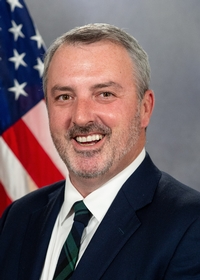
Rep. Kyle Donahue
Sponsored bills
Maddy summaryHB 478 proposes a constitutional amendment to disqualify individuals who recently held government positions (within two months) from serving as election officers in Pennsylvania. It expands existing rules by adding recent officeholders to the list of disqualified candidates, while maintaining exceptions for notaries public and National Guard members. The bill does not change election procedures but modifies constitutional eligibility standards for election workers. As a procedural resolution, it requires General Assembly passage and voter approval per Pennsylvania's constitutional amendment process.
Maddy summaryHB 201 amends Pennsylvania's Public School Code to update how intermediate units (regional education agencies) manage facilities and receive state funding. It expands boards' authority to acquire land/buildings through purchase, lease, or gift (Section 914-A(11)), and requires pre-approval from the Secretary of Education for lease/loan agreements involving office, classroom, or warehouse space (Section 919.1-A(a)). The bill revises the capital subsidy calculation: the state will allocate funds based on each intermediate unit's student enrollment multiplied by the median per-student instructional cost across all districts, then applying a 0.03% rate. This directly affects intermediate units and school districts using their facilities, changing both facility management rules and state funding distribution.
Maddy summaryThis bill is a symbolic resolution (not a law) designating February 27, 2025, as "Dominican Republic Independence Day" within Pennsylvania. It directly affects Pennsylvania residents by formally recognizing this date to honor the Dominican Republic's independence from Haiti in 1844 and the cultural contributions of the state's Dominican-American community. The resolution includes historical context about the Dominican Republic's founding and highlights the community's economic and cultural ties to Pennsylvania. It has no financial, regulatory, or policy impact - it is purely commemorative.
Maddy summaryHB 443 modifies Pennsylvania's sentencing for second-degree murder convictions, including murder of an unborn child or a law enforcement officer. It reduces maximum sentences: for adults, from life imprisonment to 50 years; for offenders under 18, it sets a maximum of 40 years for those 15+ at the time of crime and 30 years for those under 15. The bill also establishes new parole timelines - 25 years for standard life sentences under this section, 20 years for those under 18 aged 15+, and 15 years for those under 15 - requiring the parole board to prioritize public safety, victim safety, and consider the offender's culpability before granting parole. Additionally, it mandates that victims be notified and given a chance to be heard before parole decisions for these cases.
Maddy summaryHB 431 creates a new criminal offense in Pennsylvania for sharing AI-generated images or voice recordings that impersonate real people without their consent. It specifically targets artificially generated content (like deepfakes) that mimics an individual's appearance or voice, defining it as a crime distinct from other impersonation methods. The offense is a misdemeanor of the first degree, or a felony if committed to defraud or harm someone. This law directly affects anyone who shares such AI-generated impersonations within Pennsylvania, protecting individuals from non-consensual misuse of their likeness. The bill provides clear definitions for "artificial intelligence" and "artificially generated impersonation" to ensure the law applies only to AI-created content, not human mimicry.
Maddy summaryHB 432 establishes Pennsylvania's Maternal Care Access Program under the Department of Health to address gaps in maternal healthcare. The bill identifies counties as "maternal care access zones" using the Maternal Vulnerability Index (based on social factors like poverty, education, and healthcare access) and the Social Vulnerability Index. It requires the Department to develop regulations for improving access to obstetric care, birth centers, and providers in areas classified as "maternity care deserts" (regions lacking hospitals, birth centers, or specialized providers within 25 miles). The program directly affects underserved communities and the Department of Health, focusing on concrete policy changes to expand maternal health resources.
Maddy summaryHB 428 establishes the Pennsylvania Artist Fellowship Grant Program, providing $100,000 annual grants to up to 25 eligible artists in the state. The program directly affects Pennsylvania residents aged 18+ who are visual, media, film, or performing artists with regular creative practice, not enrolled in school, and who produce community-accessible work. Key provisions include the Pennsylvania Council on the Arts administering applications, disbursement, and record-keeping, with grants permitted for project costs (materials, travel, housing) but prohibited for political activities or lobbying. The bill appropriates $2.5 million for grants and $250,000 for administration from the General Fund, effective 60 days after enactment.
Maddy summaryHB 406 adds a new offense to Pennsylvania law for "kidnapping of animals" under Title 18. It specifically targets two actions: (1) intentionally taking dogs, cats, equines, swine, or cattle for resale, laboratory use, or animal fighting (a felony of the third degree), and (2) taking dogs, cats, or equines without permission for temporary use (a misdemeanor of the third degree). The bill directly affects individuals involved in animal trafficking, commercial handling, or unauthorized temporary possession of these animals. Penalties increase for repeat offenses under both categories.
Maddy summaryThis resolution designates January 23, 2025, as "Maternal Health Awareness Day" in Pennsylvania. It aims to recognize women who die from pregnancy or childbirth complications, highlighting Pennsylvania's maternal mortality rate of 82 deaths per 100,000 live births and the significantly higher rate (163 per 100,000) for Black women. The resolution does not create new laws or funding but seeks to increase public and healthcare awareness about maternal health risks. It references existing efforts like the Maternal Mortality Review Committee established under Act 24 of 2018.