

Maddy summaryThis bill designates March 9, 2025, as "Charter Day" and Pennsylvania's 344th birthday, commemorating the 1681 charter granted to William Penn by King Charles II. It urges residents, schools, and historical organizations to participate in existing events hosted by the Pennsylvania Historical and Museum Commission and other state heritage institutions. The resolution has no binding legal effect and does not create new policies or obligations; it solely recognizes a historically observed date through ceremonial designation.
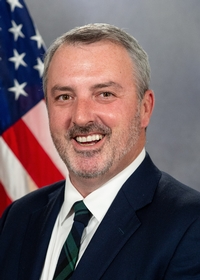
Rep. Kyle Donahue
Sponsored bills
Maddy summaryThis Pennsylvania House Resolution (HR 39) is a symbolic tribute honoring former President Jimmy Carter following his death on December 29, 2024, at age 100. It commemorates his life, presidency, and humanitarian work - including the Camp David Accords, founding The Carter Center, and efforts to eradicate Guinea worm disease - through a series of historical "whereas" statements. As a commemorative resolution, it does not create new laws, allocate funds, or directly affect any individuals or policies. The resolution serves only to formally extend the Pennsylvania General Assembly's condolences and recognize Carter's legacy. It is purely ceremonial, with no legislative or policy impact.
Maddy summaryHB 484 amends Pennsylvania's Fiscal Code to update rules for handling abandoned and unclaimed property. It directly affects property finders and recovery services by requiring them to register with the State Treasurer, prohibiting fees exceeding 15% of recovered property, and banning those under investigation for fraud or perjury. Key provisions include mandating online databases for property searches, requiring 3-month claim windows after public notices, and enabling electronic payments for resolved claims. The bill also adds annual reporting requirements and updates fund deposit rules for unclaimed property proceeds. These changes aim to streamline claim processes while increasing transparency for property owners.
Maddy summaryHB 461, the Commonwealth Funding Safety and Transparency Act, requires nonprofits and their partners receiving state funds for pregnancy-related services (like counseling, testing, and postdelivery support) to provide truthful information and follow specific standards. It mandates compliance with existing transparency laws for funded advertising, adherence to medical safety standards from the AMA and ACOG, and inclusion of all FDA-approved contraceptive options in program materials. Nonprofits failing to meet these requirements lose eligibility for state funding or tax incentives. The law applies directly to organizations administering pregnancy services with Commonwealth funding.
Maddy summaryHB 481 proposes changing Pennsylvania's constitutional amendment process. It requires two-thirds approval in both legislative chambers for proposed amendments, followed by mandatory newspaper publication in all counties and voter approval at the next general election (or a one-month window for emergency amendments requiring two-thirds approval). The bill modifies Article XI of the Pennsylvania Constitution to standardize these steps, including separate voting for multiple amendments. It does not alter existing laws but changes how future constitutional changes would be enacted.
Maddy summaryHB 479 allows Pennsylvania voters to register to vote on election day at their polling place by presenting valid ID and submitting a registration form. It requires voters to show a government-issued ID (like a driver's license, passport, or military ID) and provides a temporary ballot that won't be counted until the state approves the registration within 10 days. The bill mandates that all polling places receive same-day registration forms and instructions for voters. This directly affects qualified Pennsylvania voters who maintain residence in an election district and need to register on election day.
Maddy summaryHB 476 amends Pennsylvania's Election Code to establish a public master list of qualified voters who could serve as election clerks and create a process for filling clerk vacancies. The bill requires county election boards to maintain an annual master list of registered voters (with addresses) for random selection to fill vacancies, with specific exemptions like active military service or breastfeeding. It also mandates that election board vacancies be filled by randomly selecting from the master list of qualified voters, while maintaining the existing requirement that judges and majority inspectors must be from the majority party and minority inspectors from the minority party. These changes aim to standardize clerk appointment procedures and ensure fair representation on election boards.
Maddy summaryHB 474 requires Pennsylvania county boards of elections to maintain a publicly accessible website with a domain ending in ".gov" for election-related information. This bill directly affects all 67 county election boards by adding a specific administrative requirement to their existing duties under the Pennsylvania Election Code. The key provision mandates that these websites must use a ".gov" domain to ensure public access to election information. The bill takes effect one year after enactment, with no other substantive policy changes to election procedures.
Maddy summaryHB 471 allocates $1,000,000 from the General Fund to fund veterans' service officer programs in Pennsylvania. This bill directly affects veterans' service organizations that assist military veterans in accessing benefits and services. The key provision transfers the specified funds to the relevant department to support these programs under Title 51 of Pennsylvania law. The bill takes effect 60 days after enactment.
Maddy summaryHB 291, also known as "Susan's and Emily's Law," updates Pennsylvania's parking rules to better protect pedestrians and cyclists. It requires vehicles parked next to pedestrian plazas or bike lanes to position their wheels within 12 inches of the buffer zone between the lane and curb, aligned with traffic flow. The bill also clarifies disability parking rules, allowing local governments to restrict access to specific vehicles or license plates and charge reasonable fees while complying with federal disability law. Violations of the new pedestrian/bike lane parking rules carry a $15 fine, while disability parking violations can result in fines of $50-$300.