

Maddy summaryHB 498 updates Pennsylvania's emergency protection order process for domestic abuse cases. It clarifies that temporary orders expire after one business day unless local court rules specify a 10-day limit or until a court hearing occurs. Hearing officers must now provide victims with information about local domestic violence resources, free legal aid, and how to report order violations. The bill also requires these orders to be entered into the statewide registry for tracking and mandates courts to schedule hearings to review orders until a final decision is made.
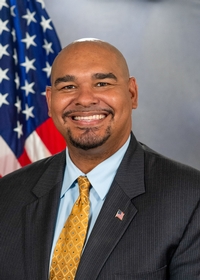
Rep. Justin Fleming
Sponsored bills
Maddy summaryHR 12 is a ceremonial resolution recognizing February 2025 as "Black History Month" in Pennsylvania. It does not create new laws or policies but formally acknowledges the month through the House of Representatives. The resolution highlights the historical origins of Black History Month, including Dr. Carter Godwin Woodson's founding of the Association for the Study of African American Life and History, and notes the 2025 theme focused on African Americans and labor. This resolution directly affects Pennsylvania residents by designating the month for commemoration, without altering any legal rights or obligations.
Maddy summaryHB 493 creates a web-based registry of acute care mental health beds across Pennsylvania, requiring licensed mental health facilities to submit real-time data on available beds (updated every eight hours). The registry includes facility contact details, services offered, patient admission criteria, security levels, and wait times, helping health care professionals (like doctors and nurses) quickly find appropriate beds for patients needing inpatient mental health treatment. Facilities must provide this information to join the registry, and the public will see limited, non-confidential details like available beds, services, and estimated wait times. This system aims to streamline referrals without altering existing mental health care licensing or treatment standards.
Maddy summaryHB 412 amends Pennsylvania law to expand group life insurance access for Pennsylvania National Guard members. It allows nonprofit associations to offer group life insurance to eligible Guard members who are on active duty for 30+ consecutive days under specific circumstances, including federal combat deployments, state emergency responses, or federally mobilized duty with state approval. The bill sets coverage limits at $400,000 per member and $100,000 per spouse or dependent, aligning with existing Servicemembers' Group Life Insurance standards. The changes take effect 60 days after enactment.
Maddy summaryHB 487 amends Pennsylvania's procurement law to prioritize contracts for supplies manufactured and services performed by organizations employing people with disabilities, directly affecting Commonwealth agencies and disability service providers. The bill requires these contracts to be entered without competitive bidding if people with disabilities make a meaningful contribution to the work, mandates annual reviews for contracts over $300,000 to verify compliance, and phases out the use of federal subminimum wage certificates (14(c)) over two years. It also requires integrated work environments where employees with disabilities interact with non-disabled coworkers in state-contracted workplaces, with annual site visits to monitor compliance. The law aims to strengthen economic opportunities for people with disabilities through state procurement while ensuring fair pricing and accountability.
Maddy summaryHB 444 requires most health insurance policies covering hospital or medical/surgical services to include coverage for postacute neurorehabilitation following an acquired brain injury. This includes specific therapies like cognitive rehabilitation, neurobehavioral treatment, and community reintegration services, with no arbitrary limits on the number of covered days if medically necessary. Insurers must verify providers are accredited through recognized programs (e.g., Commission on Accreditation of Rehabilitation Facilities) and cannot apply stricter deductibles or copays than other covered benefits. The requirement does not apply to policies like dental, vision, workers’ compensation, or accident-only coverage.
Maddy summaryHB 443 modifies Pennsylvania's sentencing for second-degree murder convictions, including murder of an unborn child or a law enforcement officer. It reduces maximum sentences: for adults, from life imprisonment to 50 years; for offenders under 18, it sets a maximum of 40 years for those 15+ at the time of crime and 30 years for those under 15. The bill also establishes new parole timelines - 25 years for standard life sentences under this section, 20 years for those under 18 aged 15+, and 15 years for those under 15 - requiring the parole board to prioritize public safety, victim safety, and consider the offender's culpability before granting parole. Additionally, it mandates that victims be notified and given a chance to be heard before parole decisions for these cases.
Maddy summaryHB 423 establishes Pennsylvania's Future Voter Program, allowing high school students aged 16-17 to preregister to vote before turning 18. The bill requires schools to hold voter registration events during Constitution and Citizenship Day (September 17), providing applications and online registration opportunities for eligible students. Students who preregister will not be added to the voter registry until they reach age 18. The program mandates school entities to coordinate these events, with the Secretary of Education and Secretary of the Commonwealth overseeing implementation. This directly affects all high school students in Pennsylvania who are 16 or 17 years old.
Maddy summaryHB 432 establishes Pennsylvania's Maternal Care Access Program under the Department of Health to address gaps in maternal healthcare. The bill identifies counties as "maternal care access zones" using the Maternal Vulnerability Index (based on social factors like poverty, education, and healthcare access) and the Social Vulnerability Index. It requires the Department to develop regulations for improving access to obstetric care, birth centers, and providers in areas classified as "maternity care deserts" (regions lacking hospitals, birth centers, or specialized providers within 25 miles). The program directly affects underserved communities and the Department of Health, focusing on concrete policy changes to expand maternal health resources.
Maddy summaryHB 390 creates a $1,000 annual tax deduction for Pennsylvania health care providers who volunteer to supervise clinical training for students. It directly affects licensed physicians, nurses, physician assistants, and nurse anesthetists who provide uncompensated, volunteer-based clinical training (minimum 80 hours annually per student) to eligible students in approved programs. The bill establishes a Preceptor Certification Committee within the Department of Health to verify eligibility, process applications within 30 days, and issue certificates confirming the deduction. To claim the deduction, providers must submit this certificate with their tax return, and the deduction cannot exceed the tax owed. The policy change specifically targets volunteer clinical education support without altering tax rates or creating new tax credits.