

Issue · Transportation
Transportation
Every transportation bill, vote, and legislator stance in Pennsylvania, automatically classified by Maddy, our AI policy reader.
Total bills
258
2025-2026 Regular Session
Top supporter
Ana Tiburcio
100% support rate
Top opponent
Parke Wentling
20% support rate
Ranked legislators
10
5 support · 5 oppose
Key legislators
Who's moving transportation in Pennsylvania
| Legislator | Party | Stance | Support rate | Votes |
|---|---|---|---|---|
|
AT
Ana Tiburcio
House · District 22
|
D |
Strong +
|
100% | 20 |
|
JM
Jen Mazzocco
House · District 42
|
D |
Strong +
|
100% | 25 |
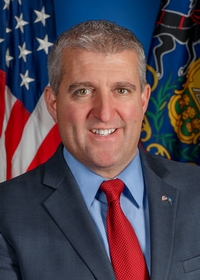
Frank Farry
Senate · District 6
|
R |
Strong +
|
94% | 32 |
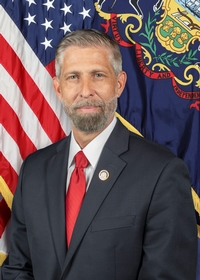
Craig Williams
House · District 160
|
R |
Strong +
|
92% | 77 |
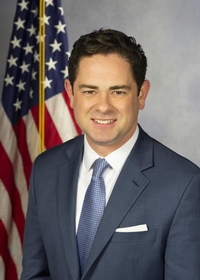
Kyle Mullins
House · District 112
|
D |
Strong +
|
89% | 100 |
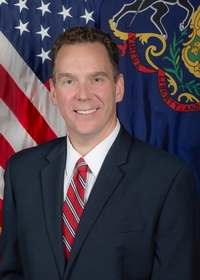
Parke Wentling
House · District 7
|
R |
Strong −
|
20% | 86 |
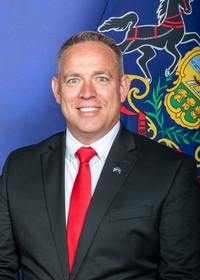
Tom Jones
House · District 98
|
R |
Oppose
|
21% | 81 |
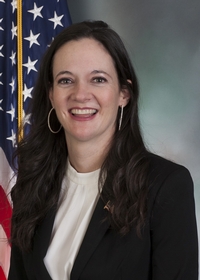
Stephanie Borowicz
House · District 76
|
R |
Oppose
|
23% | 72 |
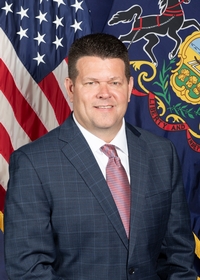
Jamie Walsh
House · District 117
|
R |
Oppose
|
23% | 75 |
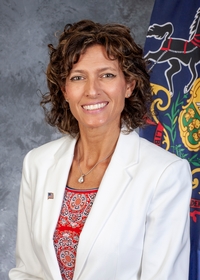
Leslie Rossi
House · District 59
|
R |
Oppose
|
23% | 75 |
Showing 81–90 of 258
bills
All transportation bills
HB 307: An Act amending the act of November 10, 1999 (P.L.491, No.45), known as the Pennsylvania Construction Code Act, in Uniform Construction Code, further providing for adoption by regulations.
SB 569: An Act amending the act of April 9, 1929 (P.L.343, No.176), known as The Fiscal Code, establishing the Snow and Ice Removal Safety Grant Program and the Snow and Ice Removal Safety Grant Program Account; and imposing duties on the Department of Transportation.
HB 829: An Act amending the act of March 10, 1949 (P.L.30, No.14), known as the Public School Code of 1949, in duties and powers of boards of school directors, further providing for kindergartens; in pupils and attendance, further providing for age limits and temporary residence, for definitions and for when provided; and, in early learning programs, providing for full-day kindergarten.
Topics
✓ EducationSupports EducationRequires full-day kindergarten for ages 3-5 (lowering age limit), makes it tuition-free, and adds transportation access - directly expanding early education access and support.
✓ TransportationSupports TransportationBill explicitly mandates free bus service for full-day kindergarten students, adding transportation funding for early education programs.
SB 828: An Act amending Title 62 (Procurement) of the Pennsylvania Consolidated Statutes, establishing the Buy American Grant Program and the Buy American Grant Fund; and imposing duties on the Department of Community and Economic Development.
Topics
✓ Budget & TaxesSupports Budget & TaxesBill uses state appropriations to fund a new grant program for local governments, increasing targeted government spending under budget management.
✓ Labor & EmploymentSupports Labor & EmploymentBill creates grants for 'union-made' vehicles (assembled under collective bargaining), directly advancing labor rights and supporting unionized workplaces through procurement incentives.
✓ TransportationSupports TransportationReimburses local governments for union-made vehicle purchases, directly funding transportation fleet procurement under transportation infrastructure context.
HB 1955: An Act amending Titles 44 (Law and Justice) and 75 (Vehicles) of the Pennsylvania Consolidated Statutes, codifying prohibition on political subdivisions and Commonwealth agencies imposing quotas on the issuance of citations for certain offenses and prohibiting the practice of station averaging; in licensing of drivers, further providing for schedule of convictions and points; in rules of the road in general, providing for radar enforcement systems pilot program; and making a repeal.
Topics
✓ Criminal JusticeSupports Criminal JusticeProhibits citation quotas and station averaging, directly enhancing police accountability in traffic enforcement per criminal justice reform indicators.
✓ TransportationSupports TransportationBill establishes radar enforcement pilot program for traffic safety, directly enhancing transportation safety standards per indicators.
HB 416: An Act amending the act of April 9, 1929 (P.L.343, No.176), known as The Fiscal Code, providing for Child Care Staff Recruitment and Retention Program; in 911 Emergency Communication Services, further providing for surcharge; in Department of Revenue, further providing for exclusion from classes of income and providing for research and experimental expenditures and qualified production property, for report to General Assembly and for interest expense; in joint underwriting association, further providing for findings and for definitions, repealing provisions relating to sunset and providing for risk-based capital certification, for fund transfers, for association oversight and additional duties, for Joint Underwriting Association Board, for board meetings, for construction, for dissolution, for appropriations and for reports and hearings; in State Health Insurance Exchange Affordability Program, further providing for Exchange Affordability Assistance Account; providing for Rural Health Transformation Program; in Treasury Department, providing for waiver of interest, costs and fees; in procedure for disbursement of money from the State Treasury, further providing for use and appropriation of unused Commonwealth funds; in oil and gas wells, further providing for Oil and Gas Lease Fund; providing for advanced air mobility sites and for public transportation vehicles; in human services, further providing for resident care and related costs; in Attorney General, providing for home improvement contractor registration fee; providing for Rare Disease Advisory Council, for affordable housing tax credit and for working Pennsylvanians tax credit; in additional keystone opportunity expansion zones, providing for additional keystone opportunity expansion zones for certain counties of the fourth class; providing for additional extensions of keystone opportunity zones; in special funds, further providing for funding, for expiration and for other grants; in additional special funds and restricted accounts, further providing for establishment of special fund and account, for use of fund and for distributions from Pennsylvania Race Horse Development Fund and providing for refund of 2003 assessment by Insurance Department; in additional special funds and restricted accounts relating to Service and Infrastructure Improvement Fund, further providing for deposits and providing for Property Tax Relief Fund; in general budget implementation, further providing Executive Offices, for Department of Community and Economic Development, for Department of Environmental Protection, for Pennsylvania Fish and Boat Commission, for Pennsylvania Higher Education Assistance Agency and for Commonwealth Financing Authority, providing for stenography services, further providing for surcharges, for Federal and Commonwealth use of forest land and for Multimodal Transportation Fund and providing for State Sexual Offenders Assessment Board, for interest transfers, for fund transfers and for miscellaneous provisions; in 2024-2025 budget implementation, further providing for Department of Education, for Department of Environmental Protection and for Department of Human Services; in Streamlining Permits for Economic Expansion and Development Program, further providing for scope of article, for definitions and for the Streamlining Permits for Economic Expansion and Development Program, providing for review and determination of specific permits and for State agency permits and further providing for construction; providing for electricity load forecast accountability, for 2025-2026 budget implementation and for 2025-2026 restrictions on appropriations for funds and accounts; making repeals; and making editorial changes.
Topics
✓ Budget & TaxesSupports Budget & TaxesBill funds essential programs (Child Care, Rural Health) and provides tax credits (affordable housing, working Pennsylvanians), supporting budget allocation and tax relief.
✓ HealthcareSupports HealthcareBill establishes Rural Health Transformation Program to improve healthcare access in underserved areas, directly advancing healthcare services and access.
✓ HousingSupports HousingBill explicitly includes 'affordable housing tax credit' as a direct funding mechanism for affordable housing programs.
✓ TransportationSupports TransportationBill explicitly mentions 'public transportation vehicles' and 'advanced air mobility sites' in title, directly supporting transportation infrastructure expansion.
Sub-Topics
Fees & Licensing
Property Tax
State Budget
Insurance
Substance Abuse
Affordable Housing
Property Development
Property Taxes
Vehicle Registration
HB 254: An Act amending the act of March 4, 1971 (P.L.6, No.2), known as the Tax Reform Code of 1971, in tax credit and tax benefit administration, further providing for definitions; and establishing the Residential Electric Vehicle Charging Station Tax Credit.
Topics
✓ Budget & TaxesSupports Budget & TaxesCreates refundable tax credit for residential EV charging stations, providing direct tax relief to qualifying PA residents under tax credit administration.
✓ EnergySupports EnergyCreates tax credit for home EV charging stations, directly promoting electric vehicle adoption and clean energy infrastructure investment to reduce fossil fuel dependence.
✓ EnvironmentSupports EnvironmentCreates tax credit for residential EV charging stations, promoting electric vehicle adoption and reducing transportation emissions - direct environmental benefit through clean energy infrastructure support.
✓ TransportationSupports TransportationCreates tax credit for residential EV charging stations, directly promoting sustainable transportation infrastructure adoption and aligning with sustainable transport indicators.
HB 784: An Act authorizing the transfer of an easement interest in lands for a portion of the Project 70 lands owned by the Pennsylvania Fish and Boat Commission, known as Lake Winola Access, in Overfield Township, Wyoming County, to the Department of Transportation.
HB 1485: An Act amending the act of June 24, 1976 (P.L.424, No.101), referred to as the Emergency and Law Enforcement Personnel Death Benefits Act, further providing for death benefits for public works employees, coroners and staff persons and for definitions; and making an editorial change.
Topics
✓ Labor & EmploymentSupports Labor & EmploymentBill expands death benefits to public works employees (municipal infrastructure workers acting as first responders), strengthening worker benefits under Labor & Employment policies.
✓ TransportationSupports TransportationExtends death benefits to public works employees maintaining roads and infrastructure, protecting transportation workforce and supporting infrastructure maintenance.