Issue · Healthcare

Healthcare

Every healthcare bill, vote, and legislator stance in Pennsylvania, automatically classified by Maddy, our AI policy reader.

Total bills
703
2025-2026 Regular Session
Top supporter
Joe Pittman
96% support rate
Top opponent
Eric Weaknecht
14% support rate
Ranked legislators
10
5 support · 5 oppose
Key legislators

Who's moving healthcare in Pennsylvania

Legislators moving healthcare in Pennsylvania
Legislator Party Stance Support rate Decisive votes
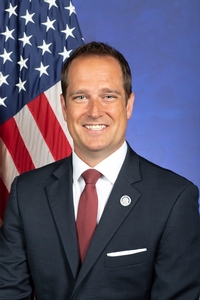
Joe Pittman
Joe Pittman Senate · District 41
R
Strong +
96% 24
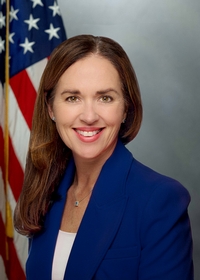
Bridget Malloy Kosierowski
Bridget Malloy Kosierowski House · District 114
D
Strong +
94% 113
Devlin Robinson
Devlin Robinson Senate · District 37
R
Strong +
93% 29
Steve Malagari
Steve Malagari House · District 53
D
Strong +
93% 95
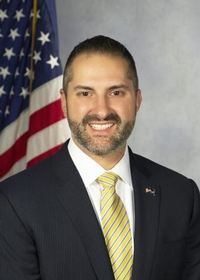
Kyle Mullins
Kyle Mullins House · District 112
D
Strong +
92% 91
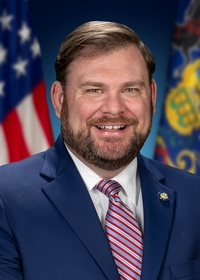
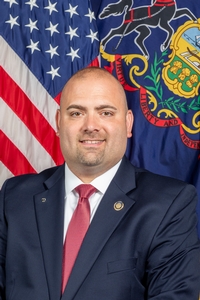
Eric Weaknecht
Eric Weaknecht House · District 5
R
Strong −
14% 66
Jamie Walsh
Jamie Walsh House · District 117
R
Strong −
14% 80
Scott Barger
Scott Barger House · District 80
R
Strong −
14% 72
Ryan Warner
Ryan Warner House · District 52
R
Strong −
14% 77
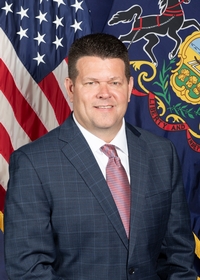
Joe Hamm
Joe Hamm House · District 84
R
Strong −
14% 76
Showing 191–200 of 703 bills

All healthcare bills

in committee · Pennsylvania · Senate Mar 20, 2026

SR 254: A Resolution designating March 11, 2026, as "Registered Dietitian Nutritionist Day" in Pennsylvania.

This Senate Resolution designates March 11, 2026, as "Registered Dietitian Nutritionist Day" in Pennsylvania to honor the work of licensed nutrition professionals. The bill recognizes registered dietitian nutritionists as food and nutrition experts who require accredited degrees, internships, and national examinations to practice. It also praises the Pennsylvania Academy of Nutrition and Dietetics and its approximately 3,127 members for promoting healthy eating and well-being across the state. This resolution is symbolic and does not create new laws or funding, serving instead to acknowledge the contributions of these healthcare professionals.
in committee · Pennsylvania · Senate Mar 20, 2026

SR 256: A Resolution designating October 13, 2026, as "Metastatic Breast Cancer Awareness Day" in Pennsylvania.

This Senate Resolution designates October 13, 2026, as Metastatic Breast Cancer Awareness Day in Pennsylvania to raise visibility for a specific stage of breast cancer. The measure does not create new laws or funding but serves as a symbolic gesture to honor patients and families affected by the disease. It highlights the need for increased research and equitable care access while aligning with national awareness efforts that use teal, green, and pink ribbon colors. The resolution is non-binding and focuses on public recognition rather than implementing policy changes.
in committee · Pennsylvania · Senate Mar 12, 2026

SB 1186: An Act amending the act of November 21, 2016 (P.L.1318, No.169), known as the Pharmacy Audit Integrity and Transparency Act, in preliminary provisions, further providing for definitions; and, in pharmacy benefits manager contracts, providing for State pharmacy benefits manager.

This bill amends Pennsylvania's Pharmacy Audit Integrity and Transparency Act to update definitions for specialty drugs and spread pricing, while establishing a new requirement for a single state-run pharmacy benefits manager. The legislation directs the Department of Human Services to select one third-party administrator by July 2026 to manage all pharmacy benefits for Medicaid recipients, replacing the current system where multiple pharmacy benefits managers may handle these services. Managed care organizations receiving Medicaid contracts will be required to use this state pharmacy benefits manager, and the selection process must include competitive bidding and strict conflict-of-interest disclosures to prevent financial entanglements between the manager and other healthcare entities.
in committee · Pennsylvania · Senate Mar 6, 2026

SR 158: A Resolution recognizing February 28, 2026, as "Rare Disease Day" in Pennsylvania.

This Senate Resolution formally recognizes February 28, 2026, as "Rare Disease Day" in Pennsylvania to raise awareness about rare diseases affecting approximately 1.2 million residents. The measure does not create new laws or funding but serves as a symbolic gesture to highlight the challenges faced by individuals with rare conditions, including limited treatment options and difficulty finding specialized care. By joining a global observance, the resolution aims to encourage public attention and support for patients and their families without altering existing policies or programs.
in committee · Pennsylvania · Senate Mar 20, 2026

SB 1234: An Act amending the act of March 10, 1949 (P.L.30, No.14), known as the Public School Code of 1949, in school health services, providing for scoliosis screening and examination; and abrogating a regulation.

This bill requires Pennsylvania public schools to include scoliosis screening and examinations in their health programs for students in grades five, six, seven, and nine, as well as age-appropriate students in ungraded classes. The screening must be conducted by qualified personnel following guidelines from the Secretaries of Health and Education, with results added to each student's health record. Parents may opt their children out of the screening in writing, and students already under medical care for scoliosis are exempt from testing. Additionally, the bill repeals an existing state regulation regarding scoliosis screening to align with these new requirements.
Sub-Topics Student Health
in committee · Pennsylvania · House Jun 10, 2026

HR 435: A Resolution recognizing the month of May 2026 as "Osteoporosis Awareness Month" in Pennsylvania.

This House Resolution designates May 2026 as Osteoporosis Awareness Month in Pennsylvania to highlight the importance of bone health and fracture prevention. The measure does not create new laws or funding but serves to raise public awareness about osteoporosis, a condition that weakens bones and increases fracture risk, particularly among older adults. By recognizing this month, the resolution encourages health professionals, policymakers, and the public to focus on preventive measures such as proper nutrition, exercise, and screening. The text includes background information on the prevalence and costs of osteoporosis in Pennsylvania and the nation to underscore the significance of the awareness campaign.
in committee · Pennsylvania · Senate Jun 22, 2026

SB 906: An Act establishing the Pennsylvania Family and Medical Leave Program and the Family and Medical Leave Fund; conferring powers and imposing duties on the Department of Labor and Industry; creating a right of action; and imposing penalties.

This bill establishes a new paid family and medical leave program in Pennsylvania, creating a fund to support workers who need time off for family care or medical reasons. It requires employers to contribute to the program and sets rules for how long employees can take leave, how much money they receive, and what situations qualify for benefits, including care for family members with serious health conditions or recovery from domestic violence. The Department of Labor and Industry will administer the program, handle claims, and enforce rules, while employees have the right to take legal action if their rights are violated. The legislation also includes provisions for self-employed individuals to opt into the program and establishes an advisory board to guide program development.
in committee · Pennsylvania · Senate Jun 30, 2025

SB 905: An Act amending Title 40 (Insurance) of the Pennsylvania Consolidated Statutes, in regulation of insurers and related persons generally, providing for addiction treatment services information collection and reporting.

This Pennsylvania bill requires health insurance companies to collect and report detailed statistics on addiction treatment services provided under their plans. Insurers must submit annual reports to the state department by April 30, including data on the number of people receiving treatment, units of service authorized and paid for, average length of stay, and the percentage of treatment requests that were denied or limited. The reported information is broken down by treatment type, such as inpatient rehabilitation, outpatient services, and detoxification, while protecting individual patient privacy. The state Department of Drug and Alcohol Programs will review these reports to check compliance with federal parity laws and Pennsylvania regulations, then share findings with legislative committees.
in committee · Pennsylvania · Senate Jun 30, 2025

SB 904: An Act amending Title 40 (Insurance) of the Pennsylvania Consolidated Statutes, in mental health parity and access to addiction treatment, further providing for scope of chapter, for definitions and for annual attestation.

This bill requires health insurance companies in Pennsylvania to annually certify that their mental health and addiction treatment coverage complies with federal and state parity laws. Insurers must submit sworn statements by January 1 each year confirming they have reviewed all their policies and plans for compliance, including those managed by third-party administrators. The law also clarifies which types of insurance policies are covered and establishes specific filing deadlines with the state insurance department. These changes aim to ensure consistent oversight of mental health and substance use disorder benefits across the state's health insurance market.
in committee · Pennsylvania · Senate Jun 30, 2025

SB 903: An Act amending Title 35 (Health and Safety) of the Pennsylvania Consolidated Statutes, providing for alcohol and other drug addiction continuing education.

This bill requires healthcare professionals in Pennsylvania to complete continuing education on alcohol and drug addiction as a condition of license renewal starting November 1, 2025. The program applies to physicians, physician assistants, nurses, and nurse practitioners and mandates at least 10 hours of training covering addiction identification, referral procedures, and support group resources. Healthcare licensing boards will enforce this requirement and may grant waivers for individuals facing serious illness, military service, or other hardships. The education must include training on a specific referral protocol called "warm handoff" that connects patients from emergency care to specialty treatment services.
Showing 191 to 200 of 703 bills
Previous 1 19 20 21 71 Next