Issue · Healthcare

Healthcare

Every healthcare bill, vote, and legislator stance in Pennsylvania, automatically classified by Maddy, our AI policy reader.

Total bills
703
2025-2026 Regular Session
Top supporter
Joe Pittman
96% support rate
Top opponent
Eric Weaknecht
14% support rate
Ranked legislators
10
5 support · 5 oppose
Key legislators

Who's moving healthcare in Pennsylvania

Legislators moving healthcare in Pennsylvania
Legislator Party Stance Support rate Decisive votes
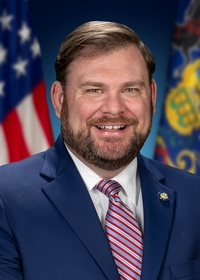
Joe Pittman
Joe Pittman Senate · District 41
R
Strong +
96% 24
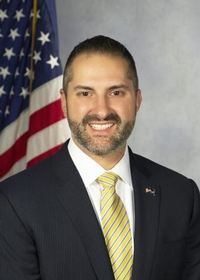
Bridget Malloy Kosierowski
Bridget Malloy Kosierowski House · District 114
D
Strong +
94% 113
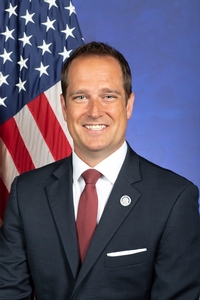
Devlin Robinson
Devlin Robinson Senate · District 37
R
Strong +
93% 29
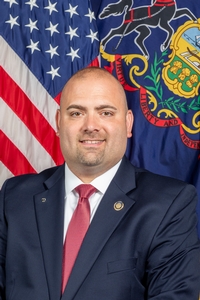
Steve Malagari
Steve Malagari House · District 53
D
Strong +
93% 95
Kyle Mullins
Kyle Mullins House · District 112
D
Strong +
92% 91
Eric Weaknecht
Eric Weaknecht House · District 5
R
Strong −
14% 66
Jamie Walsh
Jamie Walsh House · District 117
R
Strong −
14% 80
Scott Barger
Scott Barger House · District 80
R
Strong −
14% 72
Ryan Warner
Ryan Warner House · District 52
R
Strong −
14% 77
Joe Hamm
Joe Hamm House · District 84
R
Strong −
14% 76
Showing 201–210 of 703 bills

All healthcare bills

in committee · Pennsylvania · Senate Jul 8, 2025

SB 901: An Act amending Title 40 (Insurance) of the Pennsylvania Consolidated Statutes, in regulation of insurers and related persons generally, providing for disclosure of addiction treatment coverage and for administrative penalties.

This bill requires health insurance companies in Pennsylvania to send their policyholders a clear, two-page notice twice each year explaining what addiction treatment services are covered under their plans. The notice must detail specific care levels like detoxification and rehabilitation, explain how long stays are available, describe how to access services, and outline appeal processes. Insurers must submit these notices to the Department of Drug and Alcohol Programs for review before sending them to customers, and the department has 45 days to approve or request changes. Companies that fail to provide this information as required could face administrative fines or penalties determined by the department.
in committee · Pennsylvania · Senate Jul 8, 2025

SB 909: An Act amending the act of April 9, 1929 (P.L.177, No.175), known as The Administrative Code of 1929, in powers and duties of the Department of Drug and Alcohol Programs, further providing for regulatory flexibility during opioid epidemic.

This bill updates Pennsylvania's Administrative Code to give the Department of Drug and Alcohol Programs more flexibility in hiring and training staff during an opioid epidemic. It allows individuals with lived experience of addiction recovery or internship experience to serve as counselors if approved by a clinical supervisor, and prevents the department from adding new credential requirements for treatment staff during the crisis. The law defines an opioid epidemic as a period with over 1,000 confirmed overdose deaths from opioids in at least three consecutive years, and it takes effect 60 days after passage.
in committee · Pennsylvania · Senate Jul 8, 2025

SB 900: An Act providing for Commonwealth support for a Mental Health and Intellectual Disability Staff Member Loan Forgiveness Program and an Alcohol and Drug Addiction Counselor Loan Forgiveness Program; and imposing duties on the Pennsylvania Higher Education Assistance Agency.

This bill establishes a loan forgiveness program in Pennsylvania to help recruit and retain workers in mental health, intellectual disability, and addiction counseling fields. It directly affects full-time employees at county mental health agencies, private providers, and licensed addiction treatment facilities who have student loans and agree to work in these professions for at least four years. Under the program, eligible workers can receive up to $25,000 in loan forgiveness over four years, with a maximum of $6,250 forgiven each year, provided they remain employed in qualifying positions. The Pennsylvania Higher Education Assistance Agency is tasked with administering the program and determining compliance with employment requirements.
Sub-Topics Substance Abuse
in committee · Pennsylvania · Senate Feb 24, 2026

SB 1195: An Act providing for health care insurance preventive services coverage protections; conferring authority on the Insurance Department and the Insurance Commissioner; and providing for regulations, for enforcement and for penalties.

SB 1195 requires most health insurance plans in Pennsylvania to cover preventive services listed by the Insurance Department without cost-sharing (like copays or deductibles). It directly affects health insurers and enrollees (people with health insurance), excluding grandfathered plans (existing before 2010) and limited policies like dental-only or vision-only coverage. The bill establishes a "preventive services list" maintained by the Insurance Department, which can add or remove services after a public comment period. Insurers must cover all listed services without out-of-pocket costs for enrollees, with the department enforcing compliance and imposing penalties for violations.
Sub-Topics Insurance
in committee · Pennsylvania · House Feb 20, 2026

HB 2238: An Act amending Title 35 (Health and Safety) of the Pennsylvania Consolidated Statutes, in emergency medical services system, further providing for support of emergency medical services.

HB 2238 requires Pennsylvania's Department of Health to submit an annual financial report by October 1st detailing all expenditures from the Emergency Medical Services Operating Fund, including payments to local EMS agencies, compliance documentation, and corrective actions for noncompliant recipients. If the report is late, administrative funds for the department are withheld, but funding for local EMS providers (like ambulance services and fire departments) remains protected. The Auditor General must verify the report's accuracy, and false certifications carry penalties. The bill aims to increase transparency and accountability in how EMS funds are managed, directly affecting the Department of Health and local emergency medical services providers.
Tags Public Safety
in committee · Pennsylvania · Senate Feb 24, 2026

SB 1196: An Act amending the act of June 13, 1967 (P.L.31, No.21), known as the Human Services Code, in public assistance, providing for pain parity in Medicaid and for pain parity in commercial insurance.

SB 1196 requires Pennsylvania's Medicaid program and commercial health insurers to treat non-opioid pain medications equally to opioid medications. Specifically, it prohibits Medicaid from labeling non-opioid drugs as "nonpreferred" when opioids are preferred and bans insurers from imposing stricter coverage rules, higher costs, or more restrictive prior authorization for non-opioid drugs compared to opioids. The law applies to all FDA-approved pain medications once approved, ensuring patients have equal access to non-opioid options without facing worse insurance terms than opioid alternatives. It takes effect 60 days after enactment.
in committee · Pennsylvania · House Feb 25, 2026

HB 2241: An Act amending the act of July 19, 1979 (P.L.130, No.48), known as the Health Care Facilities Act, providing for hospital price transparency and for medical office price transparency.

HB 2241 requires Pennsylvania hospitals and medical offices to publish standard charges for services online in a readable digital format and provide printed copies upon request. It mandates that hospitals list all standard charges - including gross charges, negotiated rates with insurers, and discounted cash prices - for every item or service, including both inpatient and outpatient care. The bill specifically requires a simplified, consumer-friendly list of "shoppable services" (like elective procedures patients can schedule in advance) alongside the full charge list. This applies directly to all hospitals operating under Pennsylvania's Health Care Facilities Act, aiming to help patients compare costs before receiving care.
Sub-Topics Hospitals
in committee · Pennsylvania · Senate Feb 27, 2026

SB 1194: An Act requiring health care facilities to provide autologous blood transfusions and direct allogeneic blood transfusions to individuals under certain circumstances.

SB 1194 requires Pennsylvania health care facilities (like hospitals and clinics) to allow patients to receive autologous blood transfusions (using their own stored blood) or direct allogeneic blood transfusions (using blood donated specifically for them) before certain medical procedures. Patients must notify the facility at least 72 hours in advance and, for direct allogeneic transfusions, provide a list of eligible blood donors. The law aims to reduce reliance on standard donor blood, which carries risks like allergic reactions or infection transmission. It applies to all licensed health care facilities and takes effect 60 days after enactment.
passed · Pennsylvania · House Jun 5, 2026

HB 2254: An Act amending the act of April 17, 2016 (P.L.84, No.16), known as the Medical Marijuana Act, providing for compassionate access to medical marijuana; and imposing a penalty.

HB 2254 adds Chapter 14 to Pennsylvania's Medical Marijuana Act, allowing terminally ill patients to use medical marijuana within specific care facilities (like hospitals, nursing homes, and assisted living residences) under strict conditions. Facilities must create written guidelines within 180 days covering safe storage, patient safety, allowed forms of marijuana, and documentation. The bill imposes a $500 daily civil penalty for noncompliance, with penalties deposited into the Medical Marijuana Program Fund. It does not require facilities to provide certifications, administer marijuana, or permit use in emergency departments. This directly affects terminally ill patients seeking access in regulated care settings and facilities operating under the existing medical marijuana program.
Sub-Topics Long-Term Care
in committee · Pennsylvania · House Feb 26, 2026

HB 2253: An Act requiring school life support coaches in Pennsylvania high schools; and imposing duties on the Department of Education and school districts.

HB 2253 requires Pennsylvania public high schools to hire school life support coaches to provide daily nonclinical emotional support to students. High-need schools (defined by factors like poverty rates, attendance issues, or dropout risk) must employ one coach for every 300 students, while other schools must have one for every 500 students. Coaches must hold specific educational qualifications (e.g., bachelor's degree with two years of experience), complete training in trauma-informed care and crisis response, and focus on mentorship and resource connection without providing therapy or diagnosis. The Department of Education will guide districts on equitable compensation, and coaches must refer students needing clinical services to licensed staff.
Sub-Topics Student Health
Showing 201 to 210 of 703 bills
Previous 1 20 21 22 71 Next