Issue · Healthcare

Healthcare

Every healthcare bill, vote, and legislator stance in Pennsylvania, automatically classified by Maddy, our AI policy reader.

Total bills
703
2025-2026 Regular Session
Top supporter
Joe Pittman
96% support rate
Top opponent
Eric Weaknecht
14% support rate
Ranked legislators
10
5 support · 5 oppose
Key legislators

Who's moving healthcare in Pennsylvania

Legislators moving healthcare in Pennsylvania
Legislator Party Stance Support rate Decisive votes
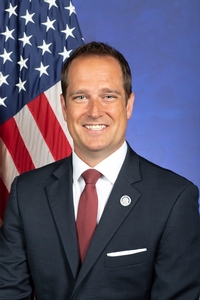
Joe Pittman
Joe Pittman Senate · District 41
R
Strong +
96% 24
Bridget Malloy Kosierowski
Bridget Malloy Kosierowski House · District 114
D
Strong +
94% 113
Devlin Robinson
Devlin Robinson Senate · District 37
R
Strong +
93% 29
Steve Malagari
Steve Malagari House · District 53
D
Strong +
93% 95
Kyle Mullins
Kyle Mullins House · District 112
D
Strong +
92% 91
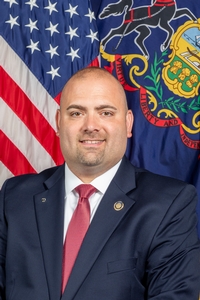
Eric Weaknecht
Eric Weaknecht House · District 5
R
Strong −
14% 66
Jamie Walsh
Jamie Walsh House · District 117
R
Strong −
14% 80
Scott Barger
Scott Barger House · District 80
R
Strong −
14% 72
Ryan Warner
Ryan Warner House · District 52
R
Strong −
14% 77
Joe Hamm
Joe Hamm House · District 84
R
Strong −
14% 76
Showing 181–190 of 703 bills

All healthcare bills

in committee · Pennsylvania · House Mar 19, 2026

HB 2304: An Act amending Title 75 (Vehicles) of the Pennsylvania Consolidated Statutes, in licensing of drivers, further providing for issuance and content of driver's license.

This bill amends Pennsylvania's vehicle laws to exempt individuals aged 65 or older from identification card renewal fees if they have surrendered their driver's license due to a diagnosed physical or mental condition. The exemption applies specifically to those who surrender their licenses based on a health care provider's diagnosis, and the department may request proof of this medical documentation. The change aims to reduce financial burdens on seniors who can no longer drive for health reasons. The legislation would become effective 60 days after passage.
in committee · Pennsylvania · House Mar 16, 2026

HB 2292: An Act amending Title 18 (Crimes and Offenses) of the Pennsylvania Consolidated Statutes, in obstructing governmental operations, further providing for obstructing administration of law or other governmental function.

This bill amends Pennsylvania's obstruction of governmental operations laws to create a specific exception for healthcare facilities. It allows nonviolent obstruction of law enforcement entry at hospitals and emergency departments unless officers have probable cause and a judicial warrant for a specific individual. The law defines key terms like "health care facility," "emergency department," and "judicial warrant" to clarify when this protection applies. The changes would take effect 60 days after enactment and apply to all law enforcement officers within the state.
Sub-Topics Law Enforcement
in committee · Pennsylvania · Senate Mar 23, 2026

SB 1243: An Act amending the act of March 23, 1972 (P.L.136, No.52), known as the Professional Psychologists Practice Act, further providing for definitions, for State Board of Psychology and for powers of the board; providing for prescription certificate, for prescribing and administrative practices and for controlled substances; and further providing for refusal, suspension or revocation of license, for reporting of multiple licensure and for penalties and injunctions against unlawful practice.

This bill amends Pennsylvania's Professional Psychologists Practice Act to update definitions and expand the powers of the State Board of Psychology. It primarily affects licensed psychologists by clarifying what constitutes the practice of psychology and establishing new categories for those who hold prescription certificates. Key provisions include defining collaborative relationships between prescribing psychologists and primary care providers, setting standards for prescribing controlled substances, and outlining procedures for license suspension or revocation. The legislation also clarifies definitions for terms like "prescription certificate" and "controlled substance" to ensure consistent regulatory oversight.
passed · Pennsylvania · House Jun 3, 2026

HR 461: A Resolution recognizing the month of June 2026 as "Scleroderma Awareness Month" and June 29, 2026, as "World Scleroderma Day" in Pennsylvania.

This Pennsylvania House Resolution designates June 2026 as Scleroderma Awareness Month and June 29, 2026, as World Scleroderma Day within the state. The measure aims to increase public understanding of scleroderma, a rare autoimmune condition that causes skin hardening and can affect internal organs, by promoting awareness rather than implementing new policies or funding. The resolution does not change laws or allocate money but serves to highlight the disease and support ongoing research efforts at Pennsylvania universities.
in committee · Pennsylvania · House Mar 18, 2026

HB 2270: An Act amending the act of November 21, 2016 (P.L.1318, No.169), known as the Pharmacy Audit Integrity and Transparency Act, in preliminary provisions, further providing for definitions; and, in pharmacy benefits manager contracts, providing for State pharmacy benefits manager.

This bill amends Pennsylvania's Pharmacy Audit Integrity and Transparency Act to update definitions for "specialty drug" and "spread pricing" while establishing a new role for a State pharmacy benefits manager. The updated definitions clarify which prescription medications qualify as specialty drugs based on cost, handling requirements, and patient needs, while defining spread pricing as when a pharmacy benefits manager charges more than it pays pharmacists. The bill requires the Department of Human Services to select a single third-party administrator to manage all pharmacy benefits for Medicaid recipients by July 2026, ensuring all managed care organizations contract with this designated manager. The procurement process mandates competitive selection with strict conflict-of-interest disclosures to prevent conflicts between the manager and other healthcare entities like pharmacies, drug distributors, or managed care organizations.
in committee · Pennsylvania · House Mar 24, 2026

HB 2315: An Act amending the act of December 29, 1972 (P.L.1701, No.364), known as the Health Maintenance Organization Act, further providing for rules and regulations.

This bill amends Pennsylvania's Health Maintenance Organization Act to require health plans to cover basic services when referrals come from direct primary care providers who are not part of the plan's network. It defines direct primary care providers as licensed doctors or advanced practitioners who offer direct care through personal agreements with patients. The rule must be established within one year of the bill's effective date and applies to all health maintenance organizations operating in the state.
Sub-Topics Primary Care
in committee · Pennsylvania · House Mar 10, 2026

HB 2276: An Act amending Title 61 (Prisons and Parole) of the Pennsylvania Consolidated Statutes, in general administration relating to correctional institutions, providing for boards of prison inspectors in State correctional institutions.

This bill establishes new Boards of Prison Inspectors at each Pennsylvania State correctional institution to oversee facility conditions and operations. The boards will consist of 18 members including medical professionals, educators, law enforcement officers, county officials, and community representatives, with at least one member being a former inmate or family member of an inmate. Each board will conduct unannounced inspections at least twice annually, review inmate complaints and officer misconduct records, and submit public reports on their findings. Board members serve three-year terms without pay but receive expense reimbursement, and they are prohibited from being current employees of the correctional system.
in committee · Pennsylvania · House Mar 18, 2026

HB 2297: An Act amending Title 61 (Prisons and Parole) of the Pennsylvania Consolidated Statutes, in medical services, further providing for Medical Services Program.

This bill establishes a fee program for certain nonemergency medical services provided to inmates in Pennsylvania prisons, with fees capped at $1 per service when requested by the inmate. It requires the Department of Corrections to create regulations specifying which medical services incur fees, their amounts, and payment procedures while exempting medical emergencies, chronic care, and preexisting conditions from fees. The legislation also mandates that inmates pay for medical services related to injuries they caused to themselves or other inmates. The Department of Corrections must update existing rules to align with these changes within 180 days of the bill's effective date, which is set to occur 60 days after enactment.
passed · Pennsylvania · House Mar 25, 2026

HR 450: A Resolution recognizing March 31, 2026, as "Black Midwives Day" in Pennsylvania.

This Pennsylvania House Resolution designates March 31, 2026, as "Black Midwives Day" to honor the contributions of Black midwives to maternal and infant health in the state. The resolution highlights the importance of midwifery in addressing maternal health disparities, particularly in Black communities where pregnancy-related mortality rates are significantly higher than national averages. It acknowledges the role of midwives in providing culturally sensitive care and reducing barriers to access in areas with limited maternity health resources. The measure serves as a symbolic recognition rather than establishing new laws or funding requirements.
in committee · Pennsylvania · House Mar 25, 2026

HB 2265: An Act amending the act of July 19, 1979 (P.L.130, No.48), known as the Health Care Facilities Act, providing for onsite emergency physicians.

This bill requires hospitals in Pennsylvania with emergency departments to have a board-certified or board-eligible emergency physician on site and on duty whenever the emergency department is open. The law defines these physicians as those licensed in Pennsylvania who hold board certification in emergency medicine or have completed accredited residency training and remain eligible for certification. Hospitals in rural areas with an average of 46 or fewer emergency department visits per day over two years may request an exception to allow physicians with different emergency medicine qualifications to staff the department. The Department of Health has the authority to grant these exceptions after reviewing a hospital's documented efforts to recruit and retain qualified emergency physicians and any additional conditions needed to protect patient safety.
Sub-Topics Hospitals
Showing 181 to 190 of 703 bills
Previous 1 18 19 20 71 Next