Issue · Budget & Taxes

Budget & Taxes

Every budget & taxes bill, vote, and legislator stance in Pennsylvania, automatically classified by Maddy, our AI policy reader.

Total bills
697
2025-2026 Regular Session
Top supporter
Camera Bartolotta
94% support rate
Top opponent
Katie Muth
23% support rate
Ranked legislators
10
5 support · 5 oppose
Key legislators

Who's moving budget & taxes in Pennsylvania

Legislators moving budget & taxes in Pennsylvania
Legislator Party Stance Support rate Votes
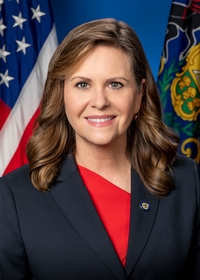
Camera Bartolotta
Camera Bartolotta Senate · District 46
R
Strong +
94% 74
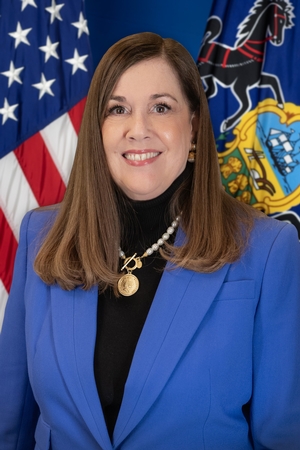
Lisa Baker
Lisa Baker Senate · District 20
R
Strong +
93% 61
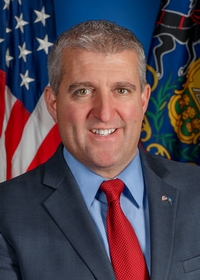
Joe Picozzi
Joe Picozzi Senate · District 5
R
Strong +
92% 83
Frank Farry
Frank Farry Senate · District 6
R
Strong +
92% 67
Dave Argall
Dave Argall Senate · District 29
R
Strong +
91% 80
Katie Muth
Katie Muth Senate · District 44
D
Oppose
23% 74
Art Haywood
Art Haywood Senate · District 4
D
Oppose
29% 83
Lindsey Williams
Lindsey Williams Senate · District 38
D
Oppose
30% 74
Charity Krupa
Charity Krupa House · District 51
R
Oppose
31% 292
Steve Santarsiero
Steve Santarsiero Senate · District 10
D
Oppose
32% 68
Showing 501–510 of 697 bills

All budget & taxes bills

in committee · Pennsylvania · Senate May 13, 2025

SB 429: An Act to provide appropriations from the General Fund for the expenses of certain agencies of the Executive Department for the fiscal year July 1, 2025, to June 30, 2026, and for the payment of bills incurred and remaining unpaid at the close of the fiscal year ending June 30, 2025.

SB 429, known as the General Appropriation Act of 2025, allocates funds from the state's General Fund to cover expenses for various agencies within the Executive Department. This bill provides appropriations for salaries, services, and goods for the fiscal year spanning July 1, 2025, to June 30, 2026, and also addresses outstanding bills from the previous fiscal year. For example, it specifically appropriates $11,921,000 to the Department of Human Services for rape crisis programs. Any unspent funds from these appropriations will lapse at the close of the fiscal year on June 30, 2026.
in committee · Pennsylvania · House May 13, 2025

HB 1449: An Act amending Title 42 (Judiciary and Judicial Procedure) of the Pennsylvania Consolidated Statutes, in budget and finance, further providing for expenses.

HB 1449 amends Pennsylvania law regarding the expenses paid by the Office of the Court Administrator of Pennsylvania (OCAP). It increases the annual registration fee OCAP pays to the Special Court Judges Association of Pennsylvania from $200 to $400 for each magisterial district judge and Philadelphia Municipal Court Judge position. The bill clarifies that OCAP directly funds a monthly journal for legal updates, while other expenses, such as the registration fee, are covered by the annual appropriation for magisterial district judges.
Sub-Topics Fees & Licensing
in committee · Pennsylvania · House Jul 16, 2025

HR 286: A Resolution urging the President and Congress of the United States and the Environmental Protection Agency to address the requirements of the MS4 storm water management program to relieve the burden on taxpayers.

This resolution (HR 286) is a non-binding request from Pennsylvania's House of Representatives urging the federal government to address requirements under the EPA's MS4 stormwater program. It states that Pennsylvania municipalities struggle to fund federally mandated stormwater management projects without federal support, leading to increased fees for residents and businesses. The resolution specifically asks the President, Congress, and EPA to relieve this financial burden on taxpayers and update the Clean Water Act to create fairer funding solutions. It does not create new law but seeks federal action on an unfunded mandate affecting over 1,000 local stormwater systems in Pennsylvania.
in committee · Pennsylvania · Senate Feb 13, 2025

SB 254: An Act amending the act of March 10, 1949 (P.L.30, No.14), known as the Public School Code of 1949, providing for the STEM Grant Program; and making an appropriation.

SB 254 establishes a new STEM Grant Program under Pennsylvania's Public School Code, enabling eligible public school educators to teach science, technology, engineering, and mathematics (STEM) subjects at nonpublic schools (including private and charter schools) during times when they are not teaching at their public school. Participating nonpublic schools will be reimbursed for the educators' compensation, calculated as the educator's hourly wage multiplied by hours taught and then multiplied by 1.25 to account for preparation time. The program is funded by a $1,000,000 state appropriation, with the Department of Education selecting an administrator to manage applications and distribute funds. Nonpublic schools must submit annual reports on program implementation, including student participation and outcomes.
Sub-Topics Teachers
in committee · Pennsylvania · House Mar 3, 2025

HB 775: An Act amending the act of March 4, 1971 (P.L.6, No.2), known as the Tax Reform Code of 1971, providing for phoenix employee and returnship tax credits; and imposing penalties.

HB 775 creates tax credits for Pennsylvania businesses hiring "phoenix employees" (workers who were out of the workforce for two years or received a 50%+ pay increase) in high-demand occupations. Companies can claim a credit equal to twice the state personal income tax rate on qualifying employees' earnings, applied against corporate, franchise, or personal income taxes. The bill limits annual credits to $150,000 in the first year, $300,000 in the second, and $450,000 thereafter, with $15 million allocated for the first year. Businesses must commit to retaining employees for three years and maintaining operations in Pennsylvania for five years to qualify. The credit directly affects employers in high-demand fields and workers reentering the workforce after extended gaps.
Sub-Topics Income Tax
in committee · Pennsylvania · House Mar 3, 2025

HB 781: An Act amending the act of June 13, 1967 (P.L.31, No.21), known as the Human Services Code, in general powers and duties of the Department of Public Welfare, providing for infant and toddler care professionals salary supplement; and promulgating regulations.

HB 781 creates a three-year pilot program to provide salary supplements for infant and toddler care professionals working at eligible child-care centers in Pennsylvania. The Department of Public Welfare will administer the program, establishing county-level pay parity standards that consider education and certification levels to prevent staff retention issues. Child-care centers receiving funds must use them exclusively for wage supplements and cannot reduce existing pay or replace staff costs. The program requires annual reporting to the General Assembly and expires after three fiscal years beginning in 2026-2027.
passed · Pennsylvania · House Jul 23, 2025

HB 1668: An Act amending the act of April 9, 1929 (P.L.343, No.176), known as The Fiscal Code, in Water Assistance Program, providing for retrofitting residential high-rise buildings with automatic fire sprinkler systems.

HB 1668 allows first-class cities in Pennsylvania to create property tax incentives for owners of residential high-rise buildings to install automatic fire sprinkler systems and monitoring devices. It directly affects building owners in cities like Philadelphia by offering tax abatements or relief programs to encourage these safety upgrades. The bill amends the Fiscal Code to authorize this approach, focusing on concrete policy changes without mandating specific actions.
Sub-Topics Property Tax
in committee · Pennsylvania · House Jan 22, 2025

HB 232: An Act providing for grants for renewable energy backup systems for the community; and making an interfund transfer.

HB 232 establishes the Sustainable Community Safe House Grant Program, providing local governments (counties, cities, townships, and councils of governments) with grants of up to $250,000 to install renewable energy backup systems at community facilities. The bill transfers $100 million from the state's General Fund to the State Sustainable Energy Fund to finance these grants, requiring applicants to submit detailed plans for energy generation, storage, and community impact. Applications must include project locations, proposed uses, and how the system serves the community, with awards determined within 20 days based on geographic diversity and community benefits. The program expires December 31, 2026, and requires a public report by September 2026 listing all grant recipients and project details.
in committee · Pennsylvania · House May 5, 2025

HB 1394: An Act amending the act of March 4, 1971 (P.L.6, No.2), known as the Tax Reform Code of 1971, repealing provisions relating to inheritance tax; in procedure and administration, further providing for petition for reassessment; and, in governmental obligations, further providing for taxability of government obligations.

HB 1394 proposes to repeal the inheritance tax in Pennsylvania, directly affecting estates and beneficiaries who would no longer be subject to this tax on inherited assets. The bill also modifies procedures for taxpayers to petition for a reassessment of taxes. Additionally, it updates existing provisions related to how government-issued obligations are treated for tax purposes.
Sub-Topics Property Tax
in committee · Pennsylvania · House Jan 27, 2025

HB 357: An Act amending the act of March 4, 1971 (P.L.6, No.2), known as the Tax Reform Code of 1971, in realty transfer tax, further providing for excluded transactions.

HB 357 amends Pennsylvania's 1971 Tax Reform Code to exempt specific property transfers from realty transfer tax. It directly affects surviving spouses and minor children of public safety personnel (police, firefighters, etc.) who died while performing official duties, as defined by the 1976 Emergency and Law Enforcement Personnel Death Benefits Act. The key provision excludes transfers where the property was the deceased's principal residence, and the transfer occurs within five years of death under defined conditions (e.g., the surviving spouse married within one year before the death, or the property was the deceased's residence regardless of the child's current residence). This creates a tax exemption for these specific family transitions without altering the broader tax structure. The bill takes effect 60 days after enactment.
Sub-Topics Tax Incentives
Showing 501 to 510 of 697 bills
Previous 1 50 51 52 70 Next