

Maddy summaryThis bill, known as the Raising Awareness for Youth Suicide Prevention Act, requires schools that receive federal education funding to include mental health and suicide prevention resources on student identification cards. The law mandates that these cards display contact information for the 988 Suicide & Crisis Lifeline, the Crisis Text Line, and any state or local suicide prevention hotlines available in the area. Schools that do not issue physical ID cards must instead post this information prominently on their websites and include it on digital platforms students regularly use. The bill also directs the federal education secretary to run outreach campaigns to help students, parents, and school staff learn about these mental health resources.
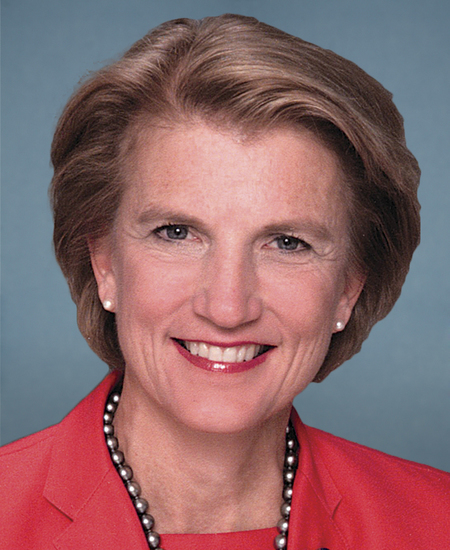
Sen. Shelley Moore Capito
Sponsored bills
Living Donor Protection Act of 2025 This bill prohibits life insurance, disability insurance, and long-term insurance carriers from denying or otherwise restricting coverage for living organ donors. Specifically, carriers may not deny, cancel, vary premiums, or otherwise impose conditions on policies based on an individual's status as a living organ donor. The bill also expressly specifies that recovery from organ-donation surgery constitutes a serious health condition that entitles eligible employees to job-protected medical leave. In addition, the Department of Health and Human Services must update educational materials on living organ donation to include information about the benefits and risks of living organ donation and the impact of donation on insurance access, particularly with respect to the bill's changes.
Maddy summaryThis bill, known as the AADAPT Act, would expand the Project ECHO Grant Program to include public and nonprofit private entities in addition to existing eligible organizations. The legislation specifically adds dementia care to the list of health areas the program can support, alongside palliative care. By broadening eligibility and scope, the bill aims to increase the number of healthcare providers trained to address Alzheimer's disease and other forms of dementia. The changes would be implemented through amendments to the Public Health Service Act, allowing for greater knowledge sharing and capacity building in dementia care across the healthcare system.
Maddy summaryThis resolution designates February 21-28, 2026, as "National FFA Week" to honor the National FFA Organization’s work in agricultural education. It recognizes FFA’s role in developing leadership and career skills for students (with over 1 million members nationally) and celebrates the 50th anniversary of Alaska’s State FFA Association, which has 19 chapters and 493 members. As a symbolic resolution, it has no legal effect but formally expresses Senate support for FFA’s mission.
Maddy summarySRES 618 is a Senate resolution recognizing the vital role of career and technical education (CTE) educators and work-based learning coordinators in preparing students for careers, classrooms, and life. It highlights that these professionals deliver hands-on skills training, support workforce pipelines in critical economic sectors, and address persistent shortages in CTE staffing (reported in 25 states for the 2025-2026 school year). The resolution formally commends CTE educators and coordinators for their contributions and emphasizes that improving their wages, benefits, and working conditions would help reduce staffing gaps. It does not create new programs or funding but serves as a symbolic endorsement of CTE’s importance to U.S. economic competitiveness.
Maddy summaryThis bill, known as the TAP Promotion Act, would allow representatives from recognized veterans service organizations to join presentations that inform service members about benefits they can access after leaving the military. These presentations are part of the Transition Assistance Program, which helps veterans prepare for civilian life, and the law requires that they be standardized and approved by the Department of Veterans Affairs before being used. The bill also mandates that the presentations include information on how veterans service organizations can help with filing benefit claims, while prohibiting any effort to encourage members to join a specific organization. Additionally, the Department of Veterans Affairs must submit an annual report to Congress detailing which organizations participated in these sessions and how many service members attended.
Maddy summarySRES 602 is a symbolic Senate resolution expressing support for the U.S. Olympic and Paralympic Teams (Team USA) competing in the 2026 Winter Games in Milano Cortina, Italy. It formally applauds Team USA athletes, coaches, and their supporters, commends Italy for hosting the event, and commits to ensuring safety for future U.S. host events (2028 Los Angeles Summer Games and 2034 Utah Winter Games). The resolution does not create new policies, funding, or obligations - it is purely a statement of congressional support. It directly affects Team USA athletes and organizers by acknowledging their efforts and achievements. This is a procedural resolution with no binding effect on government actions.
Maddy summaryS 3917, "The Dalilah Law," prohibits states from issuing or renewing commercial driver's licenses (CDLs) to individuals who are not U.S. citizens, lawful permanent residents, or certain nonimmigrant visa holders (like H-2B workers). It requires all current CDL holders to recertify within 180 days of enactment, verifying citizenship/residency status, English proficiency, and passing English-language tests. States that fail to enforce these requirements face withholding of federal transportation funding. The law directly affects commercial drivers and state licensing agencies, with specific rules for visa holders and English language requirements for CDL operations.
Rotorcraft Operations Transparency and Oversight Reform Act or the ROTOR Act This bill addresses aviation safety by increasing requirements for aircraft tracking and communication using Automatic Dependent Surveillance-Broadcast (ADS-B) technology and expanding oversight. As background, ADS-B for broadcasting (Out) and receiving (In) transmits information (e.g., location and weather information) between aircraft and air traffic control. Under the bill, aircraft must generally operate with ADS-B In equipment to provide the aircraft with location information of other aircraft and traffic advisories. Current law does not require this equipment. Current Federal Aviation Administration (FAA) regulations allow aircraft performing a sensitive government mission to be excepted from requirements for using ADS-B Out equipment. This bill limits which flights may be considered sensitive government missions (e.g., not training flights) and requires additional reporting and notifications for the exception. The Government Accountability Office must review the use of the ADS-B Out exception and the Office of the Inspector General (OIG) of the Department of Transportation must annually audit FAA oversight of operations that use the exception. Further, the bill repeals a 2025 law that exempts certain military helicopters from the ADS-B Out requirements for the Washington, DC, metropolitan area. The bill also requires the OIG of the Army to audit the Army’s coordination with the FAA, the FAA to establish an office to coordinate airspace usage of military aircraft and review the safety of flight operations and routes around airports, and the FAA to enter into memoranda of understanding with military agencies for safety information sharing.
Maddy summaryThe SAVES Act of 2025 establishes a five-year pilot program at the Department of Veterans Affairs (VA) to fund nonprofit organizations that provide service dogs to eligible veterans with specific disabilities, such as blindness, mobility issues, PTSD, or traumatic brain injury. Nonprofits must apply competitively, meet training and animal welfare standards (including ADA compliance), and provide service dogs at no cost to veterans, with the VA covering all program expenses. The VA will also provide ongoing veterinary insurance for the dogs, which continues even after the pilot ends. This program is funded with $10 million annually for five years, targeting veterans as defined by VA medical criteria.