

Maddy summaryThis Senate resolution recognizes the importance of independent living and economic self-sufficiency for individuals with disabilities, emphasizing their right to live in their own homes and communities. It calls on the Department of Justice to rescind a recent opinion that the Senate views as undermining the legal requirement to provide community-based services instead of institutional care. The document also urges various federal agencies to improve funding for home and community-based services, increase accessible housing and transportation, and promote competitive employment opportunities for people with disabilities. Additionally, the resolution pledges bipartisan efforts to address barriers faced by individuals with disabilities, including those of color, and opposes cuts to the Medicaid program that could limit access to essential support services.
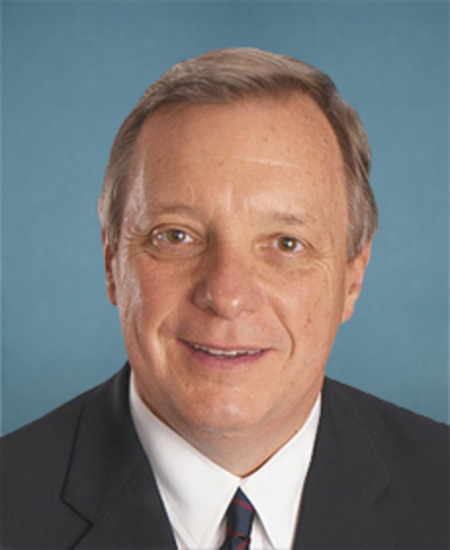
Sen. Richard J. Durbin
Sponsored bills
Maddy summaryThis bill establishes a formal code of conduct for all federal judges and specifically requires the Supreme Court to create its own set of ethical rules for justices. It creates a new position called Ethics Investigations Counsel to enforce these rules, investigate potential violations, and publish annual public reports on the findings. Additionally, the legislation mandates that Supreme Court justices publicly explain their reasons for disqualifying themselves or denying requests for disqualification in any case.
Maddy summaryThe Right to IVF Act of 2026 establishes federal protections to ensure individuals can access assisted reproductive technology and intrauterine insemination without state-imposed restrictions, while also mandating that health insurance plans, Medicare, Medicaid, and the Federal Employees Health Benefits program cover these services. The bill defines these procedures broadly to include treatments like egg and embryo freezing and requires coverage regardless of whether a patient has been diagnosed with infertility. It further directs the Department of Defense and the Department of Veterans Affairs to provide fertility preservation and reproductive assistance to uniformed service members and veterans, including funding for egg or sperm retrieval and storage. Additionally, the legislation grants federal courts the authority to challenge and block any state laws that limit access to these reproductive treatments or discriminate against providers and patients based on protected characteristics.
Maddy summaryThis bill directs the Secretary of the Interior to conduct a special study of three Illinois sites (Cahokia Mounds, Emerald Mounds, and Pulcher Mounds) to evaluate their national significance and assess whether they should become part of the National Park System. The study must consider alternatives for preservation, protection, and public interpretation by federal, state, local, or private entities, and consult with relevant stakeholders. It requires a report to Congress within three years, detailing findings and recommendations. The bill does not change current designations (the sites are already National Historic Landmarks, Illinois State Historic Sites, and UNESCO World Heritage Sites) but initiates a formal review process. This study directly affects federal agencies responsible for historic preservation and may inform future decisions about the sites' management.
Maddy summaryThe Real Courts, Rule of Law Act of 2026 restructures the United States immigration court system by creating a new, independent judicial branch under Article I of the Constitution, separate from the executive branch. This new system consists of three divisions: an appellate division with judges appointed by the President and Senate for 15-year terms, a trial division with judges appointed by the appellate division for 15-year terms, and an administrative division that manages operations and advises on court needs. The bill establishes specific qualifications for judges, sets their salaries at levels comparable to federal district court judges, and defines their powers to conduct hearings, issue rulings, and manage court resources. Additionally, the legislation transfers all existing immigration functions from the Department of Justice to this new court system while ensuring that pending cases continue without interruption.
Maddy summaryThe PROKID Act establishes an independent Office of the Ombudsperson within the Department of Health and Human Services to protect immigrant children in government custody. This new office would have the authority to conduct regular unannounced site visits, investigate complaints of abuse or neglect, and advocate for the quickest possible release of detained children. To support these efforts, the bill requires the government to share real-time data on child locations and custody details with the ombudsperson while strictly prohibiting the use of this information for immigration enforcement. Additionally, the act creates an expert advisory committee to review facility compliance and mandates that the government publish monthly statistics on the number and length of time children are held in detention.
Maddy summaryThe Children's Safe Welcome Act of 2026 establishes comprehensive standards for the treatment, care, and placement of noncitizen children in immigration custody, primarily affecting the Departments of Homeland Security and Health and Human Services. Key provisions include a prohibition on separating children from their parents or guardians unless there is clear and convincing evidence of an imminent threat, alongside requirements for rapid family reunification and the elimination of family detention facilities. The bill mandates that children be housed in state-licensed facilities that provide trauma-informed care, adequate medical and educational services, and access to legal representation, while also phasing out large congregate care settings in favor of family-based placements. Furthermore, it creates an independent Office of the Ombudsperson to monitor compliance, investigates age assessments that ban invasive medical procedures, and enforces strict data privacy rules to prevent information from custody cases from being used in immigration removal proceedings.
Maddy summaryThis bill requires the FAA to create and maintain a public website listing medications approved for use by pilots, air traffic controllers, and aviation trainees seeking medical certification. The list must include all approved prescription and over-the-counter medications, indicate required duty limitations for certain drugs, flag medications the FAA prohibits ("Do Not Issue"), and provide clear guidance for medical providers. The FAA must develop this list with input from aviation experts, training institutions, and union representatives, and update it annually to reflect current medical standards. This directly affects aviation medical applicants by making medication safety information transparent and accessible at the time of certification.
Maddy summaryThis concurrent resolution formally recognizes the significant wage gap between Black women and white, non-Hispanic men in the United States. The document cites data showing that Black women earn roughly 65 cents for every dollar earned by white men and highlights how this disparity impacts their ability to support families and accumulate wealth. By referencing existing laws like the Equal Pay Act and the Civil Rights Act, the bill reaffirms Congress's support for equal pay for equal work without proposing new legislation or policy changes. Ultimately, the measure serves as a symbolic acknowledgment of the economic challenges faced by Black women due to dual discrimination based on race and gender.
Maddy summaryThe Child Marriage Prevention Act of 2026 establishes a federal commission to study child marriage in the United States and requires the Department of Justice to create a model state law that sets the minimum marriage age at 18. The bill also amends immigration laws to generally deny visas to spouses or fiancés who were under 18 years old at the time of their marriage, with limited exceptions for compelling humanitarian reasons. Additionally, the legislation prohibits the use of federal property to facilitate any marriage where one or both individuals are under 18 and provides grants to states that establish task forces to examine and address child marriage.